
The idea of ‘One Yorkshire’ devolution has not gone away and the debate could be back on after the elections - Stewart Arnold
It would appear, if the polls are to be believed, that the pro-independence parties in both Scotland and Wales will be the biggest parties in their respective parliaments after the elections on Thursday. Assuming this success allows them to form a government, both nations will likely journey along the road towards independence in the coming years.
With a possible reunification of Ireland also on the horizon, constitutional questions could well dominate UK politics for years to come. Questions not just about what happens to Scotland, Wales and Northern Ireland but also, what happens to England?
We have been here before, of course. In September 2014, after the narrow victory for the No side in the Scottish independence referendum, the then Prime Minister, David Cameron, came out the following day not only to declare his pleasure that the United Kingdom was to remain whole, but also that English cities need to be part of the future conversation. From that vague notion the Northern Powerhouse was born and the slow, mostly piecemeal, move towards decentralisation in England began.
The English devolution debate, off the agenda since the failure of John Prescott to get his plans for regional assemblies off the launchpad 14 years previously, was back on the table and provoking huge interest. In my then role as Vice Chair of the Yorkshire Devolution Movement, in the two days following Cameron’s speech in 2014, I fielded more enquiries about devolution than I had in the previous two years.

It is difficult to be excited about the current arrangement of combined authorities and metro mayors which Cameron’s speech was to eventually spawn. Whilst anything that wrests powers out of the hands of those in Westminster and Whitehall has got to be a good thing, the metro mayors suffer from some serious fault lines. The main problem with the metro mayors is the limited powers they have to effect real change. The fact that London still has such control on the actions of the metro mayors defies the notion of decentralisation. This stranglehold was all too evident in the failure to secure immediate funding for the West Yorkshire tram network.
I hope, after the Scottish and Welsh Parliament elections, where the SNP and Plaid Cymru are expected to be victorious, our metro mayors challenge the government to expand decentralisation in England. In fact, the days after May 7 should offer all those with ideas on how devolution in Yorkshire can best work, to make their case. Ideas, for example, which would better recognise the geography, identity and ‘critical mass’ which is Yorkshire as a whole.
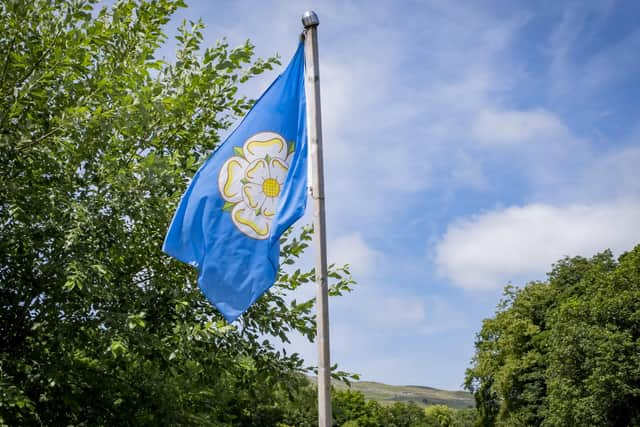
This idea of ‘One Yorkshire’ proposed by the region’s council leaders in 2017, has not gone away and it has its proponents still. For instance, Harrogate MP Tom Gordon, used the debate on English devolution in Parliament to present an amendment calling for a unified Yorkshire-wide settlement, giving the region control over services such as transport, education, health and housing. He made the point that the current fragmented nature of devolved Yorkshire is not serving anyone and he is right of course. Aside from the issues of accountability, geography and identity, the combined authorities in Yorkshire are just too small. With an average size of a little over a million people, they carry very limited heft. Writers suggest, by comparison, that territories within the range of 5-7 million people are the most successful. By way of a reminder, Yorkshire, with its 5.2 million people, falls firmly into that scope.
What makes for optimal size for a state is a complex one. It integrates economic, social and environmental factors to determine what number of residents can best sustain growth, stability and quality of life. One way an optimal population can be measured is through the Happiness Index. The country which usually tops this index, as the happiest in the world, is Finland with a population of 5.5 million people. In general, Finland is a good measure when it comes to the optimal size of successful territories (and you will have noticed that the population of Finland and Yorkshire are pretty similar).
Across a whole range of measures, like the Happiness Index, there is, what the writer Kirkhope Sale calls, ‘the virtue of smallness’, where, in his assessment, nations measured in the range of 5-7 million people are most successful – where a critical mass meets sustainability.
So, in my view, Yorkshire as a single area to which powers could be devolved, hits all the right buttons. Yorkshire’s local authority leaders (or at least the vast majority of them) understood this in 2017 when they made the case to the Government to see Yorkshire as a single devolved area. The report that they commissioned (which sadly fell on deaf ears) made the point: ‘There is strong evidence that Yorkshire is a coherent and interconnected area. The overall geography includes several functional economic areas, which have strong interconnection and similar/shared issues, priorities and networks.’ That is as true now as it was then and the election results from Scotland and Wales, ironically, give the opportunity to make that point once again.
Stewart Arnold is a writer and longstanding campaigner for One Yorkshire devolution.