
The Labour Government needs to back Yorkshire's cities to see off Reform - Andrew Carter
The Government has set its sight on improving economic prospects for every part of the country. This week's local elections will give people the first chance to show the current government how they feel their places are faring.
Mainstream parties are likely to have to reflect on the rise of Reform UK across the country and what they need to do to better connect people with economic opportunities.
One response to this could be to turn away from supporting growth in big cities and instead focus on smaller towns. It was something that was widely touted in the aftermath of Brexit and is understandable given the data shows levels of political discontent are higher outside of cities.
But this would be a policy mistake. Looking at commuting patterns as well as voting for Brexit and Reform UK reveals a further pattern – in places that are well connected to big city centres and so have more access to the prosperity that big cities generate, populist parties tend to poll a lower share of the vote. And this holds both within big cities as well as around them.
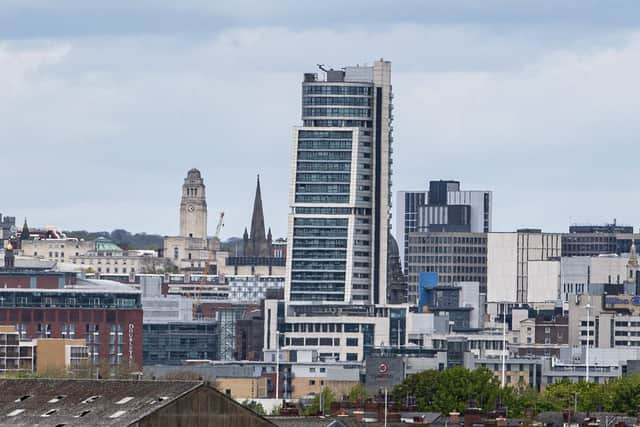

Just under 15 per cent of residents of the constituency Leeds North West have a job in Leeds city centre, indicating a relatively strong relationship with the city. Reform UK had a 12 per cent share of the vote in the general election there.
Compare that with Wakefield and Rothwell, where commuting data suggests the share of residents accessing the higher-paid jobs in Leeds city centre is half that of Leeds North West, at 7.5 per cent. Here, more than 20 per cent voted for Reform UK in 2024.
South Yorkshire sees a similar trend. Less than three per cent of residents of Barnsley South commute to Sheffield city centre and Reform UK polled around 30 per cent there in 2024. But in Rother Valley, the share of residents commuting to Sheffield city centre is double and the Reform vote is under 20 per cent. This trend is repeated across the big cities of the Midlands and the North of England.
The bigger problem for both economics and for politics is that big cities like Leeds and Sheffield punch well below their weight. In a ranking of the G7’s 112 largest cities by productivity, seven of the 10 largest cities in the UK are in the bottom 20.
At a local level, it means that while some places have access to the prosperity generated by their nearby big city, they don't generate as much generosity as they should. This limits the access to opportunities for voters in so called ‘left behind’ places to take advantage of, which they understandably rail against.
Addressing the big city underperformance has to be at the heart of any plan to connect more people with economic opportunity in their area.
The Government has an ambitious growth strategy. Rather than being blown off course by the forthcoming local election results, it needs to deliver on it in the coming months.
Adding to big steps forward it has already made on planning reform, this means following through on plans to devolve further powers to the largest cities, so they can use to improve public transport links between the city centre and the places where people live, as well as helping them to acquire the skills that city centre firms are looking for.
And it means backing big cities in the forthcoming industrial strategy with investment to support more cutting-edge economic activity in their areas.
Andrew Carter is chief executive of Centre for Cities.