
The lesson Britain needs to learn from California and China - Andy Brown
During the early stages of the industrial revolution, when efficient factories were starting to turn out high quality merchandise in great quantities, Britain sent a delegation to China to see whether it would be interested in expanding trade.
The Chinese emperor looked at the mechanical clock that the British had brought and declared that he had no need for such trinkets and wouldn’t be interested. When an attempt was made to push him into an agreement, he threatened to cut off the supply of rhubarb and wreck the health of those pesky constipated foreigners who had such need for the product.
Years later the Chinese government was forced at gunpoint to sign a deeply unequal trade agreement that let the British ship opium into their country. The out of date Chinese army was unable to compete with the superior technology of British rifles coming off production lines in Birmingham and metal warships made on the Tyne.
The consequences for China of putting their heads in the sand and trying to ignore changing technology were catastrophic. They haven’t forgotten the humiliation of those economic and consequently military failures even after well over a hundred years have passed.
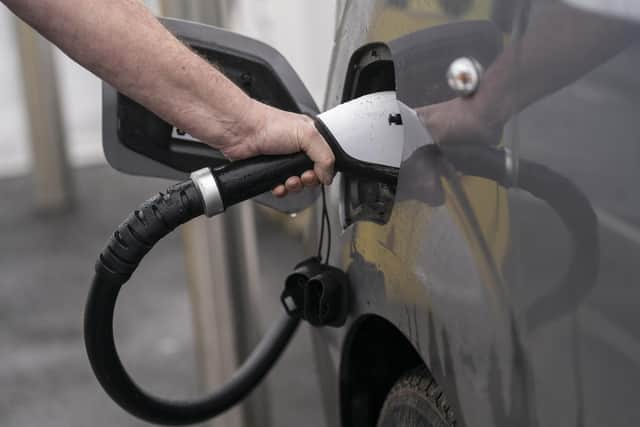

I was reminded of this piece of history by reports coming out of China that they are now delivering an increasing proportion of the goods transported across their country via electric heavy vehicles.
Only recently I was assured by a sceptic about the move to electric vehicles that such a thing is impossible because trucks are so heavy. The Chinese are already implementing technology that some people in Britain are telling us cannot be developed. Just as they already run most of their bus networks on electric power.
When I travelled around China on public transport 40 years ago the cities were dominated by millions of bicycles and were relatively quiet and lightly polluted. As their economy took off those cities got filled by millions of cars pumping out fumes and became some of the worst polluted cities on the planet. Now they are moving over to much cleaner and quieter electric cars and feeling the benefit with every lungful of air.
Most of their electric cars cost less to buy in China than equivalent petrol models. They are astonishingly cheaper to run.
Even in Britain it costs less than £10 for the equivalent of a tank of petrol when I charge at home overnight. The Chinese have networks of battery swapping stations and cheap public charging points which make it easy for people living in flats to charge up. We have an improving network of over priced ones.
If this fall behind in technology was just confined to the one area of transport things might not be so worrying. The truth is that in almost all areas of technology China, India and many other parts of the former third world are forging ahead and there are more graduates coming out of their Universities each year than we have produced in our entire history.
China is leading the way in installing solar power. It is the leading force in the production of a great deal of electronic components and of consumer goods.
Trying to beat this competition by imposing tariffs on it is not going to work. Tariffs only ever shut out more efficiently produced goods from the domestic market for a while and almost never enable your manufacturers to compete well on export markets. What is required is investment in better British technology and skills.
Across California, the US State that is the most advanced in the move to low carbon technology, there are networks of incredibly successful advanced technology manufacturers who rely on an international community of science experts. The ideas developed in their Universities interact with the expertise on implementing innovation in their business community to keep the employers in that state thriving.
It is also the State that voted most heavily against Donald Trump and continues to resist most strongly his conviction that he can shut out competition by imposing clumsy top down tariffs and by preventing technical experts and students from travelling to US Universities to do open minded research.
There are similar networks of highly successful cutting edge manufacturers in Britain. They also depend heavily on the talent pool and the ideas coming out of our universities. Harsh restrictions on the arrival of foreign students who bring in foreign currency is not a great way to support them.
If Britain wants a successful industrial base it needs to copy some of the policies of the two most successful economies of recent decades. China has succeeded by mixing private enterprise with a strong dose of conscious state planning. California has avoided becoming part of the rust belt by focusing on rapidly adopting new technology and encouraging innovation. It is a high skills economy where change has been driven forward instead of resisted.
Andy Brown is the Green Party councillor for Aire Valley in North Yorkshire.