
The lessons endangered crafts in Britain can learn from Sri Lanka’s approach - Nirma Jayawardena and Isuru Koswatte
The UK’s traditional crafts sector is under mounting pressure. According to the Heritage Crafts Association Red List, the number of critically endangered crafts has risen to 72, with nearly 100 more classified as endangered. From hand-thrown pottery and traditional basketry to niche textile techniques and woodwork, entire skill ecosystems are approaching collapse within a single generation.
While public funding, museum-led preservation, and heritage grants provide essential support, they increasingly serve as safety nets rather than growth strategies. While they keep crafts alive, they are not necessarily economically viable. The deeper issue is not about a lack of skill or cultural value, but about a lack of scalable market access and modern commercial infrastructure.
Specifically, international models from South and Southeast Asia offer a different perspective. Craft ecosystems in Sri Lanka have evolved into structured export engines, connecting rural artisans with global retail demand. A prominent example of this is Lakarcade, a large souvenir and handicraft retail brand that transforms village-level craftsmanship into curated, design-led products.
Rather than treating craft as static heritage, Lakarcade-style models treat it as a living supply chain: evolving, market-responsive, and brand-driven.
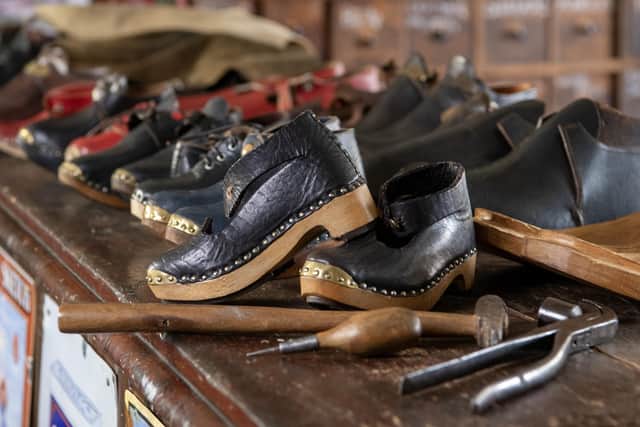

A large proportion of the craft production in many communities in the UK is still very fragmented. Individual makers often operate as sole traders, marketing by themselves and may not always have access to buyers. In contrast, the souvenir industry in Sri Lanka is a perfect example of how aggregation can make all the difference. When small artisan outputs are pooled under a unified brand, they gain bargaining power, quality consistency, and access to export logistics.
Survival of craft is closely tied to the preservation of technique, but also to its incorporation into modern retail systems, as it is with Lakarcade, which is well known in the regional craft and tourism landscape, and through which is actively involved in international craft networks, such as the World Crafts Council ecosystem.
The UK already has comparable raw material in its artisan base. What it lacks is a commercial intermediary layer capable of scaling production without eroding authenticity.
Sri Lanka's craft export model teaches us that demand has to be designed, not assumed. A successful souvenir chain doesn't just sell handmade goods - they curate them as lifestyle objects, travel memories, and premium cultural artifacts.
UK craft strategy often falls short here. We focus too much on heritage value instead of consumer relevance. Although cultural significance is important, global buyers rarely buy objects purely for preservation. Story, design, utility, and identity are what they buy.
Sri Lankan craft retailers blend traditional techniques with contemporary design consulting, seasonal collections, and tourism-driven channels. Heritage isn't diluted, but repackaged into scalable commercial formats.
For the UK, this suggests a shift: from ‘protecting crafts as endangered practices’ to ‘positioning crafts as premium cultural exports’.
There are significant economic implications. There is a shortage of alternative employment opportunities in rural or semi-rural areas in both the UK and Sri Lanka where craft production is concentrated. Craft ecosystems are decentralised engines of rural income when properly commercialised.
Sri Lanka’s model demonstrates how structured procurement from village artisans can generate stable livelihoods, particularly for women. Many cottage industries are female-led, meaning craft export systems can function as quiet but powerful mechanisms of women’s economic empowerment and financial independence.
Regions such as Cornwall, Yorkshire, Wales, and parts of Scotland have established craft traditions, but many sectors face pressures including ageing artisans, limited apprenticeships, and restricted market access. In some cases, production is still limited to a small scale and depends heavily on tourism or public funding for its survival.
Instead of importing a model wholesale, the UK could borrow a number of key features: First, the development of the so-called ‘craft aggregation hubs’ as intermediaries between independent makers and buyers from the international market. These would take care of design input, quality control, branding and export logistics.
Secondly, the opportunity for collaborative working between the UK designer and the traditional craftsperson, with the product remaining part of the tradition and reflecting contemporary tastes and sensibilities.
Thirdly, retail partnerships in which craft products are not considered to be niche souvenirs, but elevated as cultural products in the luxury homeware and lifestyle category.
Fourth, digital cataloguing and storytelling systems that enable traceable origin stories to be attached to each product, thus promoting authenticity in global markets. These ideas are similar to the successful souvenir export industry in Sri Lanka where craft is not a separate production process, but a commercial export pipeline.
Dr Nirma Jayawardena is an Assistant Professor at the University of Bradford and Dr Isuru Koswatte is an Assistant Professor at the University of the West of Scotland.