
The NHS should be the first place to offer adjustments for people who are autistic - Ismail Mulla
We’re all guilty to one extent or another of being ignorant. And I openly admit that I understood little about neurodiversity. But as journalists we’re taught to gain a working understanding of complex matters quickly.

So back in 2019, when I was sent in a pitch about a lawyer wanting to talk about his autism, I had to scrabble around and figure out what the condition meant, for my interviewee, for the reader at home, even for myself in the way that I approached the story.
The gentleman who I interviewed requested that his wife sit in on the interview. And I noticed that during our conversation he struggled to make eye contact for which he apologised.
He had nothing to apologise for, I was frantically scribbling down shorthand so that I could retell his impactful story to our readers.

From there more people came forward to talk to me about how autism affected them or someone that they loved.
What struck me as the nuance that was at play. It is a complex neurological condition with different people requiring different adjustments. But the one thing over the next few years I found was that it’s a condition that requires empathy.
The more I read around the subject and spoke to mental health experts, the more I realised that as a society we were ill-equipped to help autistic individuals. Some of these people have brilliant minds who are capable of contributing to the economy and society in a variety of ways. They’re not to be written off.
When the pandemic hit, the majority of us felt a sense of isolation at one point or another. But I remember talking to some of my contacts from the neurodivergent community and for them it was harder than most. A change in routine, alien surroundings, isolation, can all disrupt the equilibrium.
While those days of lockdowns are behind us, society is still not geared to meeting the needs of autistic people. There is perhaps no more stark illustration of this than the findings from the Society of Radiographers (SoR).
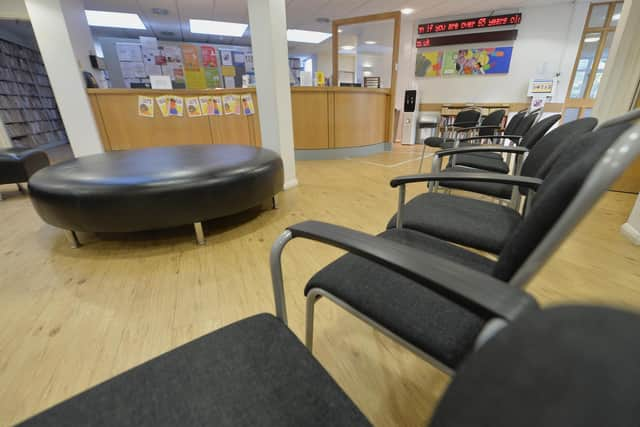
It found that autistic people and those with ADHD are avoiding seeking health care as they can find waiting rooms “unbearable”, calling for more to be done to support neurodivergent people navigate NHS services.
There are a number of barriers for neurodivergent people from the way they can communicate with health workers to overstimulating diagnostic tools and waiting areas.
Ben Potts, a diagnostic radiographer who is researching the experiences of neurodivergent patients, said: “Research has shown that 51 per cent of autistic people find waiting rooms unbearable – they’re too much of a sensory experience – that’s compared with 8 per cent of non-autistic people.
“Going into an MRI scanner, which makes a lot of noise, or into an X-ray examination room, where radiographers need to touch patients to position them accurately for the X-ray imaging, these are areas where there can be an extra layer of difficulty for autistic people.”
To non-neurodivergent people like me all of these things will be normal but we can’t continue to be blind to the needs of autistic people. Even if the NHS has a mountain of other issues that need addressing, ensuring hospitals are neurodivergent compatible should be a priority. These patients will only suffer further if they do not get the support that they need.
It need not be seen as an insurmountable task. Introducing inclusive spaces and improving communication would see patient experience improve for everyone.
And it’s not just patients but also neurodivergent staff in the NHS that need to be supported.
Dr Julie Woodley, a senior lecturer in radiography at the University of the West of England, said: “A lot of managers seem unaware of how to manage staff on the neurodiversity spectrum, so staff don’t feel supported at all.
“Some people have said that they’ve got to the point where they’re going to have to leave the NHS. They feel worn down by it all.”
That is not a good sign when the NHS is going through a recruitment and retention crisis.
By simply talking to staff members on the neurodiversity spectrum, trusts can start implementing reasonable adjustments so that these workers do not feel trapped.
Yes, we’re getting better at talking about mental health but we cannot forget the context, which is that historically conditions such as ADHD and autism were brushed under the carpet.