
The public should not have to wait until 2029 for corridor care to end and for dignity to be restored - Daxa Patel
The latest reporting on Accident and Emergency corridor care lays bare a truth that has been evident for years. Ministers now openly accept that the practice is unacceptable, yet the earliest date offered for meaningful improvement is 2029. It is difficult to reconcile that timeline with the reality faced by patients and staff.
A civilised society should not require years to restore the most basic conditions of dignity. One grows weary of repeating the same point. This is not acceptable. It has never been acceptable. The fact that it has become routine is evidence of institutional drift and political complacency.
NHS England guidance on corridor care attempts to establish principles for preserving dignity in spaces that were never designed for treatment. The intention may be honourable, but the very existence of such guidance reveals how far standards have slipped. Privacy, infection control, safe staffing, and humane treatment are all compromised in these environments. Staff know it. Patients feel it. Families witness it.
When a health service finds itself producing a manual on how to care for people in corridors, it is acknowledging that something fundamental has gone wrong. The founding promise of the NHS was never that people would receive care wherever space could be found. It was that they would be treated with dignity, respect, and compassion when they were at their most vulnerable.
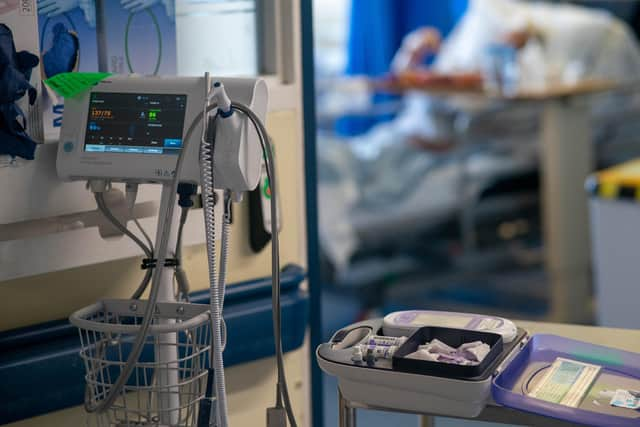

The consequences extend far beyond the immediate discomfort of patients waiting on trolleys. There is a profound impact on the quality of life of everyone involved. Patients experience fear, humiliation, and uncertainty. Doctors, nurses, and healthcare professionals carry the emotional burden of delivering care in conditions that often conflict with their professional standards. Families and friends absorb distress that the system can no longer contain.
The role of unpaid carers deserves particular recognition. Across the country, millions quietly provide practical and emotional support that enables the health and social care system to function. They are the invisible scaffolding supporting a structure already under immense strain. Without them, the pressures on hospitals, community services and local authorities would be immeasurably greater.
At the same time, the increasingly familiar tug of war between primary care and emergency departments has become a defining feature of the wider problem. Social care struggles under its own financial constraints. While the explanations may be valid, the outcome is the same. Responsibility becomes diluted and accountability blurred.
Patients are left navigating a system that often feels fragmented and impersonal. Staff spend increasing amounts of time apologising for delays and shortcomings they did not create.
If the NHS is to survive as a service free at the point of use, it must also become a service that embraces accountability. Public institutions can learn valuable lessons from the private sector about efficiency, standards, and clear lines of responsibility. This is not an argument for privatisation. It is an argument for competence.
The language of crisis has become so familiar that it now risks excusing inertia. Describing a problem is not the same as solving it. Patients must receive treatment from the right professionals, at the right time and in the right setting. That is not an ambitious aspiration. It is the minimum requirement of a functioning healthcare system.
Yet for all the legitimate criticism, there is a danger in becoming too pessimistic. To suggest that the NHS is beyond reform is a form of fatalism that serves no one. The truth is that pockets of excellence continue to exist throughout the country. Every day, dedicated clinicians, nurses, paramedics, healthcare assistants, and support staff deliver remarkable care despite the pressures they face.
These examples matter because they remind us that decline is not inevitable. The NHS does not suffer from a shortage of talent, compassion, or commitment. What it suffers from is inconsistency, fragmented leadership and a culture that too often settles for managing decline rather than pursuing excellence.
Perhaps what the NHS needs most is something that rarely appears in policy papers: Pride.
Ultimately, the most reliable measure of any healthcare system is the experience of patients and their families in their hour of need.
When people describe giving birth in a corridor, watching a loved one deteriorate without privacy, or waiting hours in a space never intended for care, they are not offering commentary. They are offering testimony.
We should listen.
The public should not have to wait until 2029 for dignity to be restored. The NHS remains one of our most cherished institutions. Precisely because it is cherished, it must be challenged to do better.
Daxa Manhar Patel is a leadership coach, author and solicitor.