
The spending review was a mixed bag of good and bad - Carl Les
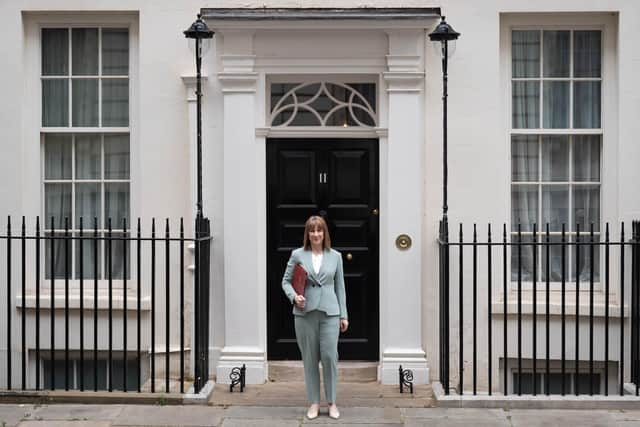
The Chancellor’s spending review statement came last week and it was a mixture, some good and some bad. As predicted the big winners were Health and Defence. Although defence was mainly an increase in capital spending, it won’t reach NATO targeted spending of 5 per cent of GDP, nor President Trump’s demand for more spending by European nations, although his target could be changed tomorrow, and then the month after.
This was a three year settlement, something local government has always asked for, sometimes got. It might sound ungrateful but whereas if the figures are good the certainty is most welcome, if they are a disappointment, then you are stuck with them for the three year term.
I listened intently to the speech, but didn`t hear the words “council” or “local government” mentioned once. In fact I rang a colleague to see if I had inadvertently missed something. Of course the speech is accompanied by a multi-page document of close-typed narrative with loads of tables. It takes some wading through but it is hugely important as this sets out the government`s plans for the next three years and beyond.
Even now it’s not a complete story, as next week there will be a Capital Infrastructure Plan, and then, really important to us, later in the year they will set out how the funding allocated by the Treasury will be divided amongst the sector. This is where we fear we will lose out to density, but in future it will be after a Funding Review that we have been invited to give evidence to.

One piece of good news, welcome confirmation, is that the Green Book will be rewritten. These are the rules by which the Treasury calculates who should succeed, or not. It is frustrating that it takes as much effort to write the bid that loses as it does to write the bid that wins. We are told that under this new regime, the BCR (Benefit Cost Ratio) will be less dominant in reaching a conclusion, and it will be more about “transformational growth”.
This could be beneficial because BCR always favours the big numbers, that is the populous South East and London. The Chancellor`s papers stated that HMT and National Growth Fund will work more closely with local and regional leaders to create “place based business cases”.
Good news too for rail passengers, that the Northern Powerhouse Rail project, (the northern Pennine route upgrade) will be funded over 10 years, but although rail is important for North Yorkshire our real priorities are road-based, where we need to finish the A66 dual carriageway improvement for congestion and safety reasons, dualling the A64 for similar safety considerations but also to open up the connectivity of the coast to benefit the economy, and to remove congestion on the York ring road. Hopefully these will be included in next week’s infrastructure statements.
Good news too that there will be more money for affordable housing, a problem often associated with urban areas, but is also a problem for rural North Yorkshire generally, where average house prices are way ahead of average earnings, but also in hotspots where second homes and holiday lets have skewed the market. Hence our introduction, unpopular though it may be, of the second homes council tax premium. This will go some way to addressing housing issues, and we are still the only authority in England committed to spending the premium on housing issues, but it will be helpful to have government funding streams in support. The devil in the detail will be what our share will be.
The spending review then was notable in what the Chancellor didn’t say, although covered in the papers. The core spending power (CSP) of local government will increase by 3.1 per cent, but regrettably this is lower than our spending pressures, both inflationary and rising demand for certain services, notably adult care and children's care, and is predicated on council tax rises being at the maximum 3 per cent plus the adult social care supplement of 2 per cent. Little room to manoeuvre there then. There was £760m extra mentioned for Special Educational Needs (SEND), distribution to be determined, but nothing to address SEND deficits, and the ending of the “statutory override” in March 2026, whereupon these deficits appear on our balance sheets. This may seem something of an accountancy technicality but it will have major practical implications and needs addressing now.
Amongst all the dreadful happenings around the world at the moment, continuing conflict in Gaza, Ukraine, and now new conflict between Israel and Iran, our thoughts must be with the relatives, colleagues and communities connected with the loss of the Air India airliner.
My father’s generation lived through an era going from no flight to supersonic flight, very risky at first becoming the safest form of travel per passenger mile travelled today. Such a calamity reminds us that it is not without risk, and when disaster strikes it has a huge effect. Let us hope the cause is quickly found and easily mitigated against for the future.
Carl Les is the Leader of North Yorkshire Council.