
The values Ramadan nurtures are not exclusively Muslim virtues - Qari Asim
Every year, as Ramadan begins, I’m often asked the same well-meaning question by friends and neighbours who don’t share my faith: “So… you don’t eat or drink all day? Not even water?”
From the outside, Ramadan can look like an endurance test - a month of hunger, thirst, and long evenings. But focusing only on what Muslims abstain from during Ramadan misses its deeper, more universal meaning. Ramadan is not primarily about food. It is about formation - of character, conscience and compassion.
For Muslims, fasting from dawn to sunset is a way of learning self-restraint in a world that constantly tells us to indulge. When we voluntarily step back from what is lawful and nourishing, we remind ourselves that we are more than our appetites. This is not a rejection of the world, but a recalibration within it.
Hunger or thirst in Ramadan is meant to teach us empathy. When you feel hunger, it becomes harder to ignore the reality that millions live with it daily, not by choice. That awareness is not theoretical; it’s visceral. It moves people from sympathy to responsibility. That is why Ramadan has always been inseparable from service.
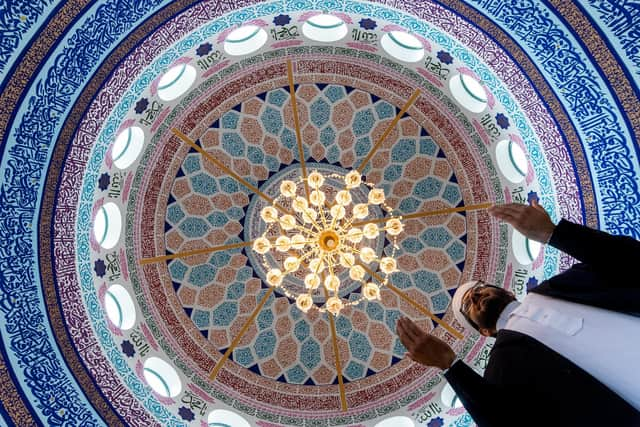

Throughout the month, the obligatory charitable contribution of zakat - 2.5 per cent of annual savings - along with additional voluntary donations, raises millions nationally for good causes. Here in Leeds, mosques and Muslim charities distribute food parcels to families under financial pressure, fund local foodbanks, support refugees rebuilding their lives, and offer assistance to the homeless.
Community iftars - the evening meals to break the fast - are now held not only in mosques, but in churches, and public spaces. These gatherings bring neighbours of all faiths and none around the same table, breaking bread and breaking barriers. They deepen understanding, strengthen social cohesion and build the kind of city where people look out for one another.
This is the Ramadan that Leeds sees each year - a reflection of the very best of our city and our country.
Fasting loses its meaning if it does not soften the heart. Anger, arrogance, gossip, and cruelty undermine the spirit of the fast. Prophet Muhammad (peace be upon him) reminds us that if someone provokes you while fasting, you should respond not with retaliation, but with restraint. In a world quick to outrage and division, this ethic feels urgently relevant.
Every tradition wrestles with the same question: how do we live well with others, especially when life feels pressured and unjust? Ramadan’s answer is not perfection, but practice. Practice patience, generosity, listening and seeing the dignity in people you may never meet again.
Even the daily rhythm of Ramadan reinforces this ethos. Each evening, families and communities gather to break the fast together. The first sip of water, the first bite of food - these small moments carry deep gratitude. And when those moments are shared across communities - in mosques, churches, synagogues, temples, community halls and public spaces - they remind us that nourishment is richest when it is collective.
As an Imam, I often witness people rediscovering themselves during Ramadan. People reconnect where they once withdrew. They volunteer where they once hesitated. They ask not only, ‘What do I believe?’ but ‘Who am I becoming?’ That question is the real objective of faith.
For Muslims, Ramadan is a reminder that spirituality is not escapism. It is engagement — with the self, with society, and with suffering beyond our immediate view. It insists that belief must translate into responsibility, and devotion into service. Feeding the homeless, supporting refugees, opening our doors to neighbours of different backgrounds — these are not side projects to faith; they are expressions of it.
In an age of excess, choosing restraint is radical. In a time of polarisation, choosing compassion is courageous. And in a world where humanity is often reduced to numbers and headlines, choosing to love people - actively and sacrificially - is transformative.
Yet this Ramadan unfolds against a troubling backdrop.
Reports of alarming levels of anti-Muslim hostility continue to rise. The impact is deeply personal for Muslim communities - not abstract, not distant, but felt in everyday moments.
Ramadan is marked by Tarawih, a special nightly prayer in which the Qur’an is recited over the course of the month. For many, these prayers are spiritually uplifting and emotionally grounding - a rare opportunity to pause, reflect and reconnect.
But increasingly, women tell me they are afraid to walk to the mosque at night. They are anxious about abuse shouted from passing cars. They worry about being visibly Muslim.
Every time someone feels compelled to conceal part of who they are, our society loses something. We must not allow Britain to be defined by suspicion or division, but by compassion and contribution.
The values Ramadan nurtures - generosity, patience, self-restraint, solidarity - are not exclusively Muslim virtues. They are human virtues to be practiced by all of us.
Dr Qari Asim is Imam at Makkah Mosque Leeds and Chair of Mosques & Imams National Advisory Board.