
The world is in need of quiet leadership the likes of Jane Goodall showed - Daxa Patel
Leadership can be loud, quiet and everything in between. Leadership is not always neat and predictable. Often, it is bold, disruptive, and relentless. I thought of some souls while writing this sentence.
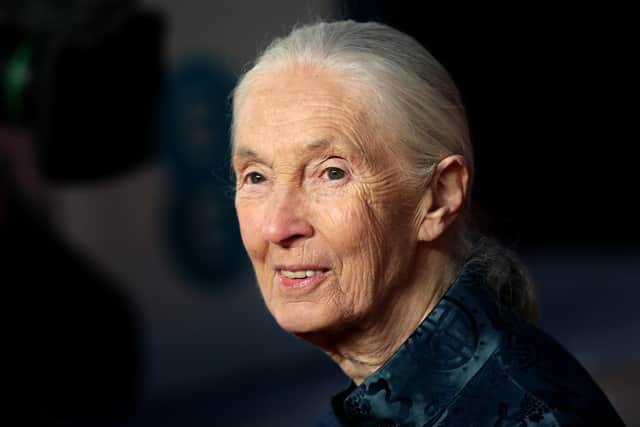
The news of the death of Jane Goodall, who did so much to further humanity’s understanding of chimpanzees and enlighten us about our responsibilities and the impact of our choices on the environment, stirred something deep.
We also heard of the sudden passing of the brilliant actress Diane Keaton, so vibrant, so unique.
These women led life on their terms and inspired many through their passion and work. Their legacy is not just in what they did, but in how they made us feel.

There is bold and brash leadership and there is soft leadership. US President Donald Trump definitely falls into the first category, bold, brash and transactional, yet he can rightly take some credit for the breakthrough in the Middle East that led to the release of hostages and the cessation of war in Gaza. I hope those entrusted to create a safe space for the Gazans succeed, as they too have a right to their homeland.
We are touched by people and events even from afar, through modern 24/7 media coverage. Robert Jenrick’s comments about not seeing a white face in Birmingham during a 90-minute video shoot crossed my mind as I found myself walking my dog on a street in our neighbourhood, closed off to traffic one Sunday to allow children to play with safety and ease.
As we walked past, I told one of the neighbours, “I love this.” I meant it. It was uplifting to see children play as they should, and it reminded me of how, as a child, I used to play hopscotch outside my dad’s shop on summer evenings.
We are united by our shared values, and the colour of our skin should not be a cause for division.
The children playing were innocent and happy. It did not cross my mind that amongst them there were no black or brown kids. Kids are kids, their colour should be of no consequence.
This was a simple, beautiful community moment that reminded me of safety, innocence and belonging. Our shared values cut through the noise of division. Beneath the surface, there are differences, but shared experience binds us together. This has been my compass in life.
The mind wrestles with political rhetoric and its divisiveness, yet the heart returns to what really matters: connection, community and everyday moments of human life that remind us of our common goal.
To see the joys and tears of the families when reunited with their loved ones showcased the love that, if we are lucky enough, we will appreciate to be the only thing that truly matters.
It is universal, and talking of love, nobody has a monopoly on this, as our four-legged family members will show us.
I hope political leaders can reflect with humility that people power is greater than people in power.
Leadership by example does not have to be grand or loud. It needs to touch and impact lives for the better.
The families who campaigned to make the Hillsborough Law did so from the pain they endured. It was the people who brought about the law through their relentless campaigns.
Similarly, the families of those hostages kept a constant vigil and ensured there was no missed opportunity to remind those in charge that their loved ones needed to be brought home.
Leadership also lives quietly, in the neighbour who organises street play, the teacher who uplifts a struggling child, the carer who shows up day after day. These are not headline-makers, but they shape the soul of a society and a caring society.
We all lead in some way. The question is not whether we lead, but how and for whom.
Whether it is through bold action or quiet presence, leadership that uplifts others is always worth choosing.
So yes, leadership is messy. It is bold, brash, soft, strategic and sometimes silent. But when it is rooted in service, in love, and in the betterment of others, it becomes a force for good.
Perhaps the most enduring form of leadership is the kind that leaves no statue, no headline, but lives on in the way others feel in our presence.
A kind word, a principled stand, a moment of courage when no one is watching, these are the seeds of legacy.
Leadership is not about being remembered by many or applauded, or praised, but about being remembered deeply by a few. That, too, is enough.
That, too, has the potential to change our immediate world.
The legacies of Jane Goodall and Diane Keaton remind us that leadership is not about control, it is about contribution.
Daxa Manhar Patel is a leadership coach, author and solicitor.