
The worrying trend of social media driven anti-social behaviour amongst Generation Alpha - Jayne Dowle
For most teenagers the holidays are over and it will be back to school or college today, but the Easter break has left a worrying trail of anti-social behaviour at the Yorkshire coast. Police in Whitby said that last Wednesday, the hottest day of the year so far, Tate Hill Beach had been left in “a mess” after youngsters gathered together leaving glass bottles, broken glass, drink cans and other litter scattered across the sands.

Credit to the officers for making the perpetrators they found still on the beach participate in a late-night litter pick, filling five bags of rubbish. That’s exactly what I – as a parent – would have done.
However, in a statement, the police warned that rising instances of such anti-social behaviour in the area are posing a threat to the town’s lifeblood: “Not only does this give a sorry impression to our tourist economy - on which many in Whitby rely - but litter such as glass bottles and broken glass causes a hazard to many other beach users, including our dogs and children.”
Residents and visitors further up the coast in Saltburn-by-the-Sea could be forgiven for arguing that Whitby got off lightly.

Last week, according to widespread social media reports, “swarms” of teenagers flooded the town, fighting with each other, harassing customers of restaurants and shops, stealing from Sainsbury’s, setting off fireworks and even – it’s said – firing a catapult at pigeons.
Local businesses were over-run; in one restaurant, it’s reported that a gang of teenage girls stormed in and started abusing the customers. When independent traders are doing their best in a very tough economic climate, this is surely the last thing they need.
Meanwhile, locals said that whilst the carnage unfolded and families and visitors ran for cover, they observed teenagers filming each other on their mobile phones.
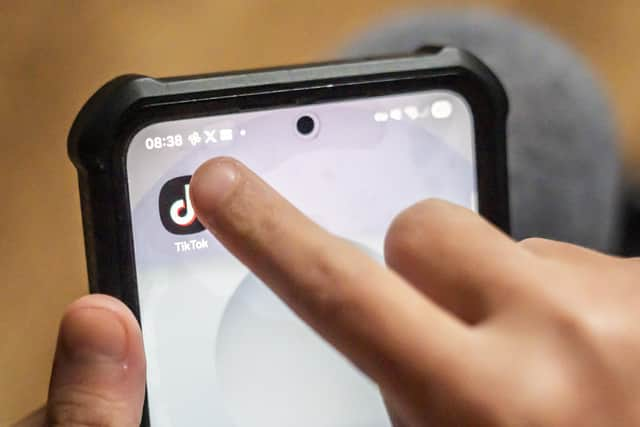
It appears that the TikTok social media trend which saw the affluent south London suburb of Clapham come under siege from hundreds of teenagers – some wearing balaclavas and assaulting police officers and emergency workers – is travelling north. There was a similar, although smaller scale, incident in Birmingham city centre recently too.
In London, Scotland Yard warned young people that events “fuelled by online trends and viral content on platforms such as TikTok” can lead to serious outcomes.
“If you join in or cause further disorder, you should expect to be arrested and risk a criminal record, which can have long-lasting consequences for your future,” the force said.
Now without wishing to incite moral panic, and again, I say this as a parent, what on earth is going on? And where are the parents of these young people? Do they know what their kids are doing and why aren’t they stepping in to stop it happening?
I remember when viral trends were relatively harmless. About 10 years ago, it was all about the ‘ice bucket challenge’, in which kids dared each other to throw buckets of freezing cold water over their heads. This however, was usually in the privacy of their own back gardens and had actually started out as a fundraiser for Motor Neurone Disease.
Now though, the power of social media is showing its very ugly side. My son and daughter, now in their early twenties, admit they are scared of ‘Gen Alpha’, loosely defined as those currently under the age of 18.
‘Gen Z’ kids like mine are criticised for being ‘woke’ and worrying about everything, but the generation that’s coming up behind them are a whole different breed.
They can’t remember anything of the analogue world, raised with smartphones and tablets in their prams, and crucially, may have spent formative years under the lockdowns of the Covid pandemic.
Ask any teacher or youth worker and they will tell you the same. Whilst it’s important not to generalise, here is a generation with a completely different mindset to all those who have gone before; a lack of faith in authority, disregard for ‘rules’, no belief that the future could bring better things and distrust in adults making the right decisions.
Traditional social structures which promoted responsibility and playing your part in what used to be called ‘the social contract’, such as finding and holding down a Saturday job, are eroding; too many young people are left, literally, to their own devices. And in many areas there are no local facilities such as sports centres or youth clubs for them to meet and take part in positive activities with each other.
Which brings us back to parents. When the outside world is a fearsome place – the current Iran war being just the latest catastrophe to impact these young minds – home should offer sanctuary, support and guidance.
A young person who knows they are loved and listened to is far less likely to roam from town to town, hooking up with others who also feel isolated and ignored.