
This needs to be the Parliament that finally fixes social care once and for all - Mike Padgham
With Parliament returning after the summer recess, there will understandably be many pressing issues competing for the Government’s attention. But we must not allow social care reform to slip down the political agenda yet again.
That has happened too many times before. A crisis dominates the headlines, social care is pushed aside, and another Parliament passes without fundamental reform. This time must be different. This must be the Parliament that finally fixes social care once and for all.
After almost four decades of campaigning, I have heard warm words from governments of every political colour. There have been promises, reviews, commissions, and consultations. Successive Prime Ministers and Health Secretaries have acknowledged that the system is broken, yet meaningful reform has remained permanently just over the horizon.
Throughout those years, despite representing care providers and running services myself, I have never managed, despite trying, to sit down with a Prime Minister or Secretary of State and have the frank conversation our sector desperately needs.
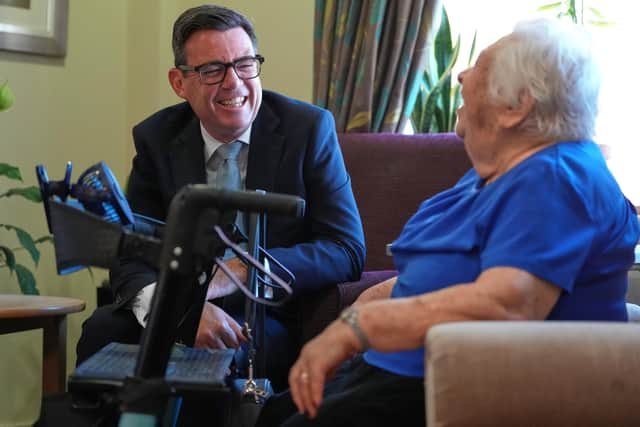

I am not asking for hours of their time. Give me five minutes.
I recently invited Prime Minister Andy Burnham and Health and Social Care Secretary Yvette Cooper to visit us here on the Yorkshire coast during the parliamentary recess. Sadly, that visit did not happen, but the invitation remains firmly open.
I welcomed the Prime Minister’s recent words, his support for a National Care Service and his decision to accelerate Baroness Louise Casey’s independent review. After decades of delay, it was refreshing to hear a Prime Minister speak with ambition about addressing the crisis.
Baroness Casey is extremely capable, and I look forward to her recommendations. But social care cannot put everything on hold until her report appears in summer 2027.
People need care today. Families are struggling today. Providers are closing or handing back contracts today. Hospitals remain overcrowded because patients who are medically fit cannot get the support they need in the community.
We cannot fix the NHS without fixing social care.
One of our greatest challenges is finding enough people to provide that care - not just now, but in the decades ahead.
The latest Skills for Care figures underline the scale of the challenge. England’s adult social care sector had around 96,000 vacant posts on any given day in 2025–26. Although that figure has fallen, vacancies remain around three times higher than in the wider economy.
Much of the recent improvement in staffing was supported by international recruitment, but that source of workers is now rapidly diminishing.
According to Skills for Care, the number of people arriving in the UK to take direct-care roles in the independent sector fell from 105,000 in 2023–24 to 50,000 the following year and just 30,000 in 2025–26.
At the same time, the number of posts filled by British nationals fell by 40,000 in a single year and has fallen by 130,000 since 2020–21.
The decision to close the dedicated overseas recruitment route for care workers and senior care workers before establishing a credible alternative was, in my view, a serious mistake.
Overseas workers have cared for our parents and grandparents, supported people with disabilities, and worked alongside their British colleagues with skill, compassion, and dedication. We should be thanking them, not making them feel unwelcome.
Every responsible provider is trying to recruit more people already living in this country. But pay remains far too low for the skill, responsibility and emotional demands involved.
That is not because providers do not want to pay more. Many services depend upon fees set by underfunded local authorities. Providers cannot pay wages from money they do not receive.
Looking ahead, Skills for Care estimates that another 410,000 posts will be required by 2040 simply to keep pace with the growing number of people aged over 65. That would take the total number of posts needed to around 2.09 million—and it does not include the additional recruitment required to replace those who leave the sector. Where will those workers come from?
Alongside the workforce question, we need an honest debate about what a National Care Service would look like.
Most care is already delivered by independent providers, including thousands of small and medium-sized businesses and family-run organisations. It would be enormously expensive, disruptive, and probably impossible for the Government simply to nationalise the entire sector. Nor is wholesale nationalisation necessary.
GP practices provide a possible model. They are generally independent businesses contracted to provide NHS services. Why could social care not operate in a similar way?
Social care should not be seen as an extra cost sitting outside the NHS budget. It is part of the solution to the NHS crisis and can save the country money.
We should also tackle duplication between the organisations commissioning, monitoring, and regulating care. Providers can find themselves answering similar questions and supplying the same information to local authorities, integrated care boards, and the Care Quality Commission.
Lasting reform will not be achieved unless we bring the public with us. People need to understand what social care does, who provides it, how much it costs and why it matters to every family.
Mike Padgham is honorary chair of the Independent Care Group.