
Time is of the essence for farmers when it comes to navigating Inheritance Tax changes - Rupert Jackson
The recent Autumn Budget announcements surrounding Inheritance Tax (IHT) reliefs, particularly Agricultural Property Relief (APR) and Business Property Relief (BPR), has caused farm and landowners to urgently consider their options surrounding the future of their estates.
Commencing April 6, 2026, the full 100 per cent relief from inheritance tax will be restricted to the first £1m of combined agricultural and business property. This policy shift will also subject farms that are valued over £1m to IHT at an effective rate of 20 per cent.
For an industry defined by succession planning, these announcements will raise questions for those who intend to pass on their farms to their loved ones in the future.
Therefore, moving quickly and getting the right guidance is paramount, as those who put off the decision now may find themselves under unnecessary pressure nearer to the changes coming into effect in 2026.
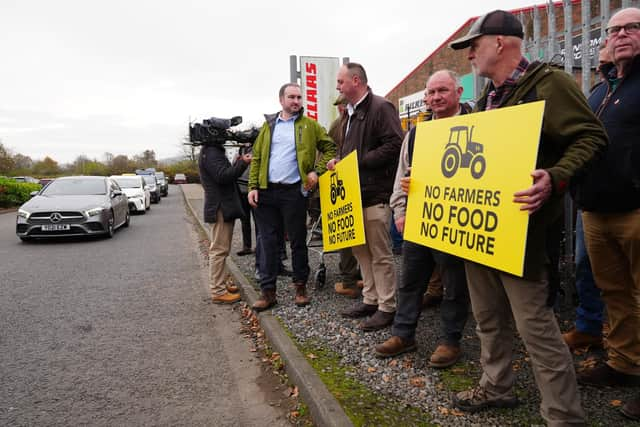

The National Farmers' Union (NFU) has cautioned that the changes, combined with other economic pressures, could be the ‘final straw’ for struggling family farms. This impact is most likely to be felt in areas with rural economies, like the agricultural industry across Yorkshire.
With an average farm size of 94 hectares, the region exceeds the English average of 88 hectares – proof of the substantial role Yorkshire plays in agriculture’s contribution to the British economy. Many family-run farms in Yorkshire are asset-rich yet cash-poor, meaning they are likely to be impacted by heightened taxes.
In addition to the direct impact on rural economies, there are unknowns surrounding supply chains and rising food prices.
While the recent changes have understandably brought forward their estate planning, it is important farmers are aware of alternatives to help safeguard their estate to exist, through proactive and effective planning.
This could include gifting land to children or grandchildren or establishing trusts. Any gifted land falls outside of a farmer’s estate and therefore is not subject to IHT at the punitive rate after at least seven years.
Additionally, for estates relating to property, agricultural and business assets, there is an instalment option to spread IHT over ten years. By spreading the payments out, this can help alleviate the financial burden of IHT and can result in an annual tax payment of approximately 1 per cent of the estate's value.
This is likely to benefit working farmers and those with smaller estates, however for those such as James Dyson, who own 14,600 hectares of British farmland, that same option of spreading IHT across a decade won’t be viable. It’s vital that farmers have their estates assessed depending on the size their land farms – it’s not a one size fits all approach, and the fine print of these upcoming tax changes must be considered carefully.
The current tax changes also incentivise fragmentation, as families may now choose to spread their assets across different family members. If this is the favoured approach, families must ensure the correct steps are in place. Pre- or post-nuptial agreements are essential to protect farmers’ assets from any third parties, such as children’s spouses that they don't wish to be included in the ownership structure.
The Government will launch its technical consultation in early 2025, where the details around agricultural tax changes will be addressed. However, farmers shouldn’t wait until then to proactively plan the future of their farm and their loved ones.
Time is of the essence and the sooner that farmers seek professional financial and legal advice, the better.
Rupert Jackson is partner and head of agriculture and landed estates at Brabners Personal.