
We need serious action to preserve our precious wildlife: Andy Brown
There is something magical about observing wildlife. Whether it is watching astonishing sights via documentaries such as Blue Planet or personally seeing our wonderful Yorkshire countryside and coastline there is always something new and fascinating to be discovered.
Britain has a strong history of producing great naturalists and creates world renowned wildlife documentaries that help millions of people to appreciate wildlife.
Yet we live in one of the most nature depleted environments on the planet.
Almost none of the countryside we live in is genuinely wild and natural. It has been drastically altered by human activities. Sometimes deliberately and often by accident. Rarely has that alteration increased the amount of biodiversity.

Even some of our most stunning countryside such as the uplands of the Yorkshire Dales is not wild and untouched. It is the product of centuries of removal of tree cover and of saplings being nibbled out of existence by large populations of sheep.
A wild upland landscape in Yorkshire would naturally contain a complex mix of low scrubby trees with a few more open areas. When the trees went a lot of wildlife went with them that included bears, beavers, lynx and a whole range of mushrooms and insects. Long distant views over grass or moorlands may be spectacular but they contain a much simplified mix of wildlife.
Much of our farmland hosts an even narrower range of species. A heavily sprayed field of wheat contains only one plant, next to no insect life, little for birds to eat and largely sterile soil conditions. Crops only prosper after heavy applications of fertilizer.
There is more variety of wildlife on the average long established housing estate than in the equivalent area of intensively farmed land.
The situation in our oceans is every bit as bad. Large areas of the sea bed have been casually destroyed by heavy bottom trawling cages that smash up everything in their path. In place of great shoals of herring and cod the size of a human being we have desperately low fish stocks, some of which aren’t even protected properly from huge international fishing fleets.
At the moment 36 per cent of UK inland waters are designated as marine protected areas. Which sounds impressive. Until you look into exactly how much protection is provided and how that protection is policed. The protection is often there in name but not in reality.
The parts of British waters that are genuinely maintained as untouched wild areas are vanishingly small. There are just three small Highly Protected Marine Areas and when I say small I mean exceptionally small in comparison with the size of our coastline.
Protecting areas of sea life obviously excludes fishing from those sites. What is less obvious is that it almost always increases the catch in surrounding waters to such an extent that it helps fishing communities rather than hinders them.
The big problem for our oceans is not small local inshore fishing fleets working to supply local markets. It is giant international fishing fleets that hoover up immense quantities of wildlife and leave so little behind that it takes decades for the wildlife to recover. If it ever does.
In such circumstances even quite surprising things can turn out to be advantageous.
It is impossible to bring enormous fishing fleets up close to a wind farm. There is a serious prospect that, once the sea bed has recovered from the building work, areas around windfarms could see significant improvements in biodiversity and fish stocks.
On the land government policy has been characterised by increasingly good intentions and remarkably clumsy application of limited funding.
Many farmers I speak to actively want to see the condition of their soil improved, enjoy seeing a good variety of wildlife on their land and want to hand down a vibrant landscape to the next generation. Many support the concept of incentives to keep land vibrant.
Few are impressed by how schemes intended to encourage landscape enhancement have been designed, managed or funded. The latest fiasco involved scarce funding being opened for applications for only a few hours. When the first come first served website closed it had already received more applications than it could possibly fund.
Farmers who went out into the fields early came home after a day’s physical work intending to start their application only to find all the money had already gone and they were left facing serious financial challenges.
Wildlife improvement requires sustained thought out funding not start stop policies. It requires serious incentives not token gestures and nice words. We cannot expect farmers to produce food with fewer chemicals, set aside more land for hedgerows, dig ponds or rotate crops in complex cycles without proper financial help.
This country could produce a far higher proportion of the food we eat and increase the diversity of the wildlife we see if we got serious about helping farmers to produce food in more sustainable ways.
We won’t achieve that by allowing bureaucrats in Whitehall to design farm subsidies.
We might get there if we put a lot more effort into getting farmers, environmentalists and naturalists together to design schemes that work for the long term best interests of both the rural economy and the rural ecology.
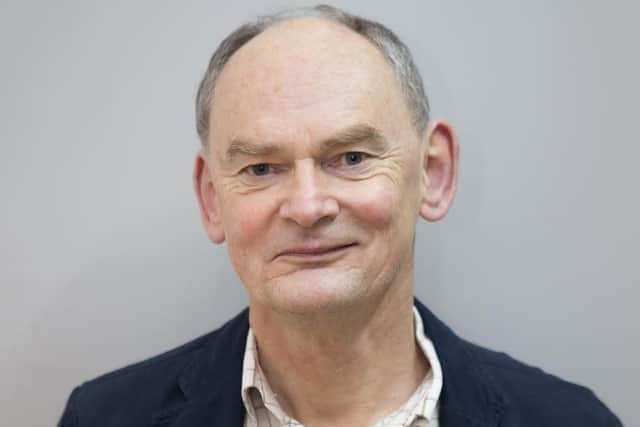
Andy Brown is the North Yorkshire Green councillor for Aire Valley.