
What exactly is our TV licence paying for at the BBC? - David Behrens
The Cabinet may have been falling apart as surely as a sideboard with the screws missing, but for a blessed 15 minutes on Tuesday evening there was no news. As far as the BBC was concerned, nothing was happening in the world that couldn’t wait.

It had postponed the 10pm bulletin on BBC One rather than interrupt the overrunning semi-final of the Eurovision Song Contest. And that raised interesting questions for the Corporation and those of us who still have a TV licence: are we paying primarily for news or for entertainment? And is there too much of one and not enough of the other?
It’s an existential equation that will confront the new director-general, a BBC virgin named Matt Brittin, when he takes office on Monday.
The relationship with licence payers has broken down in the last decade. Fewer than 80 per cent of homes are now licensed, which is why TV announcers have taken to bootlicking as they talk over the closing credits: “This and everything across the BBC is possible because we’re funded by you. Thank you.”
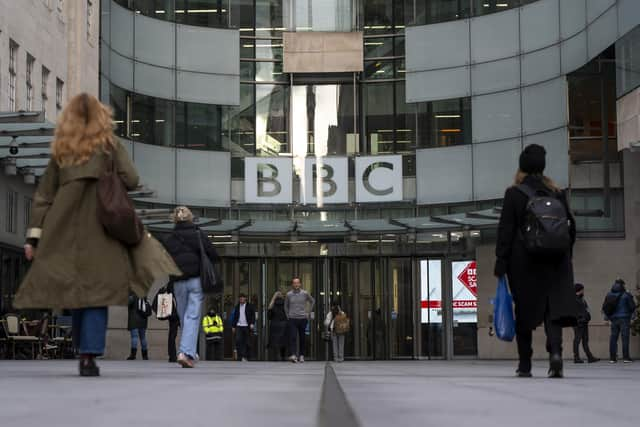

Keep your thanks. I didn’t pay my £180 willingly; I’m not going to be patronised as well.
Bulletins used to be sacrosanct at the Beeb. News interrupted the programmes, not vice versa. In 1992 when I was producing a daily quiz show that went out live at 9am, we occasionally got orders from the network to abandon part of our programme because Breakfast News needed extra time. They’d been on air for two hours already – what else could they say in 10 more minutes? But the newsroom outranked everyone else. No-one dared challenge their self-proclaimed superiority.
That remains the case. Today the BBC news can manipulate the national agenda by stealth, forestalling accusations of bias by giving equal airtime to unconventional fringe views which then mutate like viruses into the national conversation.
Meanwhile, original entertainment declines in inverse proportion. Repeats now make up around a third of the BBC One schedule.
The management’s stated policy of deprioritising TV programmes in favour of fatuous online ‘content’ adds insult to injury. This morning one of its main headlines on my news feed, vying with the fallings-out at Number 10, was about a piffling local planning dispute. “Cake shed rules could crumble in council review.”
You paid £180 for someone to write that. Everything across the BBC is funded by you, remember?
The only attraction to reading such stories is that they’re not plastered with adverts – a fact that gives the BBC an unfair advantage over commercial news providers. But why on earth should they be funded by a tax on owning a television set?
Look, this is a bad time to be at the BBC. Last month it announced it was cutting nearly one in 10 of its staff, and people who write local stories away from the mainstream of network TV must be quaking in their cake sheds. But, as the interim director-general Rhodri Talfan Davies acknowledged, “difficult choices” would have to be made.
That was easy for him to say: he won’t be the one doing the choosing. He lit the blue touchpaper and retired to watch the explosion go off in Matt Brittin’s face.
It will make the new man very unpopular very quickly. But real change can only come from someone unbound by BBC protocol and free of preconceived notions about what is inviolable. Is there to be a licence fee at all and if so is it primarily to entertain or inform?
Certainly it will be invidious if watching telly without a licence remains a criminal offence, unless the revenue is taken away from BBC Online and ploughed back into television. I don’t mean getting rid of the iPlayer, which is a legitimate extended TV channel; I mean freeing up the unbounded bandwidth taken up by cake sheds and lifestyle podcasts that commercial publishers and broadcasters do better.
The guiding principle – in broadcasting and in general – must be to reserve public money for important services the commercial sector does not provide. An enormous proportion of the BBC’s current output falls squarely outside that paradigm.
The latest idea ministers are apparently considering is widening the net of the licence fee to trawl in viewers who watch only streaming services like YouTube and Netflix. It makes no more sense than paying your council tax to the wrong town. And it would hand the BBC a mandate to keep growing when what it really needs is to grow smaller.
That isn’t a contradiction. Smaller can be better. And while the very idea is anathema to its traditional values, it’s an opportunity for the new boss to engineer a new and different BBC that is a great deal smaller, and all the better for it.