
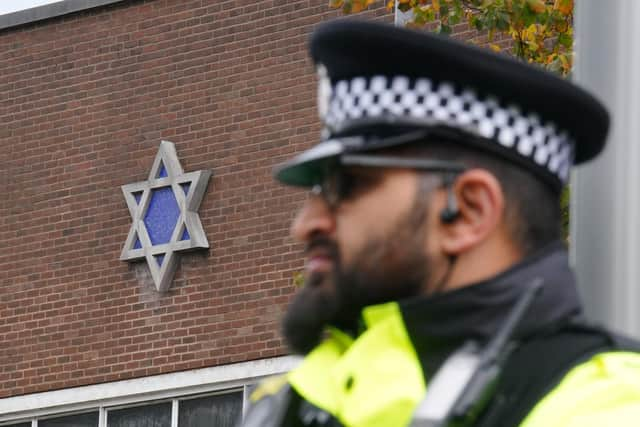
What have we become when synagogues require security guards? - Daxa Patel
The need to reflect on our rights and responsibilities became glaringly obvious over the weekend when protesters thought it appropriate to carry on protesting instead of paying their respect to those grieving following the harrowing tragedy in Manchester at a Jewish place of worship. What does that say about us and our values we must ask.
There is such a thing as civic decency. Two years have passed since the massacre in the Kibbutz community in Israel a wound still raw, still echoing across generations with the dead still waiting to be reunited with their families. In Gaza, over 60,000 lives have been lost, and hostages remain unreleased. Ukraine continues to bleed. And here in the UK, two members of the Jewish community were murdered in Manchester, their families denied the dignity of mourning in peace.
Despite appeals from the Prime Minister and Home Secretary, protesters chose to march loudly, defiantly on the very day the community gathered to grieve. The right to protest is sacred. But so is the right to mourn. This moment demands more than legal analysis. It calls for moral clarity. Rights without responsibility are hollow.
In this country our freedoms are shaped by centuries of common law, precedent, and quiet civic trust. Deep down if we share the same values, we know what is right and what is wrong. But trust is fragile. When grief is drowned out by slogans, when synagogues require security guards to protect worshippers on their holiest day, we must ask: what have we become?

Rights are not entitlements to be exercised in isolation. They are inheritances paid for by generations who fought, sacrificed and died to secure them. And they are promises to those yet unborn. To treat them as absolutes without context is to sever them from their moral roots.
I understand protest is vital but so is respect. It has shaped revolutions, challenged injustice, and given voice to the voiceless. But protest that disregards grief, that tramples over sacred space, is not brave, it is callous.
When the leader of a nation calls for a pause in protest to honour a grieving community, that call is not to be dismissed out of political deference but honoured out of respect for those hurt and lost, and for their families. It is a violation of communal empathy and an unjust drain on the very resources like police that serve to keep peace and safety.
There is something ugly when protesters justify their actions over the pleas of a mourning community. It is akin to throwing an all-night party next door to a neighbour who has lost a child. Every individual must remember that their actions have repercussions beyond themselves. The Bible teaches us to "respect thy neighbour" and to "do unto others as you would have them do unto you." Before raising placards or shouting slogans, take a moment to reflect on the silent grief of those mourning. Your heart might be in the right place, but the way you choose to act can be selfish, overshadowing a community’s need for a protective arm of love and respect.
When places of worship require security guards, that synagogues, mosques and temples now require security to protect worshippers from violence, this is not just a logistical concern it is a moral indictment. It signals a failure of community, of empathy, of shared humanity. Worship should be a sanctuary, not a battleground.
There is a dire need for moral leadership and a call to rebalance. This is not a call to curtail rights. It is a call to rebalance them with responsibility, with empathy, with memory. Let us remember: our rights are not just ours. They are borrowed from the past.
Last weekend’s protests were not just untimely, they were a vivid manifestation of how far some have wandered from the truth of what it means to coexist in a community. When the entire country stands still in mourning, and even the loud arenas of football honour the pain with a minute of silence, what message does it send to see protesters defy that sacred pause?
I do not discount the sincerity behind holding a placard, the drive to be seen, heard, and valued. Voices must rise against injustice and neglect. But there is a profound difference between raising your voice to build justice and raising it to drown out the cries of those who need peace, respect, and compassion the most. We have lost our way in the cacophony of competing demands.
Rights without responsibility turn into ruptures rather than bridges. The new Archbishop of Canterbury, Dame Sarah Mullally, as the first woman to hold this transformative post, stands at a critical crossroads. Her leadership can ignite a renaissance of awareness, reminding us that our destiny is not individual but collective. We do not live in isolation; we survive and thrive in the weave of each other’s lives. Our responsibility extends beyond personal freedoms to the sacred duty we owe to one another. It is the recognition that silence for some is a powerful act of love and respect is not a concession but a cornerstone of civilisation. In this, we find profound strength.
Daxa Manhar Patel is a leadership coach, author and solicitor.