
What have we learned to prevent a nuclear disaster 80 years after Hiroshima? - Daxa Patel
As the world marks the 80th anniversary of the end of World War II and the US bombing of Hiroshima which led to Japan’s surrender, we must ask: what, if anything, have we learned to prevent a similar nuclear disaster?
Survivors, many now in their 90s, live in despair, feeling the world has ignored the devastating aftermath of the bombings on Hiroshima and, three days later, Nagasaki.
An estimated 210,000 people died, with countless others left disfigured and burned.
Shunned by society and burdened by stigma, some were denied jobs and marriage. Many still watch global events with a haunting question: why are we on the brink of another nuclear catastrophe?
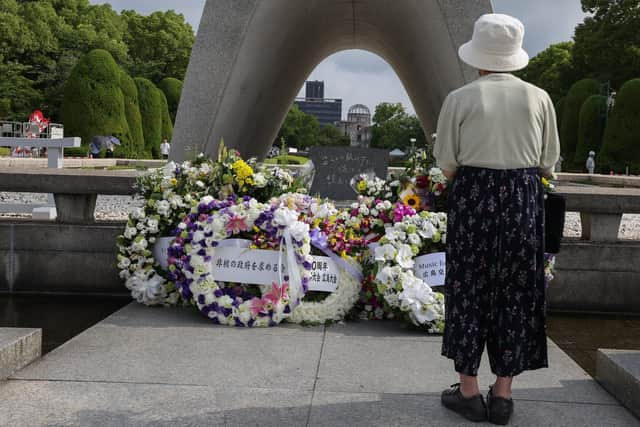

Those emotionally and physically scarred often died later from radiation-induced cancers. As this tragedy fades from living memory, it is vital we pause to honour the victims and ask what lessons we have truly learned.
August 15, 1945, the day Japan surrendered should serve as a solemn milestone. Survivors have been warning us for 80 years.
While every nation must be prepared to defend itself, careless threats and actions have real-time consequences, as seen in the Russian invasion of Ukraine. Countries need robust defence, but how do we prevent another nuclear war?
Toshiyuki Mimaki’s story, a Hiroshima survivor at just three years old, paints a haunting picture of devastation, the lingering pain, shattered lives and haunting images that endure decades later.
His experience reminds us that beyond politics and power, human suffering persists. While I am not calling for immediate nuclear disarmament, his story teaches a vital lesson: awareness and education about the catastrophic impact of nuclear weapons are essential. It is our duty to share these truths widely so the horrors of the past guide those in power and help prevent another nuclear tragedy.
Today, our world is more connected than ever, meaning a nuclear conflict anywhere threatens us all. This interconnectedness gives each of us the power and responsibility to urge leaders and citizens worldwide to choose diplomacy, dialogue and education over dangerous brinkmanship.
As leaders like Donald Trump and Vladimir Putin prepare to meet and “feel things out”, it is crucial that those most affected, the victims, are not excluded from the conversation.
Their stories must be heard and honoured, serving as a powerful reminder of the true cost of conflict. While world peace may seem distant, building mutual understanding of human suffering, loss and grievances is essential. Only then can we shift focus away from self-interest, like oil or minerals and toward a shared commitment to lasting peace.
In today’s complex world, some countries act like bullies, exploiting crises for their own gain, while others resort to appeasement that only delays inevitable reckoning.
Between these extremes, the world desperately needs leadership grounded in integrity and honesty, qualities that, frankly, are in short supply on an epic scale.
Without courage to face uncomfortable truths and transparency in intentions, efforts toward peace and security will falter. It is time for leaders to rise above self-interest and power games, embracing the responsibility to protect humanity and the planet with unwavering commitment.
Leaders are entrusted to represent us and forge treaties, but doing so in isolation from the human stories behind these decisions is like trying to drive a car without its engine, lacking the power and direction needed to move forward.
Our responsibility extends beyond politics; it reaches into the future, to generations yet unborn and the planet we have been gifted to live on.
We owe it to the survivors of Hiroshima and Nagasaki, and to all humanity, to ensure they do not leave this earth feeling unheard or forgotten. Let us honour their legacy by truly listening, learning and committing to actions that prevent such devastation from ever happening again.
On an individual level, it is easy to feel too small to make a difference, but when we come together, sharing the stories of survivors and victims’, we create a collective voice that cannot be ignored.
This shared consciousness carries the weight of history and humanity, sending a clear message to those in power: the cost of nuclear war is too great to risk.
Each of us holds a piece of this responsibility and by speaking up, educating others and demanding accountability, we become part of the force that can steer the world away from catastrophe.
To conclude on a personal note, some of us have been fortunate to live without immediate threats of harm and violence, but many have not been so lucky.
Their pain must be our pain too, after all, what makes us human is our ability to emotionally connect and feel with others.
Daxa Manhar Patel is a leadership coach, author and solicitor.