
What it was like being the British Home Secretary during 9/11 - David Blunkett
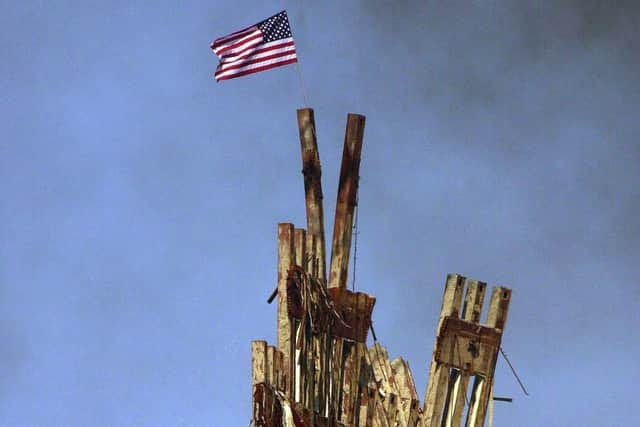
Today is the 25th anniversary of the tragic death of 3,000 people in the World Trade Center in New York on September 11, 2001. Others were killed in the bringing down of a plane and the attack on the Pentagon.
I will never forget that day, and the weeks afterwards, because I'd only been Home Secretary for three months when this terrorist incident took place.
In fact, I was addressing the Police Superintendent's annual conference.
On the train back to London from Warwick University, messages came through to those who had the early mobile phones that something terrible was going on. My son, Hugh, phoned me from outside a television shop (there were such things in those days).

Then one of my protection team came running down the carriage to say that Number 10 had been in touch to ask me to go straight there from the station.
The now well-known meeting room - Cabinet Office Briefing Room A – was the venue for what turned out to be a calm, thoughtful and incredibly serious discussion about what we should do.
The way in which that genuine crisis was dealt with was an exemplar.
Tony Blair chaired the meeting with the gravity that it required, whilst Gordon Brown spelt out the potential economic consequences if we didn't get this right.
My job as Home Secretary was to ensure that we secured our country from internal attack, whilst at the same time balancing increased measures with the need to provide reassurance and social cohesion.
In other words, to get across the message we coined: ‘alert but not alarmed’ and genuinely provide people with the confidence to go work, leisure activities and live a normal life.
All these years on, we face very different challenges but, as we see both internationally and at home, the need for vigilance in protecting our democracy, our economy and social fabric remains as critical as ever.
That thought rests with me as I recognise that my friend, Andy Burnham, as the new Prime Minister has been in office just short of eight weeks, but the expectations of what he can achieve have gone through the roof.
In part, this is because he's offering a message of belief and hope that politics can work effectively on behalf of people who have often felt alienated and excluded.
Over the summer, he took steps to give people what he described as “breathing space", with modest but very welcome reductions in energy costs by reducing VAT.
He promised help for pubs and hospitality, and, after some hiccups in those first few weeks, the beginnings of sorting out our criminal justice system.
Yet there remains a mountain to climb.
When he was my Parliamentary Private Secretary in the aftermath of 9/11, and when we were dealing with an influx of unauthorised migration from across the Channel, he learnt, alongside me, that we needed to listen and learn from those who are most affected.
Sometimes it wasn't just those who were directly impacted. I will never forget walking with the then-migration minister in the Lake District, and being accosted by a lady who said she was sick and tired of asylum seekers being housed in her area.
We took her details and investigated how many families had been placed in that particular location – a small town in the South Lakes. It turned out to be one family.
So, as Andy Burnham takes up his second week in Parliament, having undertaken the most marathon of sessions on September 1 - a record 3 hours and 24 minutes speaking and answering questions - it is too early for anyone to make a rational judgement.
What we do know, however, is that he's a great communicator; he has empathy and he is determined to devolve influence and, where possible, power out from Whitehall and Westminster.
This is easier said than done. But there is limited time to make our democratic system work sufficiently fast and effectively for people to turn away from the disillusionment that turns them to extremes.
Last Sunday, in the German region of Saxony-Anhalt, the very far right Alternative for Germany did extraordinarily well, capturing a record 43.8 per cent of the vote - even though they have been deemed by the Federal security services to be dangerously far right.
We live in very dangerous times. That is why Andy has taken the most incredible challenge on his shoulders.
Tony Blair, who remains another friend of mine, used to talk about the “hand of history" on his shoulders, understanding that the steps we take today determine what others will be able to do in the distant future.
Andy Burnham, like me, learnt a great deal from those events following the horrendous tragedy in 2001.
Learning to keep calm, hear people’s fears and, above all, to balance the competing demands of extraordinarily difficult actions on the one hand, and the involvement of people in day-to-day decision-making on the other.
David Blunkett is a Labour Party politician, and served as the MP for Sheffield Brightside and Hillsborough.