
What next for rural life in Yorkshire is a question worth pondering - Carl Les
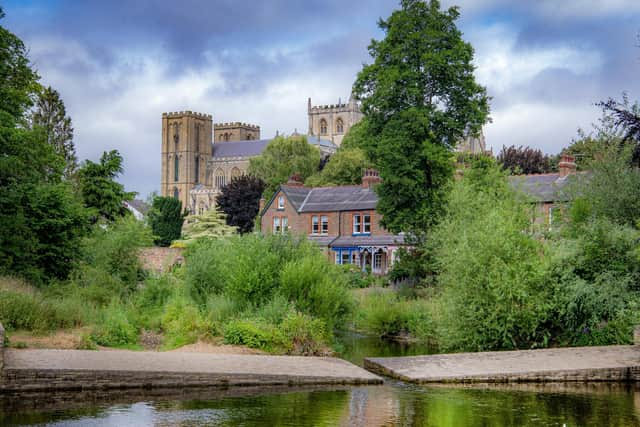
The meeting I missed last week was the Rural Forum organised by Ripon Cathedral, led by the Dean the Very Reverend John Dobson. Held in the Library within the building of the cathedral itself for the morning session, moving to an adjacent part of the cathedral estate at Thorp Prebend House for the afternoon, this emphasises the role that the cathedral wants to play within the diocese, one of the largest in England in geographical size.
It is also about the role that the cathedral wants to play not just in the church, or within organised religious activities. Here it is working in a convening role, bringing together subject expert speakers to provoke thoughts about issues that concern us all. Subject experts if only because this is their day job, or their living experience.
The previous forum was a very successful debate about rural housing issues and I’m pleased my council took part to present and also to listen. The challenge now is ‘what next?’, having had the discussion, what steps can be taken to make improvements.
Some time ago North Yorkshire County Council invited the Dean to convene and chair a Rural Commission of subject experts, an innovative approach to long-standing problems, and Now What has been regularly applied to their findings, certainly by myself and the council I lead, if only to introduce a state of mind of rural proofing where policies are introduced. I’m pleased to see that the Combined Authority (CA), chaired by the Mayor, is adopting that same approach.

This latest forum asked a more general question – rural villages, what makes them tick? Subject experts were drawn from the Church, parish councils, rural schools (inevitably small because of sparsity), pubs as representative of small business, and the CA.
What was clear was that to be successful there needed to be local institutions, and visible leadership, yet all the while facing continuing challenges. Examples were abundant of local initiatives, tailored to each location, but often operating in isolation, and relying heavily on the continuous commitment of organisations and individuals. Break any link in the chain of continuity, and the initiative could fall away. NYC recognises this dilemma, and has put in place our ‘Stronger Communities’ team not to deliver, but to support.
Bishop Anna Eltringham’s contribution focused at first on the key role of the 214 churches served by 64 paid ministers in the diocese, that of places of faith worship and prayer. Traditional to the social requirement for the hatch, match and despatch moments of life, there are more dimensions to appreciate.
Multi-generational engagement, places of refuge from mental stress, places of giving, of connection, of ecclesiastic tourism in pilgrimage, and increasingly places for congregating for discussion, entertainment, music and the arts.
The fact that the forum was held in the cathedral, the week after a banquet in the nave and previously a concert, shows the possibilities for repurposing such large spaces. Recently The Archers ran a storyline of the village shop moving to the church whilst the building was repaired. More permanent? Mobile cinema? Not without its challenges, but not beyond possibility.
A village shop is an asset, but so too are the 14,000 village pubs in the country, 1,448 in North Yorkshire, 85 per cent run as small businesses. Pub, shop, café can be a happy combination in some places, not all. But opportunities and new ideas abound. 25 years ago the then Prince of Wales encouraged the establishment of the Pub is the Hub charity, funded by donations from the brewing industry. They offer support, advice and guidance and in some cases small grants of up to £6,000.
This is often linked, but not exclusively, to community ownership of the local pub, and there are now numerous successful versions here in North Yorkshire.
One example is the Black Lion in Skelton-on-Ure which with advice went through an iterative journey following the acquisition of the property. A community café to generate new footfall, then a shop linking with local producers, then allotments and a community garden. The restored pub was the final piece of the jigsaw.
A village school is important but exists in a challenging world of falling birthrates in an already sparse landscape. Digital connections may be difficult and so can be recruiting teachers, as now with rural GPs. It is essential though to maintain the quality of education through enough social interaction.
In all this challenging context there exists a building block of local government at the most local level – the parish council. Often unsung, now frequently maligned by others who don`t agree with their decisions, but equally don`t volunteer their time themselves, they are responsible for many of the place-setting activities like grass-cutting, playgrounds, support of local clubs, and are the sounding board for NYC about planning applications, traffic orders, lighting and footpaths.
What next? Certainly to continue with the forum, playing a part there, but perhaps a wider conversation with all local and national governments about delivering a pilot platform of exemplars to produce growth, and sustainability, in every postcode, including rural ones.
Coun Carl Les the Leader of North Yorkshire Council.