
What on earth are food manufacturers doing using foreign eggs? - Sarah Todd
Getting hot under the collar about our Prime Minister’s polo shirts has achieved nothing but a self-diagnosed rise in blood pressure levels.

The fact that our world is inhabited by the sort of softies who largely think a leader’s comfort on a train journey is more important than arriving to represent his country looking like he means business is just too depressing for any more words.
This won’t be dwelled on for long or there will be knock at the door, the police saying there has been incitement to some sort of naughty behaviour.
But sometimes, just in a fleeting moment’s imagination, it might be great to throw an egg.
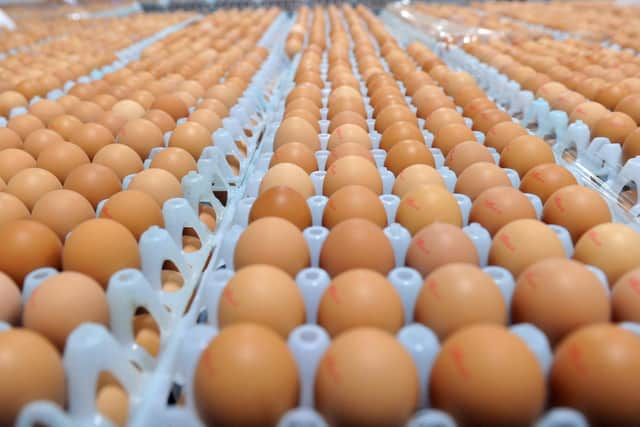

The olden days must have been brilliant for the freedom to chuck an egg. Not just any egg, but a really rotten one.
Of course, there would be the risk of getting egged oneself, but it would be worth taking - in this secret corner of your correspondent’s mind rather than the real world - for that satisfying splatter.
On the flip side (yes, a deliberate egg pun) there could be retribution. Remember when the late John Prescott, then the Deputy Prime Minister, was egged and he served up the most marvellous left hook.
How dreadful and degrading of such high office. But really? How utterly fantastic for this country to have in its upper echelons somebody so real. A million miles away from today’s scripted speeches and TikTok videos.
Prescott’s passion, something that ran through him and so many others of the era’s politicians (of all parties) like the wording inside a stick of seaside rock, is lost forever on the altar of political correctness.
Back in the real world where, of course, there are absolutely no thoughts of actual egg throwing, it’s time to get back to this red-headed reporter’s bread and butter. Writing about agriculture rather than the statesmanship - or otherwise - of our political leader’s wardrobe.
Eggs still feature, but rather than imaginary ones, it’s time to talk about the imported ones that have left close to 500 people ill with salmonella. There have even been two deaths recorded.
All cases involve bacteria that are almost genetically identical, suggesting a common food source.
Investigations are ongoing, but based on what is known so far, experts say people have fallen sick after eating out rather than cooking eggs at home.
More than a third of those ill in the UK - some babies and others as old as 92 - have needed hospital care.
What on earth are food outlets and convenience food manufacturers doing using foreign eggs? The public obviously don’t want them as given the choice they are so savvy at looking for British branding when buying a box of eggs in the shops.
Foreign ingredients such as eggs - same, as an aside, goes for Halal slaughter - should be flagged up on menus and packaging.
Just the other day The Daughter came home with some cooked chicken and her mother gave her a right roosting for not reading the country of origin, which was printed in very small writing on the back of the packet. Believe it or not it was from Brazil, a country which is now facing major trade restrictions for failing to prove it complies with strict international standards on limiting routine antibiotic use in livestock.
It beggars belief that any packet of chicken picked up in a small supermarket in a rural North Yorkshire market town could come from Brazil.
But back to eggs. It has been an absolute eye-opener to learn that bulk buying from abroad is cheaper than using British, with many establishments and commercial kitchens often opting for liquid format imports. Do they just turn a blind eye to the fact that the animals involved in producing them will be living lives nowhere near the same standard as those here in Britain, where welfare is top of the pecking order? They should hang their heads in shame, along with those using foreign eggs in processed foods such as ready meals and sauces.
Chairman of the National Farmers’ Union’s poultry board, Will Raw, is right to call out politicians for using the phrase “Food security is national security” but not following it up with policies that match the rhetoric.
“If British farmers are required to meet standards on food safety, animal health and welfare, responsible antibiotic use and environmental protection, then imported food should be expected to meet equivalent standards,” says Mr Raw, adding: “That isn’t protectionism. It’s common sense.”