
What the war in Iran means for Ukraine and the role it could play with drones - Patrick Mercer
Hello, remember me and a war that you were all calling ‘a threat to the very existence of Europe and NATO?’ Remember the dictator whose tanks were about to be parked on your lawns? You can almost hear President Zelensky saying this as the eyes of the West swivel firmly away from him and his embattled people.
Before looking at that, though, it should be asked why President Trump has embarked on a highly contentious adventure which everyone except Sir Keir Starmer seemed to know was coming, if not exactly when? Well, the answer’s easy: to stop Iran from developing nuclear weapons that will threaten Israel and the West. And that’s true up to a point.
But there’s a deeper logic. Once sanctions began to bite on Iran that country threw itself into the arms of China: Tehran became Beijing’s largest customer for oil. Not just that, the Ayatollahs evolved into the least predictable part of the Russia/China/Iran pact. So, close down or destroy Tehran’s ability to export oil and you’ll hurt China badly. It’s exactly the same indirect approach that was taken with Venezuela, upon whom China also depended for certain grades of oil.
It’s also helpful to view The Donald’s roller coaster relationship with Moscow through the same prism. It would be foolish to mount a direct, military assault on the numerous and battle hardened Russians, but might something more subtle serve to peel Moscow away from their latest set of allies?
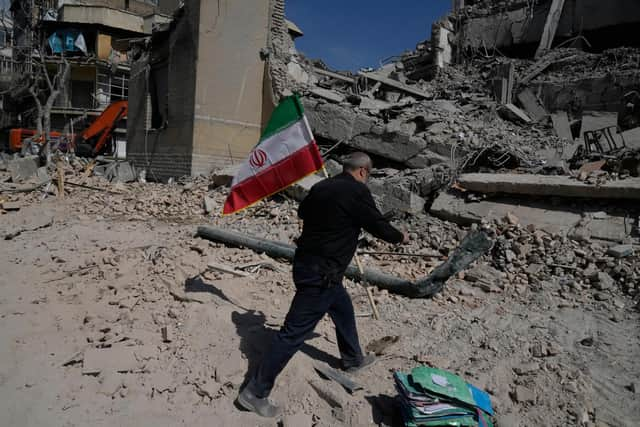

The clearest demonstration of how Mr Trump does business came last Monday in the face of rocketing energy prices. With oil supplies from the Gulf having all but stopped, we’re told that an hour's phone call between Washington and Moscow left the US President “mulling whether he should lift sanctions and allow Russian crude to flow towards Western markets”. Probably not very principled, but that’s realpolitik.
Now back to Ukraine and Zelensky: where do they stand? Not unreasonably, the lessons of last June’s bloodletting in the Middle East have made Kiev deeply worried about oil price inflation and a global shortage of advanced air defence systems.
As President Zelensky said, “Israel was under Iranian attack then, and missile delivery programs for us were slowed down… it hasn't happened yet, but I fear it could happen again."
Something similar, of course, applies to Russia who was being provided by Iran with endless amounts of drones and their guidance systems. On top of this, Britain has learnt a great deal from Ukraine about drone warfare - enough to be developing her own operators.
Now London has suggested that joint UK/Ukraine drone warfare teams and technical expertise should be made available to certain Gulf States that want to buy such advice. But there’s a hitch: whilst the revenue and the international kudos are attractive for Kiev, there’s a danger that others might be critical of a country that claims to be in crisis but which offers to export crucial, defensive skills only when there’s a quick buck to be made.
Kiev, quite rightly, has never shied away from telling the world how much their drone teams punch above their weight. Isn’t diminishing such defences very risky? Certainly, but there’s a powerful, political argument for it. As Oleksandr Merezhko, chairman of the foreign relations committee in Ukraine's parliament said, “The US does not view us as allies, but as partners…(sending drone operators and expertise) gives us a chance to show that we are allies. We are fighting against the same coalition – Iran and Russia."
Simultaneously, though, US-Israeli operations are destroying large numbers of Iranian Shahed drones and their production lines, many of which were due to be sent to Russia. Any success that Operation Epic Fury has against drone stocks, therefore, is bound to help Ukraine. Maybe the very experience and skill of Kiev’s precious pilots and technicians outweighs any criticism from outsiders?
There are further policy difficulties for President Zelensky, though. On the one hand he must unequivocally support the assault on Iran in order both to shore up his turbulent relationship with Mr Trump and undermine one of Russia’s most significant allies.
One the other, Moscow’s oil is making a handsome profit for the Kremlin, much of which will be spent on operations against Ukraine. Every day the war continues Iran gets weaker but Russia gets wealthier: it’s a real dilemma for Ukraine’s president.
The situation in the Middle East has also plunged the EU’s leadership into another, deep crisis. Several of the central European countries depended almost exclusively on Russian oil, most of which came from pipelines that crossed Ukrainian territory.
Currently, it’s only landlocked Slovakia and Hungary who haven’t weaned themselves off Russian crude and there’s always been an exemption for them. But, in bitter arguments that have involved accusations from Kiev of collusion with Russia and suggestions from Budapest of sabotage, the oil has ceased to flow.
The cause is less important than the lack of energy supplies which are creating real difficulties for Slovakia and Hungary.
Patrick Mercer is a former MP for Newark and Army Colonel.