
Whatever happened to Britain’s love for the humble hatchback? - Ismail Mulla
The other day I saw a picture from 20 years ago of a British high street. The recognisable shops that no longer exist today triggered a trip down memory lane. But other than nostalgia for the likes of Woolworths and Blockbuster, I noticed something else in the picture.

The cars. They looked very different. Now, I’m not a petrolhead by any stretch of the imagination. If anything, I am indifferent to motoring. It is a necessary chore that has to be done. Only on a rare occasion will I ever just take a ‘drive’.
However, I noticed the types of cars that were prevalent in this picture. Small European hatchbacks. Peugeot 206s, Ford Fiestas, little Renault Clios. Chelsea tractors were few and far between.
In fact, I remember the popular BBC motoring programme, Top Gear, then fronted by petrolhead turned farming saviour Jeremy Clarkson, mocking people who drove unnecessarily large cars. The presenters on the show had a genuine fondness for small affordable hatchbacks, despite their own personal riches.
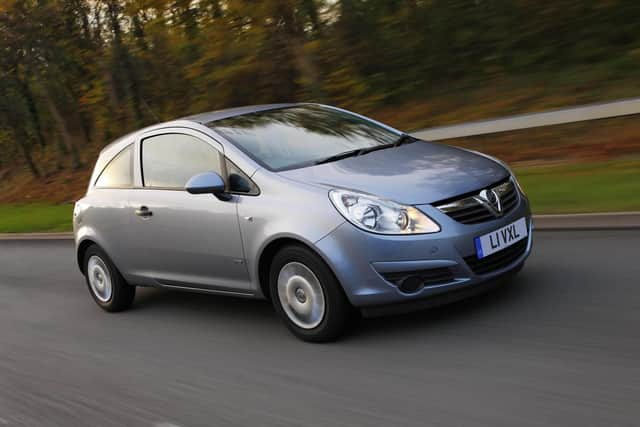

Hatchbacks have played such a vital role in motoring for generations in this country. How many young people learnt to drive in one? I remember taking lessons in a small Mercedes A-Class and Vauxhall Corsa.
My first car was a little Fiat 500. I believe that anyone starting out their motoring life should do so with a small car. Chances are, people of a certain vintage will feel pangs of nostalgia for the first Mini they owned. Smaller cars help you avoid trouble, the engine usually isn’t too big, the actual body also aids the driver passing traffic, sharpening their judgement over time, and of course they used to be relatively affordable. I say relatively because cars are generally expensive, regardless.
If the Fiat 500 hadn’t become such a problem child and the fact that only two people could sit in the back, I probably would have held onto it a lot longer than two years. The upgrade was another hatchback, a reliable Ford Fiesta.
But in recent years there has been a major shift in car supply. What was a nation of hatchback owners has turned into a nation of Chelsea tractor drivers. Large SUVs became a pound a penny. School runs awash with big 4x4s that had never been offroad.
Big cars for many were previously only an aspiration but the car industry successfully managed to switch the motoring mindset from ‘owner’ to ‘driver’ thanks to the availability of cheap credit. People could afford what they couldn’t.
That results in the make-up of the roads today. On top of that, the roads are a jungle. The small hatchback drivers increasingly feel like they’re being swallowed up by SUVs on the road. The roads are a rutted mess putting smaller cars at more risk of damage. Drivers perceive greater safety behind the wheel of a SUV than a small hatchback.
And manufacturers are increasingly abandoning the hatchback space because of the switch to bigger cars. For them, it means bigger margins.
In recent years there has been a major push towards electric vehicles (EV). Manufacturers are under regulatory pressure to deliver more EVs. But the demand for bigger cars has created an environment where the transition to big cars is also focused on Chelsea tractors.
Common wisdom dictates that the smaller the car, the less energy needed to drive it. Yet even the Chinese manufacturers that are squeezing out legacy European carmakers are rolling out big SUVs. This undermines the very premise of eco-friendly motoring. Especially when there is a need to try and extract as much energy from as little as possible.
American manufacturer Ford recently decided to revive the Capri. As someone who grew up on a diet of 70s and 80s cop shows, my interest piqued. That was until the pictures dropped.
Ford had churned out another SUV, no different in characteristics to many Chinese brands.
Not only has the shift to bigger cars choked a lot of Britain’s streets, driving down residential roads seems to be getting harder and harder. But as pictures from the past show, our streets and roads are losing their character. Children are deprived of the opportunity to play out in the street.
The more that our roads resemble American motoring, where big cars rule the roost and the majority are used to driving everywhere, the more lamentable it is.
I’ve even seen driving instructors giving lessons in big cars, which is surely not ideal for a potentially nervous 17-year-old first time driver?