
What’s the point of putting power into the hands of communities if local authorities won’t listen to local people? - Daxa Patel
It is encouraging to see a Prime Minister who believes in giving power back to the regions. If devolution genuinely results in better lives for people in the parts of the country that have been ignored for decades, especially the very north and the northeast, then it is long overdue.
Yet it is hard to reconcile this ambition with the reality on the ground. There are still remote parts of Britain with no daily bus service to the nearest town. Entire parishes have no transport links at all. Rural communities are forgotten when it comes to basic infrastructure such as transport and broadband, the very things most of us assume are a given.
Local councils often complain about cuts, but we do not need to look far to see the consequences of their own ill-judged decisions when funding is available. In Leeds, the council decided to install car parking meters in local parks, claiming the levy would improve car park surfaces.
In our neighbourhood, an estimated £20m has been poured into roadwork improvements. Living in the thick of it, I struggle to see any meaningful benefit. My initial reaction to both announcements was simple: is this really the best use of our finite public resources? A couple of pedestrian crossings would have solved the roundabout problem. A ring road is not ideal for cyclists anyway.

Walking with a large, majestic dog means you speak to people. I have yet to meet a single person within a wide radius of about six miles, who supports either the car parking charges or the roadworks. The consequences have been serious to people in the neighbourhood.
Old established trees that brought joy to passers-by have been cut down without hesitation, adding to pollution and stripping away the green views that make neighbourhoods liveable. Residents on the ring road have lost their carefully looked after grass verges outside their drives and now risk stepping straight into a passing cyclist the moment they leave their homes. If safety is the justification for the disruption we have endured for more than a year, then I am waiting with interest to see what difference these cosmetic works actually make. Side roads have seen an increase in traffic. Houses may become harder to sell, and property values could be undermined.
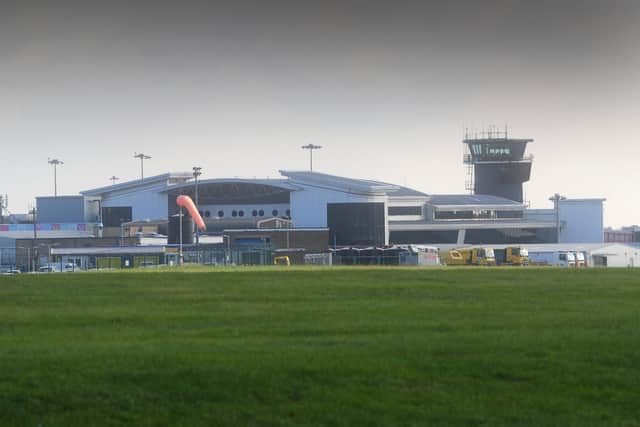
Leeds city council is preparing to consider Leeds Bradford Airport’s request for greater flexibility around night-time flights. I live on the flight path, and I know exactly how deafening the noise is. I avoid Zoom calls during flight times because the sound is overwhelming. The BBC reported on both these stories perhaps because residents felt nobody was listening.
Now the sweetener which people can see through, Leeds Bradford Airport has offered to contribute towards fitting air conditioning units in nearby homes to help reduce noise from night flights. Residents fear this offer is nothing more than a public relations tactic to secure planning permission. Given the council’s recent decisions on car parking charges and the £20m spent on roadworks, it is not an unreasonable concern.
People are already dreading more disturbed nights, more anxiety, and the possibility that they may have to move but will not be able to. I want to believe in the goodness of those who make decisions in our local council, but it is hard not to question whether the voices of those affected are taken seriously.
The pandemic taught us the value of green spaces. Remote working and the dominance of online life mean that going out is essential for many people’s wellbeing. If councils used their powers and funding to enhance the wellbeing of the people they serve, the Prime Minister’s approach could be genuinely transformational. Local councillors, even the career politicians who sit on powerful planning committees, are best placed to understand the concerns of residents.
I hope the planning committee at Leeds City Council has the humility to recognise that residents know best. Corporations exist to serve directors’ salaries and shareholders’ dividends. Cities must be progressive, but cutting down trees that enhance green views and removing grass verges that offer the only solace when people are already priced out of local parking is not progress. It is carelessness.
Local authorities have a serious task in balancing the books while providing essential services, and when they get it right, I am the first to applaud them. For example, when it comes to supporting carers, they have moved in the right direction.
Yet we are in a social care crisis. People who should not be in hospital are unable to access support to live safely at home. Energy and funds spent on ambitious schemes with minimal return on investment are a luxury when thousands of citizens simply need an extra helping hand.
I welcome the Prime Minister’s commitment to giving more power to local authorities. But I want to see those authorities act with integrity, humility, and accountability. Judging from recent decisions in my city, these qualities appear to be in short supply.
Daxa Manhar Patel is a leadership coach, author and solicitor.