
Where does uncertainty around Sir Keir Starmer leave Ukraine? - Patrick Mercer
Don’t waste any effort wondering whether he’ll go or not, Keir Starmer’s finished. By the time you read this he may already have resigned, but the hour and date matter not a jot because the British political and media establishment has learnt how to ditch prime ministers whenever it suits them: just ask Liz Truss.
The Epstein scandal - essentially an American one - is now reverberating around the globe. Perhaps it will engulf the most powerful man on the planet, Donald Trump…perhaps. There’s still a lot more revelations to come, although an early casualty is our own prime minister.
He’s been guilty of an inexplicable lack of judgment and now his decision to appoint Peter Mandelson, the friend and confidant of Jeffrey Epstein, to the prestigious and highly sensitive post of ambassador to Washington, has laid our premier low and probably wrecked his government.
There’s no point in debating just how serious or not this matter really is, our media has smelt blood, seized upon the story and now chiefs of staff, press secretaries and the like are going down like ninepins. Ask not whether Sir Keir will survive, just concentrate on who’ll succeed him, because that’s when dangerous ripples will spread in earnest across the international pond. And make no mistake, nowhere are those ripples being studied more carefully than in Bankova Street - the seat of Ukraine’s government.
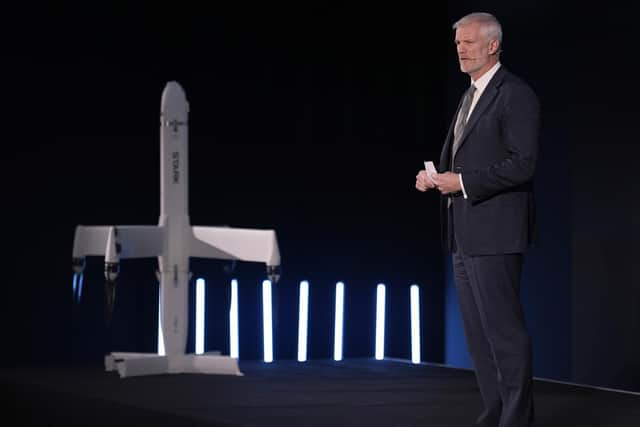

There’s no doubt that Britain has been the most vocal of all the Allied nations in her support for Ukraine. There’s a perfectly good argument to suggest that our hollow defences and incoherent military planning make us nothing much more than a joke, yet that’s not Moscow’s perception.
Andrei Klenin, Russia’s ambassador to London summed it up: “Britain provides Kiev with political direction, supports it financially… shares intelligence, arms, trains and fights alongside the Ukrainian forces…We have every right to consider London as a de facto party to the conflict.”
Sir Keir’s part in this has been pivotal. His chiefs of staff and closest advisors - Sue Gray, Morgan McSweeney, Peter Mandelson, Pat McFadden - all had one thing in common, a close association with matters Irish and I have no doubt that amongst the PM’s dearest projects was a bruising vision for the future of Ulster. But, before that, Sir Keir had little choice other than to continue the Tories’ intense jingoism over Ukraine.
Public and press opinion had been pumped to fever pitch by the likes of Boris Johnson and it would have been all but impossible for the Labour government to alter course even slightly in the face of this landslide of opinion. The question now is can Kiev depend upon Sir Keir’s successor to hold the line?
Before we look at the candidates, though, there’s one name that quietly yet sibilantly dominates so much of Downing’s Street’s thinking. Jonathan Powell is the PM’s Security Advisor (for which read Machiavellian fixer) who’s been loitering at various Labour premier’s elbow’s since Blair’s time.
There’s not many major issues in which he hasn’t been involved, the Good Friday Agreement, Iraq, Afghanistan, the list continues and when he, like his friend and long time colleague Peter Mandelson, made yet another comeback to serve Sir Keir, no one was very surprised. Until, of course, it’s become clear that Powell was lobbying heavily for his mate Mandelson’s dodgy record and friendship with Epstein to be overlooked.
Yet that lobbying, that twisted advice was exactly the sin that caused McSweeney to defenestrate himself, but Powell sails on, apparently bullet proof. Perhaps he’ll succumb; maybe some unsavoury titbit will be his undoing, but until that happens Labour’s policy towards Ukraine will remain exactly the same. But what if he does fall: who will replace Powell? I suspect that question’s the subject of many, anxious emails from Kiev to London and back at this very moment.
In truth, the main players haven’t had a great deal to say about the most deadly issue that faces Britain at the moment. Wes Streeting will soon be off the slate, I suspect. The photos of him schmoozing the sometime Lord Mandelson will put paid to his manoeuvres. We’re told that Ed Miliband is the coming man once more, but there seems little chance of him peeping out from behind a solar panel to carve a new path on international affairs. Need I even dwell on Angela Rayner’s probable views on Ukraine: she’ll be only too glad of turgid, predictable advice that does nothing except kill more Slavs.
There’s a distant outsider whose name is beginning to be whispered, though, a name which will warm the cockles of Mr Zelensky’s heart. This is the recently appointed Minister for the Armed Forces, former Royal Marine colonel, Al Carns. With a chest full of proper, fighting medals he cuts an angular, direct approach wholly at odds with most politicians. He also carries the magic ‘Special Forces’ imprimatur.
As far as Kiev is concerned his views are stolidly, reassuringly, predictable - but at least he’s grasped the issue.
Were Labour to come to its senses and select this man as prime minister, Britain would get a proven, disciplined leader who could be trusted to make bold and brave decisions. And that’s exactly why Al Carns is unlikely to get a look-in!
Patrick Mercer is a former MP for Newark and Army Colonel.