
Whitby Goths are play-acting what medieval Yorkshire folk believed to be real - Michael Carter
Covens of Goths will once again be congregating at Whitby over the Halloween weekend. Since the late 1990s, these twice-yearly weekends have been a mainstay of the town’s tourist season. With their overtones of counterculture, frisson of sensuality and danger, they also give a welcome boost to the local economy.
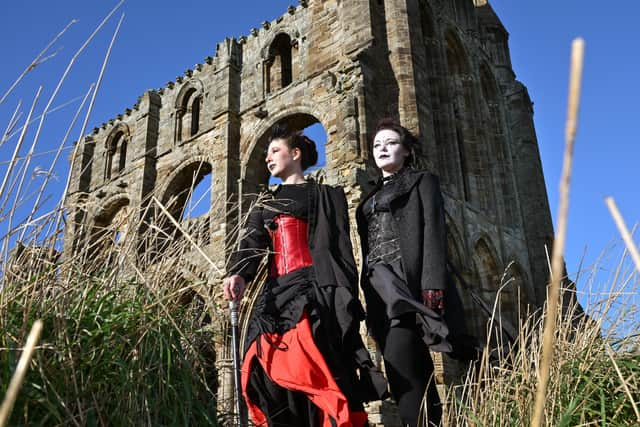
With hair gelled into gravity-defying spikes, clad in black leather, velvet and crepe, and all genders adorned with elaborate facial makeup, the Goths themselves have become as much of a tourist attraction as the shattered remains of Whitby Abbey.
These ruins will be a major focus of Halloween-tide Gothic happenings. It’s all thanks to Bram Stoker’s Dracula. In the vampire novel par excellence, the blood-sucking Transylvanian count of the title makes landfall in the town. It’s in the churchyard of the parish church - the shell of the monastic ruins looming in the background that Dracula sinks his fangs into the throat of his first victim on English soil.
Almost 130 years since its publication, Dracula remains the stuff of nightmares. But it’s nothing compared to the supernatural tales of ‘night-walkers’ recounted by Yorkshire priests and monks between the 12th and 15th centuries. Read them and you’ll realise that today’s Goths are play-acting what medieval Yorkshire folk believed to be real. Sceptical? There’s also archaeological evidence to show that vampire belief has a very long Yorkshire pedigree.

Twelfth-century Yorkshire wasn’t always a happy place. The land was ravaged by civil war, Scottish invasion and famine. If the monastic chronicler William of Newburgh is to be believed, the dead were also rising from their graves to torment the living. These occurrences, wrote William at his North Yorkshire monastery, would not be believed were they not happening with such frequency.
The England of his day was in the grip of nothing less than a vampire epidemic. He didn’t use that word; for William and his contemporaries, the dead bodies believed to rise from their graves were ‘prodigies’, ‘night-walkers’, and, most evocatively of all, ‘satellites of Satan’. Today we call them revenants. After rampaging at night, they were discovered in their graves gorged with blood.
Only the most drastic action was thought to stop their nocturnal wanderings. Bodies of supposed revenants were exhumed, decapitated, dismembered, their hearts cut out and then burnt, their remains buried on unhallowed ground. Even then, their malign influence lingered, pestilence believed to follow in their wake.
All had lived evil lives. Take the unchaste priest buried at Byland Abbey, who according to one of the ghost stories written at the monastery, rose from his grave, wandered over the moors and gouged out the eye of his former concubine. The terrified monks threw his corpse into the Gormire, a nearby lake - a watery end described in other revenant stories. There might be a link with the ‘bog bodies’ discovered across Europe.
The Whitby Goths and vampire-clad trick-or-treaters across the county will rightly enjoy what M.R. James called ‘pleasing terrors’ on Halloween. James, arguably the greatest ghost story writer ever, was also the man who first brought the Byland tales to public attention.
He knew better than most that for the people of medieval Yorkshire, such terrors felt all too real.
Michael Carter is a fellow at the Institute of Historical Research, University of London.