
Why Andrew Davies’ adaptation of Pride and Prejudice was more than just a TV series - Victoria Finan
No one ever forgets the night they first lost their heart.

I was ten years old, in one of my grandma’s Marks and Spencer nighties, with a family-sized bag of Doritos on my lap, I watched as she pushed the video into the player.
“There’s two tapes,” she said with glee, as we settled onto the sofa and I rolled my eyes at the idea of spending the next five hours watching some boring old programme about girls in bonnets.
The theme music began, a hand pulling embroidery through plush silk as the opening titles played out, and then two men galloped across the screen to view the “fair prospect” of Netherfield Park – finally let at last.
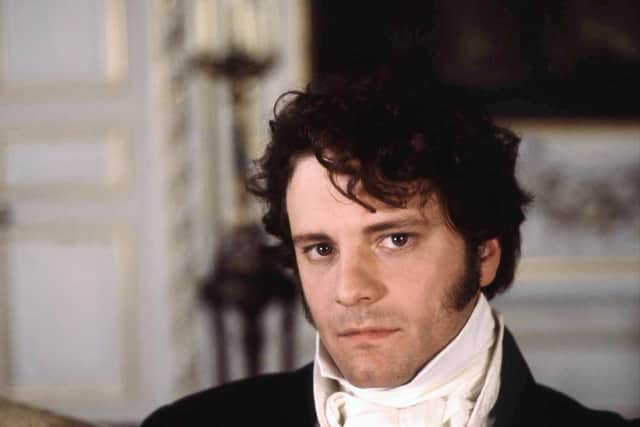

Today marks 30 years since Andrew Davies’ adaptation of Pride and Prejudice was first broadcast on BBC.
Millions tuned in to watch as Jennifer Ehle and Colin Firth seethed and sniped at each other over the course of six episodes before inevitably falling in love to a backdrop of stunning British countryside.
The series sparked something of an Austen revival across television and film, with adaptations quickly coming of Emma, Persuasion and another version of Pride and Prejudice, this time with Keira Knightley in an Oscar nominated turn as Elizabeth.
Colin Firth even played a second Mr Darcy in the film adaptation of Bridget Jones’ Diary, the plot of which is shamelessly and wonderfully pilfered by Helen Fielding and based on Pride and Prejudice.
But for many of us Austenites it is 1995’s faithful version that endures.
It’s become a cultural icon in its own right, alongside the novel it’s based on, with Colin Firth exiting the lake at Pemberley in his wet shirt (oh, be still, the racing hearts of...all of us) embedded in the canon of TV moments of the 20th century.
Davies is a master of never assuming his dialogue is better than Austen’s, letting her words speak for themselves.
And the result is that it’s rewatched by thousands of us each year, and for many people, re-viewings, whether on a hungover Sunday, or through times of grief, have proved to be a comfort time and time again.

I grew up with the adaptation. Within a few weeks of first watching, I tortured my little brother into learning the dance routine for Mr Beveridge’s Maggot, from the memorable scene of Darcy and Elizabeth’s sparring dance, and I attempted to master the theme tune on the recorder.
As a teenager, I consoled myself after break-ups that I’d escaped yet another Mr Collins to eventually find my Mr Darcy.
During periods of mental illness where it felt like my concentration levels were utterly depleted, I relied on the series for background noise to drown out the pernicious thoughts in my mind. It always helped, just a little.
My incredible grandmother, who introduced me to the series, died in 2017.
She was riddled with dementia, the cruellest disease, and to the last, whenever I ran out of coherent conversation with her in her last months, I’d fall back on describing our favourite parts of the series to try to jostle her memory.
They included Mr Collins treading on Elizabeth’s toes at the Netherfield Ball (basically all the best scenes in the adaptation involve Mr Collins), Darcy and Elizabeth’s gazes smouldering over the piano at Pemberley, and Alison Steadman’s legendary Mrs Bennet passing out before being revived with her smelling salts.
After Grandma died, for a time, I couldn’t watch the series, but when I finally forced myself to, about six months on, it was magical.
For the first time since she passed away, I felt as if she was sitting by me again, her hands deep in the mint imperials as we were spellbound by Elizabeth once more.
In 2021, my own Mr Darcy finally made an honest woman out of me after ten years. We walked down the aisle of my North Yorkshire village church to the theme tune of the adaptation, and he quoted from Mr Darcy in his speech.
Two years later, my battered copy of Pride and Prejudice was in his hands as I laboured to give birth to our daughter. Who needs a birthing tape? You can probably guess what her middle name is.
As I mark this special anniversary - also in the year of wider celebrations for Jane Austen’s 250th birthday - I'm trying to understand why it's had me spellbound all these years.
Much as it adds to the appeal, it's too easy to lay it all on Colin Firth’s sodden shirt. And I don’t think it’s because I yearn for simpler times.
Yes, it might be “light, bright and sparkling” as Austen described it, but don’t forget Pride and Prejudice is set amid a major war, when women were at the mercy of marriage to avoid homelessness and childbirth was a peril.
I think ultimately, it’s this. Elizabeth Bennet, and by extension Jane Austen, have been true friends to me since that night in the early 2000s.
I might even argue Andrew Davies’ adaptation was the gateway, then, to a love that has endured, that led to an English literature degree, that led to a career in journalism - that led to writing for the pages of this esteemed newspaper.
My pen will never produce anything to rival Austen’s, of course, but I’ve an awful lot to thank her for.
Victoria Finan is social affairs correspondent at The Yorkshire Post.