
Why Andy Burnham should back more fast trains to power up the North - Tony Lodge
Fast train connectivity is everything. It’s clean, connects cities, reduces road congestion and at the same time, delivers critical economic investment to the regions. Direct fast trains are often the clincher when a business looks to invest, relocate or set up a base outside London; they trump a host of badly targeted Whitehall ‘levelling up’ schemes and help boost foreign investment, social mobility and modal shift.
So what should 'King of the North', Andy Burnham, do to better encourage and deliver more affordable intercity services, particularly bridging the North-South divide, alongside Labour’s plans to create a high growth nationalised railway. What should ministers beware and avoid as rail passenger numbers finally return to their pre-Covid levels.
Studies show that businesses are less keen to invest in places which don’t enjoy direct and fast rail connections, so we need more and they must be affordable. The need to take more than one train to reach a destination can suppress demand by up to 50 per cent. Consequently, this keeps people on the road or even in the air. Similarly, when ticket prices are simply not even close to competing with the coach or car.
Yorkshire and the North East are particularly unique and mature case studies in that many of their large cities now enjoy fast long distance train competition, where rival fast firms compete for passengers from the same stations and fares are comparatively low. This happens on the East Coast Main Line but nowhere else on this scale in Britain. But why? It is a successful model which started after Labour’s 1997 victory. Rail nationalisation must do nothing to undermine it; if anything it should and can deliver more.

Passengers at York, Hull, Wakefield, Bradford, Doncaster and Newcastle now enjoy up to three competing high-speed train services to London where unsubsidised ‘open access’ services compete with the government-run LNER. A plan to introduce a new fast open access service to connect Louise Haigh’s Sheffield with London King’s Cross was sadly rejected last year despite strong cross-party support. Hopefully this bid can be resurrected so passengers can enjoy more trains and real fare competition. It will also help the city’s leaders make their case for more inward investment and regeneration.
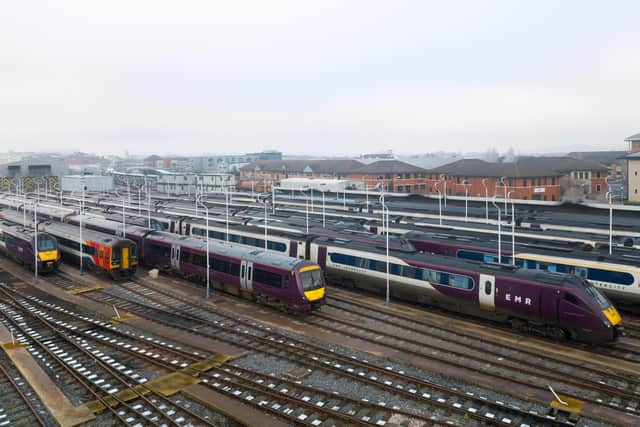
Sheffield hasn’t enjoyed a direct fast connection with King’s Cross since 1968 and a new fast service would also connect South Yorkshire’s growing hi-tech manufacturing and aerospace hubs. It would rival the existing and troubled East Midlands Railway (EMR) train service to London St Pancras which is unpopular and cutting services.
Similar plans to connect London Euston with new direct trains to Rochdale, Salford and Manchester are also awaiting approval; Rochdale hasn’t had a direct fast train with London since 2000 and the new LUMO service would compete with the troubled Avanti service on the West Coast Main Line, Britain's busiest railway. It would also give Salford MediaCity a better direct link with London, especially as HS2 won’t now reach Manchester, whilst also stopping at Newton le Willows next to Andy Burnham’s Makerfield. Avanti has announced a 12 per cent cut to its summer timetable and Burnham told the Commons earlier this month that, “rail connections to my part of the North are nowhere near what they should be.”
Importantly, economic analysis from ARUP shows what can be achieved. The open access Hull Trains services which connect its namesake, Selby, Doncaster and Grantham with London have delivered between £185-£380m in extra local benefits since the service was green-lit under Tony Blair’s government in 2000.
These figures are expected to grow to between £325-£700m by 2032. Prior to Hull Trains starting operations, there was just one direct daily train in each direction between London and Hull. Similarly, the Blair government also delivered new fast open access Grand Central services to Sunderland, Hartlepool, Doncaster, Bradford, Wakefield, Pontefract, Halifax and York (mostly post-industrial mining, manufacturing, textile and shipbuilding regions) in the mid-2000s.
Competing direct rail links have done more for so called ‘levelling up’ than a flurry of flawed Whitehall handouts. There are also significant environmental benefits as it means more people abandon the car, coach and plane and instead use value for money high speed trains. The fast LUMO services between Edinburgh and London have significantly eaten into the domestic air market. Interestingly, Sheffield has a particularly high reliance on coach and car travel to London and its train fares are comparatively high, especially when one compares them with those at nearby Doncaster where three fast train firms compete for London bound passengers and fares are over 20 per cent cheaper.
A key challenge for the new PM will be to force through reforms to out of date passenger and rail revenue planning.
Tony Lodge is a research fellow at the Centre for Policy Studies and author or Rail's Last Chance - A four point plan to save the railways.