
Why British Muslims felt a deep sense of betrayal after the 7/7 terrorist attacks - Qari Asim
It has been 20 years since the terrorist attacks on July 7, 2005, killing 52 people and injuring more than 700 in one of the darkest moments in Britain's recent history. The victims, their families and all those affected by this deadly attack remain in our thoughts. We also remember the bravery of the emergency services and the fellow passengers who were caught up on that horrific day.
The aftermath of 7/7 was a painful chapter in Britain’s history but it was also a moment that revealed the strength, dignity, and resolve of a nation determined not to be defined by extremism, hatred and division but solidarity, mutual respect and hope.
The terrorist attacks not only sent shockwaves through the nation but the tragedy came with an additional layer of suffering for British Muslims - one that was silent, complex, and deeply psychological. The emotional and social toll of 7/7 on Muslim communities was profound — and is still felt by many to this day.
As Imam of a mosque in Leeds, I reminded our congregation in the Friday sermon following 7/7: "the actions of these terrorists were not just an attack on London but on all of us and our faith, and we stand together against all those who have no regard for sanctity and dignity of life.”
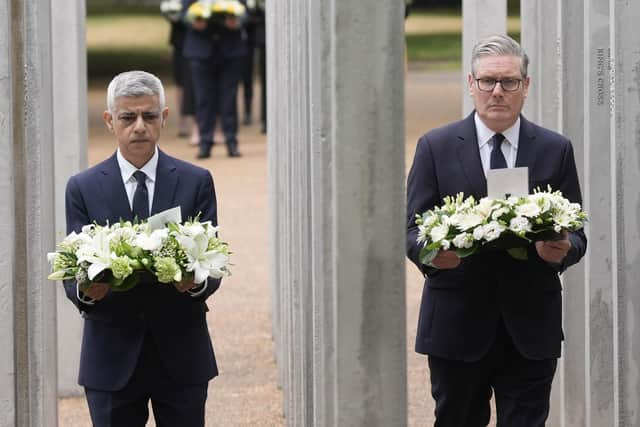

This sentiment was echoed in mosques across the country, where Friday sermons in the aftermath focused on Islamic teachings of compassion, solidarity and rejecting extremist ideologies.
Despite condemning the 7/7 terrorist attacks in the strongest possible terms Muslims were initially blamed, profiled, and marginalised - many still continue to see Muslims through the lens of security. Islamophobia surged exponentially in the aftermath of 7/7 bombings. I experienced people walking out of public lifts when I got into a lift, or people visibly looking frightened when I got on a public transport with a rucksack. Security profiling became normalised for Muslims.
7/7 was also a moment of painful introspection for British Muslims. There was a deep sense of betrayal that the attackers had claimed to act in the name of Islam — a faith rooted in peace, justice and mercy. We wrestled with difficult questions, such as how and why the faith was being used to radicalise young men to such an extent that they were willing to take another life. Although faith was not the only factor contributing to radicalisation, British Imams and Mosques sent out a loud and clear message: those who commit terrorist attacks are not following the path to God or to Paradise.
In Islam, the taking of a single innocent life is considered as being akin to the killing of the whole of humanity. In the last two decades, British Imams have continued to reject the twisted and out of context interpretation of selective passages of the Quran by vile - Islamist or far right - extremists - to justify radicalisation, hatred and violence.
Since 7/7, there has been a renewed determination amongst Muslims leaders to promote authentic understanding of the faith, deeply rooted in traditional understanding and framed in the context of the digital AI age. A new generation of British Muslims, shaped by the trauma of 7/7 but committed to civic engagement have helped reframe the national conversation around identity, loyalty and integration. But there's still a section of the media and some in political corridors who continue to promote the damaging and divisive Us-v-Them narrative.
The terrorists want to divide communities but from the tragedy of 7/7, a strong sense of resilience and solidarity has emerged in communities, which continues to thrive, despite occasional setbacks. Just as in the immediate aftermath of London bombings Britain was united in grief and solidarity, similarly we saw in the aftermath of last Summer's racist riots following the Southport tragedy, Britain emerged with a renewed commitment to building stronger and more connected communities.
Places of worship and grassroots organisations have continued the difficult but essential work of fostering mutual understanding, despite the deep trauma caused by the recent Palestine-Israel humanitarian crisis.
Combating radicalisation in the digital age remains a constant race against time. While Islamist extremism dominated headlines in the early 2000s, far-right extremism has surged in the last decade. The hate-driven actors have moved from the fringe to the mainstream in some political and digital spaces. Anti-immigrant and anti-Muslim hatred has moved from the fringes of society into the mainstream, creating a chilling environment for British Muslims.
Over the past two decades, survivors and families of victims have shown extraordinary strength. Many have turned their grief into advocacy - for greater mutual respect, stronger communities and a safer world. Those who promote extremism and division must honour this legacy.
As Britain reflects on the legacy of 7/7, we must recommit to tackling all forms of extremism, and deal with root causes, such as disinformation, economic inequality, social alienation, racism and misinterpretation of religious texts.
The scars of 7/7 remain with us 20 years on, but we are stronger together as communities standing together against those who wish to undermine our values of freedom, democracy and mutual respect.
Imam Qari Asim is senior Imam at Makkah Mosque Leeds and co-chair of British Muslim Network.