
Why I am sceptical about plans to stamp out irresponsible pavement parking - Daxa Patel
History is a powerful teacher, revealing the cyclical nature of the world. From Hitler’s rise in Germany to Donald Trump’s recent ambitions to acquire Greenland territory that clearly does not belong to the United States, there is an unbroken thread of might imposing itself over respect for ordinary, law-abiding citizens.
I heard the acronym TACO recently - ‘Trump Always Chickens Out’. Perhaps that is where hope lies. However, any form of bullying demands a clear message, and sadly, action often speaks far louder than words.
Political leaders must confront these issues courageously, regardless of party allegiance, yet too often careers take precedence over real leadership. The glaring vacuum at present leaves the President of the United States behaving less like the father of a great nation and more like an unashamed bully.
Beyond laws and regulations, there lies a fundamental civic duty, our responsibility to one another as members of a shared community.
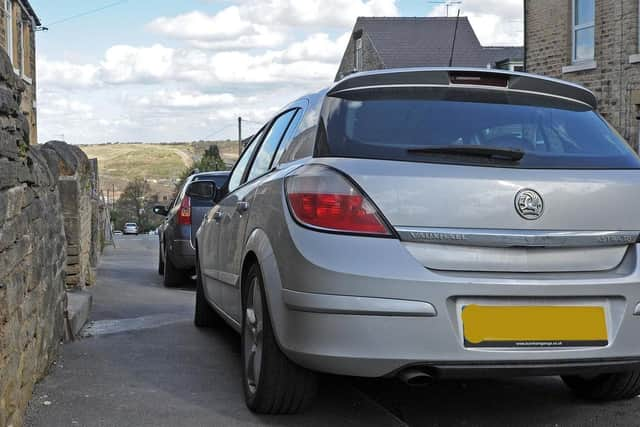

Civility demands more than mere compliance; it calls for genuine consideration and respect for the vulnerable, the elderly, and those with disabilities. Our daily actions, whether as drivers, pedestrians, or neighbours, ripple beyond ourselves and shape the safety and quality of life for others. It is incumbent on each of us to go beyond self-interest, to embrace empathy as a guiding principle, and to foster a culture where respect is the norm, not the exception.
With limited influence over global affairs, my focus turns to local issues that affect our neighbours and families daily. The government’s recent move to grant local councils more powers to tackle pavement parking is welcome.
Yet, I question the feasibility of effective monitoring, enforcement, and policing. Take, for example, the story shared by a blind resident of Leeds, a professor at the University of Leeds, who recently told the BBC she avoids certain pavements with her German Shepherd guide dog out of fear for their safety, due to inconsiderate pavement parking.
I live close to a bus route near a set of traffic lights, where I frequently witness drivers stationary behind red signals, their attention consumed by handheld mobile phones, texting.
Despite the legal ban on hand-held mobile phone use while driving, the law does not deter all offenders, and the resulting accidents stubbornly persist.
Professor Lawson’s account provides a glimpse into the daily challenges faced by vulnerable pedestrians. The elderly, parents with prams, and others routinely confront irresponsible parking that blocks pavements.
Cyclists riding on pavements, forcing pedestrians onto busy roads, add further hazards. Leeds prides itself as a green city, yet I regularly see grass verges damaged and destroyed due to careless parking.
Recently, a parcel delivery driver parked inside my driveway. Unaware that my gates automatically shut, he found himself locked in. Unable to summon assistance my German Shepherd was unfazed by his knocks, he climbed over the railings, setting a poor example of acceptable behaviour.
My neighbour alerted me, and I had to rush home to help this flustered driver. When I confronted him, he confessed that no safe parking was available, so he used the private driveway to deliver the parcel.
This incident highlights the broader consequences of irresponsible behaviour. From the blind lady with her guide dog, who should be able to walk safely without fear, to parents with prams thwarted by careless drivers, the problem stems from a toxic mix of increased online deliveries, rising car ownership, and indifference to shared responsibility as well as pride in our green city.
Delivery companies such as Amazon and Yodel frequently use self-employed contractors, who face strict delivery targets but little accountability for their behaviour on the roads or pavements.
As online shopping surges and car density grows, space remains limited. Meanwhile, pedestrians distracted by mobile phones, walking unaware into hazards only compound the risk.
Why do we tolerate such disregard? Because anti-social behaviour is rarely challenged. Many turn a blind eye, assuming it is not their problem. Professor Lawson’s ordeal, her near-misses with vehicles and the continual stress of navigating Leeds with her guide dog, should make each of us reflect on our own actions.
I invite people to ask themselves: if I order online, do I ensure drivers have safe access for delivery, or do I unwittingly sacrifice the safety of law-abiding citizens?
I appeal to drivers everywhere, do not use handheld mobile phones while stationary in traffic. It is a criminal offence.
Local councils will soon wield greater powers to combat pavement nuisance. However, with funding constraints and competing priorities, I remain sceptical that this alone will stamp out irresponsible pavement parking and obstruction.
Daxa Manhar Patel is a leadership coach, author and solicitor.