
Why I welcome the move by the Justice Secretary to rescind the right to a trial by jury in all but the most serious cases - David Behrens
Does Magna Carta mean nothing to you? Did she die in vain? That was Tony Hancock in 1959, famously sending up the film 12 Angry Men and proving in one swift half-hour how a juror with ideas above his station could single-handedly upend the scales of justice.

We can never know if that sort of thing happens behind the closed doors of a real jury room. But even if it went on every other Tuesday it would still not be the most compelling reason to find a better way of administering the law.
Look, you can argue forever about the merits and demerits of guaranteeing someone a trial by their peers, but look at it for a moment from the other side. Jury duty is the last relic of peacetime conscription – the only remaining civic service to be mandatory and punishable by prison for noncompliance. That in itself makes it archaic.
And what do we mean by peers, anyway? When the real Magna Carta was sealed in the Middle Ages a peer was anyone not of the nobility. Eight centuries later the definition doesn’t begin to cover the tiers of society that have emerged since. Is a drug-dealing alleged killer really a peer of yours? I hope not.
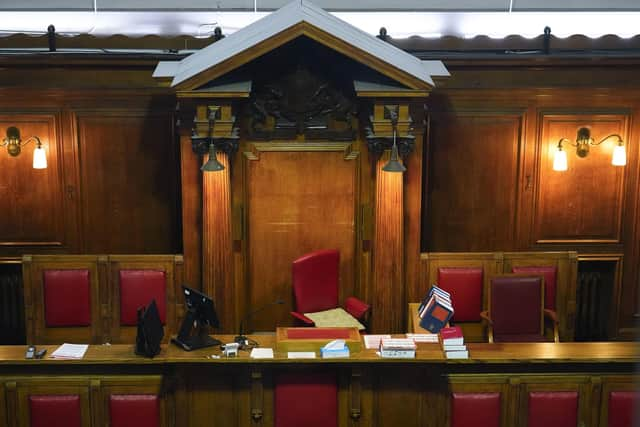

That’s why I welcome the move by the Justice Secretary David Lammy to rescind the right to a trial by jury in all but the most serious cases.
Lammy’s argument is that the justice system is buckling at the knees and that victims are facing intolerably long waits to see criminals brought to book. The crooks, meanwhile, are gaming the system by spinning out the process in the hope that their accusers will back down.
All that is true. But there is an even more fundamental reason for overhauling the process and it’s one to which the civil servants in Lammy’s department are blind.
The fact is that to people with proper jobs in the private sector, to whom time is money and time off work a black mark against their career prospects, compulsory absence is as burdensome as a frozen tax threshold. It’s like punishing a perfect stranger for the crimes of someone else.
As evidence, m’lud, I cite the case of Behrens junior, who was called to jury service some years ago in his first month of full-time employment after university. The request went down like a lead balloon and though his firm complied, as it was compelled to do, it was with extreme reluctance.
The case he tried took a fortnight and concerned a pub brawl on the outskirts of Liverpool. It was a waste of everyone’s time. A judge could have seen it off in a day and come to the same (guilty) verdict. The only beneficiaries were the barristers, who charged by the hour to explain the finer points of law to amateur jurists who would rather have been anywhere but there.
When it was over, everyone went back to their respectable, different lives. If it was literally a jury of peers you wanted it would have consisted exclusively of other criminals. And they would most likely have sided with each other because, you know, it takes one to know one.
There are those who believe that judges are too bound up in process, too removed from reality, to objectively pronounce on innocence and guilt. The stereotype persists of fossilised relics in medieval wigs and gowns who think Elon Musk is a perfume by Chanel.
In practice, they are professional arbiters who can dispense justice faster and more efficiently. In most other walks of life that would be an advantage.
And the right to a jury trial is already selective. It applies only to serious and mid-level crimes and the distinction between them is entirely arbitrary. If you’re accused of drink driving, for instance, and you deny it you will be tried by magistrates.
Nor are juries universal. In much of Asia, they are considered too open to bias to be of any use, and in France, they are sworn in for only the most serious cases. Even the US, whose legal framework is based on ours, is turning to the system of plea bargains to avoid the need to drag people off the streets.
Here, there are currently around 80,000 cases waiting to be completed in the crown courts and for the victims of those alleged crimes, justice delayed is justice denied. Restricting the right to a jury trial will not in itself clear the backlog but it’s a start. And in fairness to Lammy, it’s just one of a whole raft of measures he is proposing.
The rest of society has adapted to modern and efficient ways of working, and the legal system will itself be on trial if it does not follow suit. Mandatory jury duty feels as out of place in today’s world as the stocks and the ducking stool – because in the final reckoning the courts are there to serve society, not vice versa.