
Why I welcome the RSPB’s ‘Feed the Birds Day’ despite frightful early memories - Sarah Todd
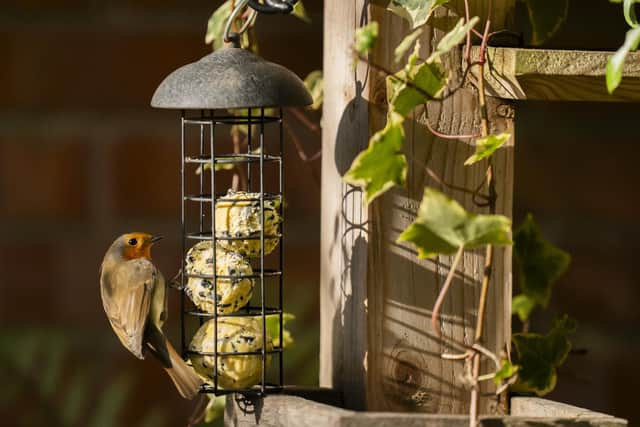
Today marks the Royal Society for the Protection of Birds (RSPB) national ‘Feed the Birds Day’.

While an agricultural background makes this correspondent wary of this particular charity - it once felt like farming got the blame for all wildlife decline - it would be churlish not to make mention of this very worthwhile annual push encouraging people to put out food for birds at a time when they need extra to prepare for winter.
To say this writer is cautious of birds is an understatement. A very early memory involves accidentally disturbing a broody hen under the granary stairs in an old farm building.
To say this encounter gave a fright that has lasted a lifetime is no exaggeration.

In stark contrast The Daughter, back in the day, was a hen entrepreneur with a delivery basket on the front of her bike.
She once even had her photograph in The Yorkshire Post while showing her favourite in the young handlers’ class at the now-no-more Countryside Live.
Looking back, her mother must have been absolutely crackers. Not only allowing herself to be egged on, forgive the pun; to take a hen all the way to Harrogate but she wouldn’t have been double digits age wise when she was cycling the mile into the village to deliver her eggs.
Coming back clutching - sorry, couldn’t resist - the money and usually a few sweets from the old ladies among her customers.
Going off on even more of a tangent now, we once went in the big old lorry we had back then to a show with a pony in the back and a guinea pig in the front.
It absolutely poured down and we tore through all the gateways at such speed, poor Geoff the guinea pig sliding around in his cage (bitter experience had taught this trucker that we would get stuck if we hesitated for so much as a moment).
Kids clambered down to lay old carpet tiles down in the mud for the wheels to rumble onto and our precious cargo was unloaded.
The rain made the pony’s reins so slippery he couldn’t be stopped so exited the ring in disgrace and, as for Geoff, his owner tripped up in the mud and his carrying cage door opened.
The fact he was safely scooped up was a miracle, given that fur and feather was next door to the dog show.
He is buried, along with that special hen who came here after not making the grade in an intensive poultry unit, and a myriad of other pets, under the shade of a cherry tree.
Despite that practical farming background, it’s hard not to have your heart broken by animals.
We have had two cats run over recently and among those the finger of blame has been pointed at are the delivery drivers dashing around the countryside, looking at addresses on screens in front of them rather than at the road ahead.
Any that call here now get the hard word about not being idle; asked to please park-up and walk (rather than speed) up to within a bumper’s distance of the door.
It was a positive step forward in the fight against pet owners having their legs lifted to learn earlier this month that vets could be forced to cap prescription prices after an investigation by the markets watchdog found owners may be paying twice as much for some common medicines from practices - especially the large corporate ones - than they can be bought online.
The Competition and Markets Authority (CMA) found vet prices rose by 63 per cent between 2016 and 2023, considerably faster than general inflation, and a final decision on what to do about it all will be published by next March.
But back, in a very roundabout way, to where we started and a study from the University of Sussex has shown every bird nest they sampled contained traces of insecticides that are banned for agricultural use but are found in pet flea treatments.
Garden favourites such as blue tits line their nests with animal fur and the results of this study - eggs that never hatched and chicks that expired soon after - correlated with the pet fur in the nests giving off strong enough doses of pesticides to kill.
So, time to feed the birds but maybe also time to stop feathering big businesses’ nests.
Looking at whether all the chemicals dished out like Smarties are really needed could be good for the pocket as well as the planet; an environmental improvement that makes a million times more sense to this correspondent than others - such as solar panels on farmland - ever will.