
Why social cohesion will remain a significant challenge in 2025 and beyond - Qari Asim
The previous year was marked by a convergence of global crises as well as political change. The conflicts persisting in regions such as Ukraine, the Middle East and Sudan, with diplomatic efforts failing to achieve peace, have tested our values.
At home, social tensions, inequalities, rising levels of hatred, economic pressures have caused deep pain, frustration and scepticism, with many questioning whether their voices are truly heard or valued.
The reality is that due to the growing number of ethnic minorities living in Britain and rapid cultural shifts, social cohesion will remain a significant challenge in 2025 and beyond.
The racist riots last summer demonstrated how misinformation and inflammatory rhetoric, ignited by a tiny minority of extremists, can lead to violence on our streets. These riots followed years of extreme voices - some media outlets, among certain politicians, and within some think tanks - echoing and legitimising language that demonises Muslims and migrant communities in the national discourse, sanctioning hatred in hearts and violence on our streets.
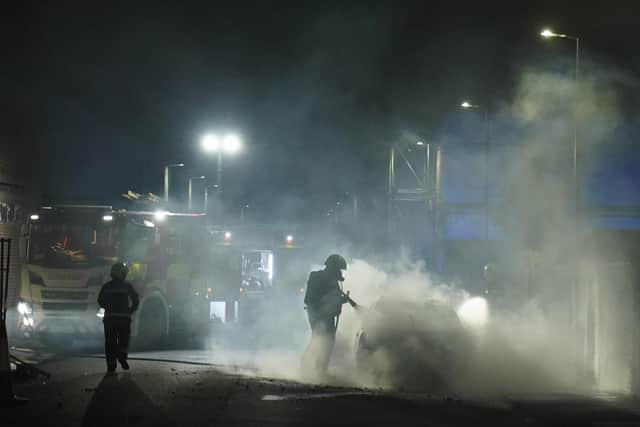

Sustained resources are required to better understand the ideologies, cultures and beliefs that are shaping our multi-ethnic communities so that harmful ideologies and regressive practices can be challenged or disrupted before they deepen division and hostility. The overwhelming response of communities to riots demonstrated that they reject prejudice, racism and demonisation.
While polarisation has been growing, I have been involved in several localised bridge-building conversations, in particular those facilitated by MINAB and Light Foundation charity, enabling a constructive dialogue in mosques.
This project has aided conversations between some extreme far-right sympathisers, coming into mosques to express their anger, frustration and grievances over the Muslims and minority groups ‘taking over their country’, ‘taking their jobs’, ‘invaders Islamising Britain’ etc.
Similarly, it has been deeply emotional and insightful listening to some recent arrivals, sharing their experiences of escaping death and violence and legitimately entering into the country, working extremely hard to financially support their families whilst regularly experiencing hatred.
Such encouraging encounters give me hope as they help dispel misinformation and foster relationships.
At Makkah Mosque Leeds, we have seen some participants hugging the ‘other’ after having listened to their perspectives and experiences. Dialogue often reveals that, despite apparent differences, people share common values, needs and aspirations. They want safety, stability and prosperity for themselves and their neighbours.
We cannot ignore the fact that the continued death and devastation in the Middle East has had a considerable impact on community relations in the last year. Metastasising of the Gaza-Israel conflict with the death toll crossing 45,000, 70 per cent of those being women and children, has been excruciatingly painful and deeply traumatic for the Muslim community. The fact that many hostages are still in captivity, following the massacre of Israelis on October 7, 2023, continues to cause pain and grief to British Jews.
The prolonged violence, the humanitarian crisis, described as “apocalyptic” and Gazans being on “the brink of famine” due to obstruction of aid deliveries (according to the UN agencies) will continue to perpetuate resentment and trauma. The unprecedented frustration and pain experienced by ordinary Brits will continue to profoundly impact on social cohesion- possibly giving rise to disenfranchisement, demonisation and extremism.
The lived reality of Muslim-Jewish communities, compounded by the exponential rise in anti-Muslim hatred and antisemitism has intensified a sense of trepidation, vulnerability and suspicion. In terms of Islamophobia, the government statistics in 2024 showed almost two in five religious hate crimes (38 per cent) were targeted against Muslims, and the monitoring group Tell Mama UK recorded nearly 5,000 incidents of anti-Muslim hate between October 2023 to 2024.
Since the latest violent phase in the Palestine-Israel historic conflict, I have helped organise a number of constructive dialogues between the two communities. These dialogues have sparked extremely difficult and emotionally draining conversations, which have not necessarily resulted in participants changing their views completely about the conflict.
But they have definitely provided safe spaces for alternative narratives to be heard and helped many realise that listening to 'the other' is an important step in humanising them, overcoming perceived fears and starting the process of healing. Safe spaces must be provided to communities for more of such dialogues to take place in the new year.
If the previous year has taught us anything, it is that social cohesion cannot be an afterthought. The government rapidly condemning the racist violence, calling out anti-Muslim prejudice and restoring order, shortly after the Southport riot, was extremely effective in rebuilding trust. There needs to be a strategic approach to cohesion and to resilience risks in our communities and neighbourhoods.
Imam Qari Asim is Chair of Mosques & Imams National Advisory Board (MINAB), Trustee of British Future, Hope not Hate and The Light Foundation.