
Why the Humber’s energy transformation depends on us all - Fiona Auty
Across the Humber, the region is entering a defining period for energy and industrial investment. A range of nationally significant infrastructure projects are progressing or in development, spanning carbon capture and storage, hydrogen, offshore wind, solar, power generation and electricity transmission.
Collectively, these developments could reinforce the Humber’s position at the forefront of the UK’s energy transition, while supporting jobs, skills and long-term economic growth.
However, the scale and pace of this transformation also bring challenges. The benefits for the region are not automatic, and the delivery of projects depends on a combination of policy support, investment certainty, and effective engagement with local communities.
In recent years, many residents and businesses will have noticed an increase in consultations, community events and planning activity. In some cases, it can be confusing to see the variety of near-identical sounding proposals from different companies in similar locations, making it even more important to examine and ask questions about differences. These events are a key part of how major infrastructure is designed and assessed.
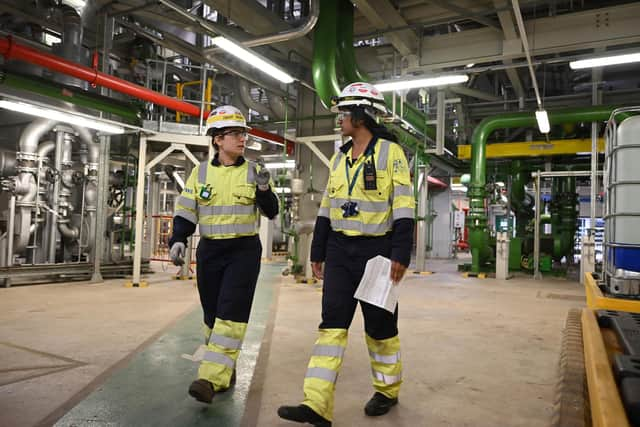

Alongside shaping individual projects, these processes also offer a wider opportunity to better understand the industries and technologies driving change across the Humber.
From carbon capture and hydrogen to offshore wind and low-carbon power generation, many of these developments will require new skills and long-term workforces.
For local people, engaging with proposals can provide an early insight into the types of roles, training pathways and careers that may emerge, creating opportunities not just for individuals, but for families, friends and future generations across the region.
Planning processes, whether led locally or through national infrastructure regimes, are designed to balance these factors.
For decision-makers, clear and constructive engagement can provide confidence that proposals have been properly scrutinised and that communities have had the opportunity to influence outcomes.
This is why participation matters. Taking part in consultations does not mean supporting or opposing a project outright. It is about understanding what is proposed, asking questions, and contributing views that can help shape better, more responsive developments.
Design teams regularly amend plans in response to community feedback, ensuring that final proposals are aligned with the interests of those living and working in the area, and giving those local people real power to influence outcomes.
The Humber has a long-established role in the UK’s energy and industrial landscape. As the region looks to the future, there is a significant opportunity to build on that heritage, supporting innovation and attracting investment in a changing energy system. Realising that opportunity will depend not only on infrastructure and policy, but also on meaningful engagement between developers, stakeholders and local communities.
As a developer active in the region, RWE is currently undertaking consultation on proposals for a new power station at Stallingborough. Like many projects at this stage, the focus is on gathering feedback - understanding local perspectives and identifying where plans can be refined.
RWE is also involved in a range of other energy developments across the Humber and Lincolnshire area, including the Sofia offshore wind project currently under construction in the North Sea, as well as proposed solar developments at Tween Bridge in North Lincolnshire and Peartree Hill in the East Riding of Yorkshire.
Local MP Martin Vickers summarised the importance of community engagement on such consultations: “It is vital that local residents, businesses and stakeholders have the opportunity to fully understand plans and make their views known. I encourage everyone to take part, review proposals and provide feedback, so that any development reflects both national priorities and the interests of our local community.”
This is one example of a broader pattern across the Humber, where engagement is becoming an increasingly important part of how projects are shaped and assessed.
Looking ahead, the region has a clear opportunity to build on its industrial heritage and play a leading role in the UK’s transition to a lower-carbon energy system. Realising that opportunity will depend on a combination of factors: investment, policy clarity, and a planning process that works effectively for both developers and communities.
When consultations take place, they are not simply procedural milestones. They are one of the main ways in which the future shape of the Humber’s energy system is negotiated in practice.
When information about a project appears, whether in a local venue, online, or in the press, it represents an opportunity to engage with decisions that may shape the region for decades to come. Taking the time to understand proposals and provide feedback is one of the most direct ways for communities to contribute to the Humber’s future.
RWE is hosting consultation events regarding its proposals for Stallingborough Power Station throughout April, details of which can be found at www.rwe.com/stallingborough.
Fiona Auty is head of energy transition at RWE and a Humber Energy Board member.