
Why the tone of leadership matters more than ever - Daxa Patel
The tone of leadership matters more than ever given the turmoil and uncertainty we face. Words have always mattered. They have the power to comfort, encourage, persuade and unite. They can also belittle, inflame, and divide.
Yet in modern politics, it sometimes feels as though the ability to wound with words has become confused with strength. The sharpest insult is too often mistaken for authority, and the most cutting remark is too often rewarded with applause.
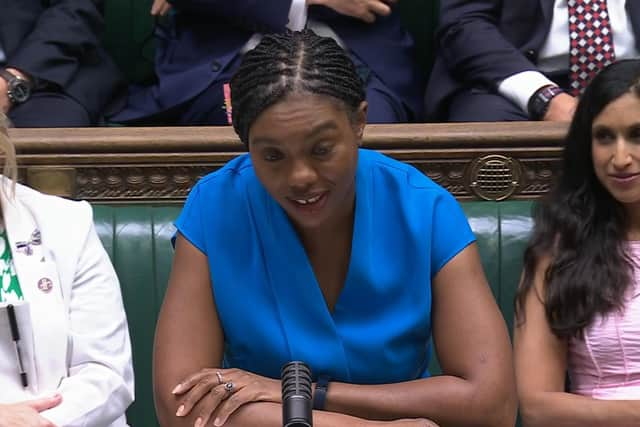
Recent exchanges in Parliament have brought this into sharp focus. During Prime Minister’s Questions, Conservative leader Kemi Badenoch described ministers in highly personal terms, referring to Labour MPs as traitors and deserters, suggesting there were hundreds of knives in Sir Keir Starmer’s back and calling Education Secretary Bridget Phillipson a spiteful class warrior. The Speaker, Sir Lindsay Hoyle, intervened to remind Members that the language used in the House influences conduct far beyond Westminster. His intervention deserved far wider attention than it received because it spoke to a deeper problem in our national discourse.
This concern has been echoed elsewhere. In a recent speech, the King reflected on the importance of temperance in public life and the need for those in positions of influence to consider the effect their words have on the wider community. His comments were measured, but the message was unmistakable. The tone adopted by leaders shapes the tone adopted by the nation.

This is not a criticism of vigorous political debate. Democracies depend upon disagreement. Opposition parties have a duty to challenge governments robustly, just as governments have a responsibility to defend their decisions with conviction. Difficult questions should never be softened simply to preserve comfort.
However, there is an important distinction between challenging ideas and diminishing people. That distinction appears to be fading, and the consequences reach far beyond the chamber.
Somewhere along the way we have begun to mistake aggression for authority. The louder the accusation and the more personal the insult, the more likely it is to dominate the evening news or social media feeds. Increasingly, commentators describe this as evidence of strong leadership. It is a troubling misunderstanding of what genuine leadership looks like. Strength expressed through hostility is not strength at all. It is simply noise.
Leadership is not confined to those who occupy high office. Parents lead. Teachers lead. Employers lead. Coaches lead. Community volunteers lead. Every person entrusted with responsibility teaches something through the way they behave, whether they realise it or not. Tone is not decoration. Tone is about how we impact, influence, and make others feel.
Politicians occupy a particularly influential position because they help shape the tone of our national conversation. They do more than announce policies or debate legislation. They demonstrate, every single day, how people with differing views should treat one another. Their words echo far beyond the walls of Westminster. They set standards that others absorb, often unconsciously.
Children, perhaps more than anyone, absorb those lessons. We spend considerable time teaching young people about kindness, respect, and tolerance. We encourage them to resolve disagreements peacefully, to avoid bullying and to speak to others with courtesy. Yet when they switch on the television or watch clips online, they often witness adults engaged in exchanges characterised by mockery, personal attacks, and barely concealed contempt. It is difficult to persuade children that respect matters if many of the country’s most visible leaders appear unwilling to practise it themselves.
Language creates culture. It determines whether disagreement becomes dialogue or descends into hostility. The tone adopted by those in leadership positions gradually filters through workplaces, schools, homes and communities. What begins as political rhetoric often becomes everyday behaviour.
None of this requires leaders to abandon honesty. On the contrary, leadership frequently demands uncomfortable truths. Governments should be challenged when they fail. Oppositions should scrutinise relentlessly. Difficult conversations cannot be avoided if societies are to improve. The question is not whether leaders should speak plainly. It is whether they can do so without sacrificing respect.
The strongest arguments rarely depend upon personal insults. Remaining respectful under pressure may be one of the clearest demonstrations of genuine strength.
This responsibility belongs to every political party. No party has a monopoly on civility, just as none has exclusive ownership of inflammatory language. The issue is larger than party politics. It concerns the standards we expect from those who seek the privilege of leading our country.
Daxa Manhar Patel is a leadership coach, author and solicitor.