
Why we cannot lose the human touch in a world increasingly dominated by technology - Philip Bartey
There is much discussion around urging everyone to embrace artificial intelligence (AI) and comparing this technological advance similar to the benefits gained from the Industrial Revolution.
Sceptics including eminent scholars and IT specialists are warning the introduction of AI will be detrimental to the human race and could lead to increased loss of jobs, and our ultimate destruction.
University and college lecturers are warning essays and examination papers could be filled with brilliant submissions using AI, and yet they worry students will be unable to interpret, understand the text, avoid thinking and challenge and learn nothing from their submissions.
I wonder whether current technological advances are already dehumanising people? I grew up in an age with no computers, laptops, or mobile phones. Where you relied upon letters and meeting and talking to people.

On Saturday I decided to take a bus ride into Halifax to visit the Piece Hall. This grand structure was built in the 1700s to gather pieces of textiles and woollens for display and sale from the many manufacturers in the town and at the height of the Industrial Revolution.
I have fond memories given my grandma’s house was located in Thomas Street at the very rear of the Piece Hall. Her back garden was bordered by the main boundary wall of this amazing structure. There was a tiny hole in the wall, and I used to crawl through it as a young boy to observe the hustle and bustle of traders and customers going about their business. Gone were the days of Empire, cloths and woollens. The Piece Hall was hitherto full of market traders including fruit and vegetable stalls, nick nacks and bric a brac. Today the Piece Hall has evolved into a modern-day attractive venue frequented by rock bands and singers such as Ed Sheeran (who was born in Halifax), Oasis, Tom Jones, and many other famous bands. I think Granny would have approved of the change but would have been saddened at the loss of her house which is now a social security office run by the civil service.
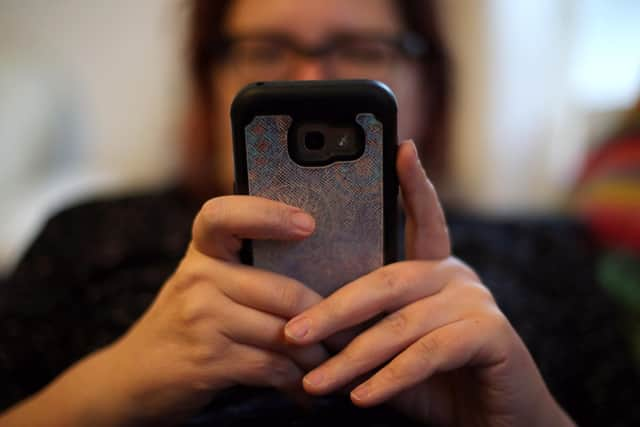
Whilst I was pondering all of this as I sat on the bus, I noticed sitting in front of me was a young man with learning disabilities. His young female carer sat beside him totally absorbed with her mobile phone. I wondered if she was texting her friends, or a boyfriend. Or is she browsing the internet? The young man beside her was making moaning noises that increased in volume with the occasional scream.
The carer ignored him and continued messing with her phone. The young man was salivating and looked distressed. I leaned forward and started to quietly sing a lullaby as I used to do with my kids when they were toddlers screaming and crying. I could sense people on the bus were staring at me critically, but my focus was on the young man.
He stopped screaming and turned his head towards me as he was clearly listening, and it calmed him down. The best part was when his distressed face eased and he broke into a smile. I continued repeating the lullaby all the way into town and the young man remained relaxed and at ease. I wasn’t seeking praise or thanks for my effort. My effort was sparked out of concern and was to me a natural and human response to a young man who was clearly distressed.
I think some of these young carers are obsessed with their phones and forget that the people charged to their care are human and need love, compassion, companionship and attention just like the rest of us. Thankfully, we are blessed with many good people in our team who achieve amazing things with service users, and that makes me so proud of them.
Ten years ago, whilst visiting one of our day services in Sheffield I observed our well-trained team avoiding getting too close to service users, not hugging them, or showing affection. In their training they would have been told that a number of national scandals had taken place where sexual and physical abuse was inflicted on vulnerable people.
This naturally would lead to them feeling inhibited when caring for our service users. I understand this, and we have adopted ways of demonstrating love and affection whilst taking care to do so openly and with witnesses present wherever possible.
I also observed our minibus drivers at the centre, who were not trained at that time and had no inhibitions. They engaged with service users in banter, laughter, hugs, and the positive demeanour of those charged to our care was electrifying.
Later on, at the same site I walked into one of the activity rooms. The service users sat around in chairs. Some were staring at the carpet; others were rocking forwards and backwards. In the corner of the room, I found a guitar and started playing it and singing songs.
Everyone stood up, some were gently dancing, others were singing and some came up and wanted to touch the guitar. Music, of any sort, has magical therapeutic powers, and is one of many interventions that can make an enormous difference to people’s wellbeing.
I believe technology and AI can and will bring many benefits to all of us, providing we control and master it, rather than the other way round. It is important to ensure we never lose our humanity and we continue to interact as human beings expressing love, compassion, sense of community and simply being human. It’s not rocket science.
Philip Bartey is the chief executive of Autism Plus.