
Why we need to reject pessimism to turn around the NHS - Wes Streeting
We started in government by being brutally honest about the state of the NHS and the Darzi investigation concluding that it was in a critical condition. That left us with a stark but simple choice. Do nothing and leave it to die, or reform it to make it fit for the future.
Lord Darzi’s diagnosis wasn’t just a health check, it was also a reality check. We can’t just play the greatest hits from 1997.
Times have changed and we have to do things fundamentally differently to meet the rising demands of our ageing society and the higher burden of disease, to harness the promise of science and technology and to replace today’s overly centralised top-down state bureaucracy with a service that empowers frontline leaders and staff to reshape the way they provide care.
Our 10 Year Plan sets out the radical transformation required to fix our broken NHS. Three big shifts in the provision of healthcare that you’ll be familiar with, from hospital to community, analogue to digital, sickness to prevention.

And major reforms in how the NHS is run, removing unnecessary layers of bureaucracy, ending the culture of micromanagement and directing resources and responsibility down to the frontline.
All designed to ultimately put power in the hands of patients. The easiest part of any plan, of course, is drawing it up, even if by draft 3,042, it didn’t feel entirely like that. But what really matters, though, as you’ve been discussing, is delivering it.
And one of the biggest obstacles facing this government is the same one that’s facing nearly every democracy around the world today. Cynicism.
It’s not surprising. By my account, in the last 20 years, there have been 10 major NHS plans, coming along almost as frequently as health secretaries.
Those plans haven’t been delivered. Bureaucracy has become bloated. Costs have ballooned and services have gone backwards. So, I do get the scepticism. What I reject is pessimism.
Not only is our agenda a bold vision for the future of health and healthcare, but we’ve got a credible plan that the government and the system can deliver together.
That starts with recognising that we’re already getting to work. On electives, we’ve delivered almost five million extra appointments, more than double what we promised in our first year, waiting lists are down by a quarter of a million to their lowest level in two years, and they fell in the month of April for the first time in 17 years.
We’ve begun delivering the next shift with an extra £1bn in funding to GP practices, with more than 2,000 extra GPs on the front line.
But of course, I’m conscious that whenever I talk about some of the data moving in the right direction, there’ll be someone raising their eyebrows somewhere saying I couldn’t get a GP appointment this morning or I’m still waiting for my hip operation. They’re right. It’s not good enough yet.
And of course, there is sometimes data that moves in the wrong direction or doesn’t move fast enough in the right direction.
That’s why we took the latest step in rebuilding people’s faith in the NHS by publishing a new set of league tables.
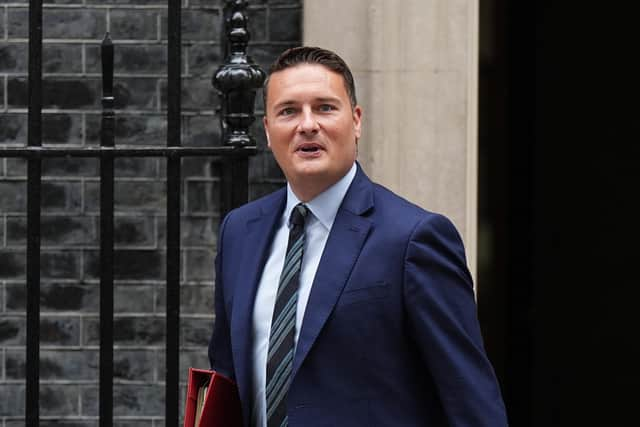
An abridged version of a speech delivered by Health Secretary Wes Streeting at the King’s Fund.