
Why Yorkshire farmers can’t afford to ignore pollination any longer - Casey Woodward
Yorkshire farmers are no strangers to pressure. Rising input costs, volatile markets, changing policy and unpredictable weather are part of the job. Every decision on the farm now must justify itself in hard numbers. That’s why one of the biggest risks facing agriculture in our region today deserves far more attention than it is currently getting: pollination.
Pollinators are too often discussed as a conservation issue, something important for wildlife charities and environmental strategy papers. But for farmers across Yorkshire, pollination is not about sentiment. It is about yield, quality and profit.
Yorkshire’s agricultural sector is hugely diverse and economically vital. The Department for Environment, Food & Rural Affairs reported that in 2024 the total income from farming across Yorkshire and the Humber was approximately £582m. Key produce from the region like oilseed rape, beans, soft fruit and forage crops all play a major role in regional farm incomes and supply chains. Many of these crops rely heavily on insects to reach their full yield potential. When pollinator activity drops, productivity drops with it. That impact doesn’t show up as a dramatic crop failure; instead, it quietly chips away at margins through smaller fruit, misshapen berries, reduced seed set, worse flavour and ultimately lower market value.
This is not theoretical. Across the UK, insect populations have been declining for decades due to habitat loss, land-use change and wider environmental pressures. The Bumblebee Conservation Trust revealed that 2024 was the worst ever year for bumblebees since records began, with UK populations declining by 22.5 per cent. For Yorkshire farms, that translates into fewer insects working fields at the exact moment crops need them most.
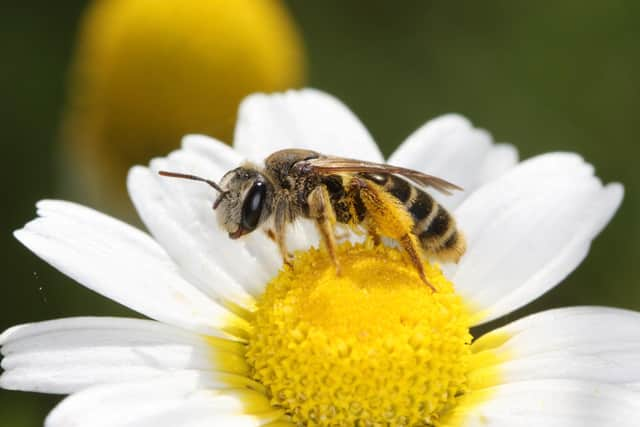

The financial consequences are already significant. A study from the University of Reading and the UK Centre for Ecology & Hydrology estimates the cost of yield losses from a 30 per cent drop in pollinator activity to be over £188m per year. Yorkshire, with its scale of arable and horticultural production, inevitably carries a share of that burden. Yet pollination losses rarely appear on balance sheets or feature in investment discussions. They are absorbed quietly, season after season.
What makes this issue stand out is how inconsistent it is with the way farmers manage every other aspect of production. Soil health is measured. Nutrient plans are optimised. Pests and disease are monitored carefully. Precision farming is now standard practice across much of Yorkshire. Pollination, however, is still largely left to assumption and good fortune.
For insect-dependent crops, that is a serious oversight. Pollination is not something that can be corrected after the event. If activity is low during flowering, the opportunity is lost. No amount of late intervention can fully recover yield or quality. Pollination should be viewed as a core agricultural input, just as fundamental as seed choice or fertiliser strategy.
The encouraging news is that this is a risk farmers can actively manage. New technologies now make it possible to measure pollinator activity directly in the field. Instead of relying on occasional visual checks or gut feeling, growers can access real-time data showing when insects are present, how active they are and how this aligns with crop development.
For Yorkshire’s farming businesses and their stakeholders, this shift in thinking is crucial. Pollination should no longer sit on the edge of farm planning discussions. Treating it seriously is not about chasing higher yields at any cost, it’s about protecting the yield potential farmers have already invested in.
Casey Woodward is CEO and founder of AgriSound.