
Why Yorkshire’s high streets still matter and they’re about more than just shops - Lord Mendoza
Do Yorkshire’s high streets matter? I could give you a hundred reasons why they do, to me, to us all. High streets aren’t just about shopping. They have been used and shaped by communities down the ages, as a place to gather, do business, to live, work, eat, or just to sit and watch the world go by.
Each generation has left their mark on our high streets, which makes them locally distinct and rich in character. You need only look up next time you find yourself on Westgate in Wakefield, for example, to see a whole range of different styles and ages of buildings, all jumbling together to make a unique whole.
The decline of our high streets across Yorkshire and the country may sometimes seem inevitable, but it isn’t - they can adapt and they can have a bright future. I am the proud chairman of Historic England, which for the past four years has been working hard to bring over 60 historic high streets back to life in towns across the country, with £95m of government funding. Nine of these regeneration projects are in Yorkshire, from Huddersfield in the west to Hull in the east.
The aim has been to reimagine these spaces for a changing future, to bring people back, boosting local pride and economic growth by using their special heritage to kickstart regeneration.

This hasn’t only involved funding physical improvements to shops and businesses along high streets, but also creating a whole programme of community engagement events to bring life and to shift how people see them. We want people to see they’re not tired and dated, but vibrant and full of character.
There have been many challenges along the way. The Covid-19 pandemic affected every corner of our lives and its ripple effects on the places and spaces where we come together can still be seen. But when we emerged from the pandemic and we could gather again, we did. And we made it count.
High streets once again became places where we came together, not least through our High Street programme’s cultural events, which has been the largest ever publicly funded community-led cultural programme to date.
Three out of every four people who joined in with local events had come to the high street specially and 80 per cent of people felt more pride in their place and part of their community.
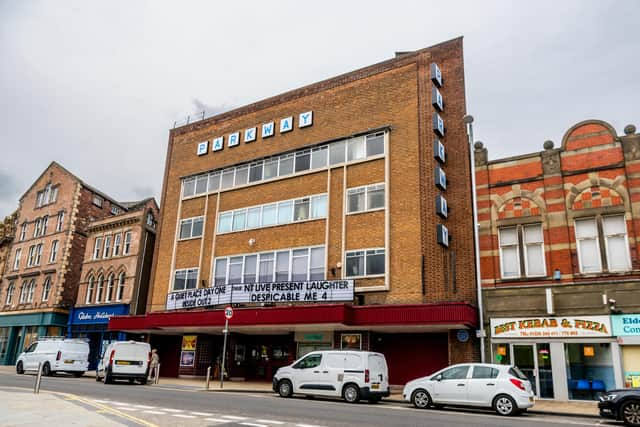
Recently I was lucky enough to join a celebration marking the end of the project to reinvigorate Eldon Street in Barnsley. The event marked the end of something, but also many beginnings because the project, thanks to strong leadership from Barnsley Council, has included historic building repairs that have brought just over 3700 m2 of commercial floorspace back into use. Dedicated local people who love their town are shaping its future.
From the independent Parkway Cinema, a social anchor in the town, to the family-run JE James Cycles, which although has been operating for over 60 years is a new arrival on the high street, drawn to the area by its renewed vibrancy and operating out of a historic building they have beautifully renovated with some grant support. Businesses are buzzing along this street - it feels so alive.
Projects like this have been able to thrive thanks to a lattice of partnerships between us, the council, shop keepers, building owners and the people who live and work in Barnsley. Through a whole raft of community engagement events, over 800,000 people have been able to get involved in the project, from school children to the Poet Laureate, Simon Armitage.
Incidentally, if you haven’t heard his band LYR’s ‘the ballad of Eldon Street’ please listen. It is the street’s story told by the people of Barnsley - the people who know it best.
There are similar success stories from the other eight projects across Yorkshire. In Wakefield, 19 historic buildings have been repaired and given a new chapter as creative, flexible workspaces, as homes or as new commercial spaces. These have in turn created a ripple effect, with other building owners seeing the positive improvements and making similar renovations to their own properties.
A community garden has even been created as part of this project and the town is fully embracing its history through the ‘Our Year’ festival which will draw visitors to Wakefield and celebrate what makes it special. The story from across the region is one of a steady revival, with people, place and local voices at its heart.
There is still so much to do and we are exploring opportunities for further schemes, for example in the historic town centre of Bradford, which will be City of Culture 2025. We have learned a lot from these projects across Yorkshire, and the nearly 60 more across England, about how best to revitalise these important spaces. We want our town's high streets to last. We know how crucial they are to our collective identity, our local pride and our sense of place.They deserve a future.
Neil Mendoza is chairman of Historic England.