
Without guardrails on Artificial Intelligence (AI) we’ll go backwards - Ismail Mulla
Everywhere you go right now artificial intelligence (AI) seems to be peering around the corner. Work, entertainment and even our social lives are being infiltrated by some form of AI.

And of course one of the great ongoing political debates currently is that of AI safety versus AI innovation. Europe is being characterised as taking a risk-averse, safety-first approach.
While the US, certainly under current President Donald Trump, is taking a more cavalier approach. The tech bros have been pushing hard to be given free rein.
I understand concerns of innovative companies straining at the leash to start laying down the foundations to a brave new world. However, it is clear that guardrails need to be put in place if AI is going to proliferate all parts of our lives.

Social media and how that has been turned into a medium for societal damage is a case worth not only examining but learning from. Simply, the same mistakes cannot be made with AI.
Where AI is having the greatest impact right now is in education. Forward thinking education practitioners warned about this before ChatGPT even began chatting.
Some believe that there is no getting away from AI and that we must embrace it. Then there are others who worry about the impact this is likely to have on the development of children.
A conceptual research paper from the University of Cambridge, released recently argued that education must be reframed to integrate AI. It suggested that AI could be used to support students to learn and work collaboratively while drawing on different sources of knowledge.
Co-author Rupert Wegerif, professor of education at the University of Cambridge, said: “Every so often a technology comes along that forces a rethink of how we teach.
“It happened with the internet, with blackboards, even with the development of writing.
“Now it’s happening with AI.
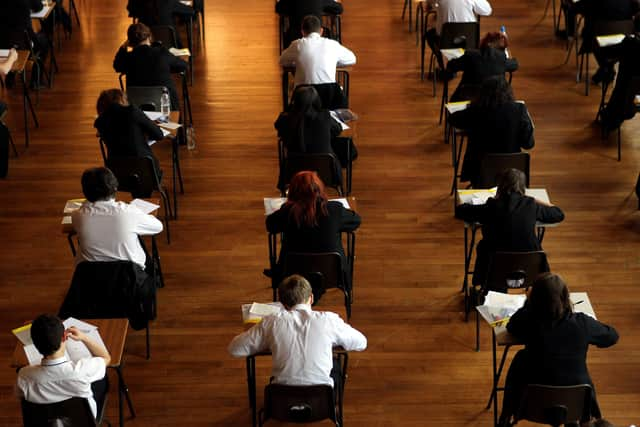
“If ChatGPT can pass the exams we use to assess students, then at the very least we ought to be thinking deeply about what we are preparing them for.
“One thing we should consider is education as a more conversational, collaborative activity, an approach first advocated by Socrates, but also highly relevant to a digitally connected world with planet-sized problems.”
The problem with this is that the web has become somewhat of a wild west when it comes to information and indeed misinformation. Peer-reviewed research papers don’t always take precedence over clowns throwing excrement at the virtual wall.
The other concern is that the development of young people will be stifled, even if the information that they are able to access is correct.
When I was training to be a journalist I found having a working understanding of media law was important even though all the information is there in McNae’s Essential Law for Journalists. It sped up the process of reporting because you wouldn’t have to spend time thumbing through the latest edition of the book.
Imagine a surgeon needing to make a split second decision on how to conduct a procedure. It could be the difference between saving someone’s life or potentially doing more damage.
But can we even get away from AI, if we wanted to? Students are tech savvy and if they really want to they will find a way to cheat.
I’ve spoken to university lecturers who continue to grapple with the issue of AI.
Some have now moved away from coursework and towards live in classroom assessments. Others have even gone as far as hiding irrelevant references to films and television shows at the bottom of assignments so that those who simply copy and paste everything into ChatGPT get caught out.
It’s not just academic integrity that is at risk but also creativity. Putting prompts into an AI search engine is not going to make someone a better writer, videographer or even a graphic designer.
The reality is that at this stage AI is mainly producing slop but the technology is clearly coming along. There’s nothing wrong with using AI to aid creative endeavour but it cannot become the means to an end.
By giving young people problems to solve themselves, they are able to go on a journey of discovery. This journey should not be underestimated.
I’m not completely dismissive of the idea of AI but I fear that unless guardrails are put in place we’ll go backwards as a society in the name of progress.