
Yorkshire can't wait for planning reform, decisions need to speed up now - Harrison Reeves
Yorkshire has never been short of ambition when it comes to building. Home to what will be the world's largest offshore wind farm, and with hydrogen projects already transforming the Humber estuary, the region pulled in £700m in private energy investment last year alone. By any measure, this is one of the most strategically important places in Britain to build.
But appetite alone doesn't deliver homes and energy infrastructure. Decisions do - and right now, they're not coming fast enough.
One of Labour's most ambitious pledges is to deliver 1.5 million new homes before the end of this parliament - and Yorkshire has a big part to play in that.
The Government has tasked the region with delivering roughly 25,000 homes every year. That's 68 new homes every single day, seven days a week, without pause. It's a formidable challenge, and councils across Yorkshire are doing their best to rise to it - but too often projects stall not because they're rejected, but because the process to reach a decision is slow and under strain.
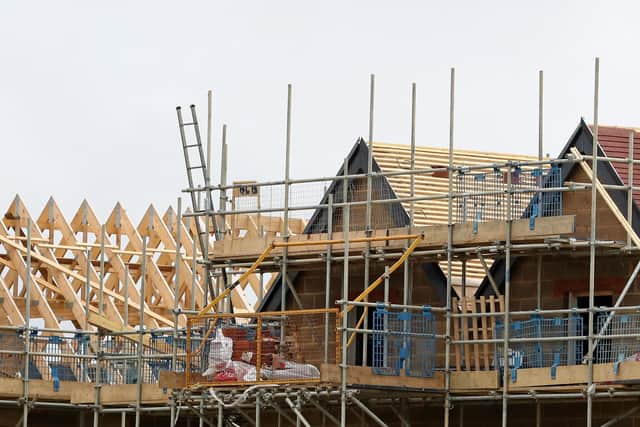

The numbers tell a sobering story. Housing approvals across Yorkshire have fallen by 56 per cent in the last quarter. North Yorkshire Council has recorded one of the highest rates of ‘unreasonable’ planning decisions in the country - cases where decisions are overturned or have to be reworked. That's not a reflection of poor judgement from planners. It's what happens when teams are stretched thin and pressure keeps building.
Successive governments have promised planning reform, consulted on it, legislated around it - and yet meaningful change has remained elusive. Labour has taken steps in the right direction, reforming the National Planning Policy Framework and introducing mandatory targets. But those changes will take years to translate into homes on the ground.
Yorkshire cannot afford to wait. If we are serious about delivery, councils must work within the system they have - and that means focusing hard on how decisions are actually made.
Because much of the delay doesn't sit in policy. It sits somewhere far more mundane.
Planning in many local authorities is still handled in ways that would be familiar a generation ago. Applications tracked on spreadsheets. Consultees chased through long email chains. Officers working through stacks of documentation by hand. Each step adds time. Each handover creates friction. And when the pressure rises - as it has across Yorkshire - the risk of errors, duplication, and delay rises with it.
They're dealing with increasingly complex applications, rising expectations, and shrinking capacity. The problem isn't the people - it's the way the work is built around them.
Much of what planning involves is, at its heart, administrative. Validating applications, coordinating consultation responses, compiling officer reports - these tasks follow repeatable patterns but consume enormous amounts of time.
Adopting a modern approach to streamlining this process doesn't sideline planners; it frees them to focus on the work that genuinely requires local knowledge, expertise and judgement.
In practice, replacing outdated methods with faster, automated, validation means applications move through the system more quickly. Better coordination reduces delays between consultees. More consistent reporting reduces the need for rework.
For Yorkshire, the stakes couldn't be higher. Planning efficiency is no longer a back-office concern - it's central to whether this region delivers on the ambitions it has set for itself.
Harrison Reeves is the CEO of Valon.