
Yorkshire Post comment: Protection against flooding should not be a postcode lottery for North

Ten years ago, Yorkshire’s Christmas was thrown into turmoil by the worst flooding to hit the county since the Second World War.
Starting on Boxing Day, floods devastated more than 4,000 homes and 2,000 businesses as swollen rivers burst their banks and roads became raging torrents, leaving vast areas of North and West Yorkshire under water, people and farm animals stranded and a historic bridge collapsing.
The 2015 floods were among the most severe natural disasters ever to strike Yorkshire, leaving the county’s residents in a state of shock.
The cost of that winter’s flooding across Yorkshire, Lancashire and Cumbria was estimated at £1.6bn by the Environment Agency, but no price can ever be put on the heartache – even trauma – suffered by those affected who saw their homes ruined and livelihoods placed in jeopardy by relentlessly rising waters.
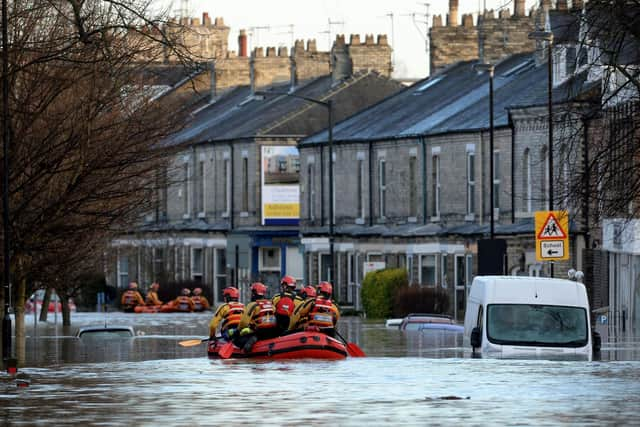

The legacy of those terrible few days a decade ago is still felt in the cities, towns and villages that suffered so badly, among them Leeds, York, Tadcaster, Selby, Hebden Bridge and Mytholmroyd.
It is one of fear of flooding happening again, worry when winter brings torrential rainfall, uncertainty about the safety of homes, expensive insurance premiums, and possibly houses which are difficult, if not impossible, to sell because they remain potentially at risk.
There was entirely justified anger, too, among the people of stricken communities because of decades-long penny-pinching by governments which refused to spend enough on flood defences.
In Yorkshire, that anger was intensified by the knowledge that a grossly unfair north-south divide in the way flood protection funds were allocated was at least partly to blame for the extent of the damage.
In the years before the floods, Leeds had been denied funding for a protection scheme that would have saved hundreds and homes and businesses, while money had been found for defences in the affluent Thames Valley. The inevitable, and infuriating, conclusion to be drawn is that those in power regarded the north as being less worthy of protection from natural catastrophe than the south.
To its credit, the present government has recognised the unacceptability of this attitude and announced a much fairer system of allocating funds which should mean the north is no longer disadvantaged.
Even so, the approach to protecting Yorkshire from any repeat of the nightmarish scenes of 2015 remains flawed.
Areas of the north will still have to bid for a share of funding for defences, which means some losing out, irrespective of how deserving or pressing their needs are.
Protecting against flooding should not be a postcode lottery of this sort, but regarded as investing in critical national infrastructure, especially when it is clear climate change is producing more extreme weather, particularly much heavier winter rainfall. Every area at risk deserves protection.
We also still await a comprehensive strategy for guarding against floods, to include defences, river dredging and maintenance of drains. And the government’s drive for housebuilding must not lead to homes going up on flood plains where they would be immediately vulnerable.
If such a strategy had been in place 10 years ago, it is conceivable that the damage and sorrow that Yorkshire suffered would have been much diminished.
As we look back to that dreadful Christmas, we should also remember that it brought out the very best in Yorkshire’s people and salute them. They rallied round to comfort and console those who had seen their homes wrecked, and displayed astonishing resilience in meeting a challenge most had never experienced before.
And when the filthy waters that had inundated homes and businesses began to recede, entire communities turned out to clear away the debris and the stinking mud that blanketed residential streets and main roads alike.
A decade on, the most fitting acknowledgement of how magnificently Yorkshire coped with the worst of times would be for the government to ensure that our county never has to face such adversity again.