
Yorkshire’s countryside is being threatened by the Planning and Infrastructure Bill - Andrew Vine
All of us who love Yorkshire’s countryside ought to be paying very close attention to a debate in Parliament this week which could lead to irreparable damage to some of our most treasured landscapes.

The Planning and Infrastructure Bill, which is at the committee stage, sounds dry but is in fact one of the most alarming pieces of legislation to appear in decades, because it sweeps away environmental regulations that have protected the countryside for generations.
If the bill is nodded through into law by Labour’s thumping majority in the Commons, we could see areas of Yorkshire prized for their beauty and unspoilt wildness covered in homes, wind turbines or solar farms.
It would enshrine a dangerous presumption in favour of developers who want to concrete over green spaces, and effectively abolish all safeguards for nature and wildlife, provided those doing the building pay into a national fund for ecological recovery.
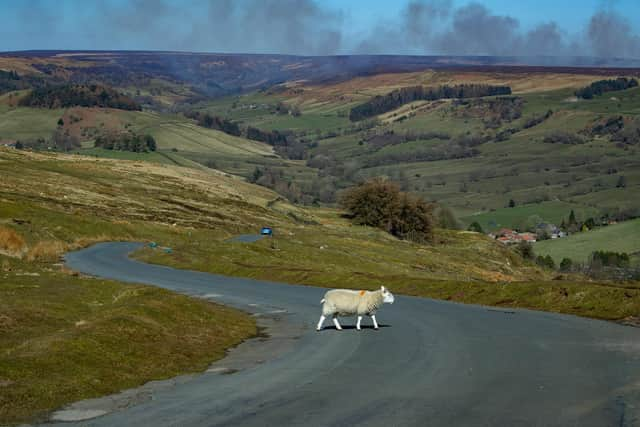

Put bluntly, that means if developers stump up enough cash, they can trash natural habitats and make a handsome profit from doing so.
I don’t think this is what vast numbers of people in Yorkshire voted for last year when they put their trust in Labour. In an age where concern for the natural world is ever more to the forefront of the public consciousness, it is simply wrong to treat places of environmental importance as commercial commodities to be exploited.
The people of this county appreciate and cherish the richness of our countryside and the prospect of the government giving developers the licence to wreck it will horrify many.
Influential voices are being raised against the new measures. Last week, a group of eminent academics wrote a blistering letter to MPs expressing their concerns and warning that the government is peddling falsehoods about the economic necessity of loosening restrictions on building in the countryside.
They included Sir Partha Dasgupta, professor emeritus of economics at the University of Cambridge, Yorkshire Wildlife Trust president Sir John Lawton and Dr Tom Tew, a former chief scientist of Natural England.
In part, their letter read: “The nature levy is not a tool for ecological recovery: it is a licence to kill nature, with no evidence to suggest this would in any way help our economy.”
A licence to kill nature. That is an exceptionally serious charge to level at a government, but one which is entirely justified.
If anybody doubts the threats to Yorkshire’s countryside, they need only look at a couple of especially contentious proposals to see what may lie ahead if the law is changed to favour developers.
In South Yorkshire, there is what could be the UK’s largest solar farm, stretching across greenbelt land in Rotherham to its border with Doncaster, about which residents have expressed environmental concerns.
And in West Yorkshire, there is the plan to cover Walshaw Moor, above Hebden Bridge, with the country’s biggest onshore windfarm of 65 turbines, each 200m high, which is taller than Blackpool Tower.
Residents of the surrounding areas of Calderdale are vehemently opposed to the idea, pointing out that it would destroy an unspoilt natural landscape which is a site of special scientific interest and a haven for wildlife.
If the planning bill becomes law, there will be more groups of Yorkshire residents protesting – but with a worrying difference.
Their objections will be in vain. The developers’ ambitions will outweigh the concerns of communities and ministers will justify their betrayal of the countryside by pointing to the money paid into the nature levy.
That though will be as great a falsehood as claiming natural landscapes need to be sacrificed for the country’s economic welfare.
Planting a few trees somewhere away from previously open countryside covered in turbines or solar panels won’t make up for its loss. Once these natural treasures are gone, they can never be recovered.
The scientists and academics who wrote to MPs about the planning bill have called for it to be subject to proper consultation and review before it progresses any further.
That is the least that should happen. A wholescale rethink of the government’s attitude towards building in the countryside is needed, because the risks it poses to unique and precious landscapes are immense.
Labour MPs cannot simply acquiesce to a course of action that could potentially change the face of the countryside forever.