
You can’t eat Bitcoin, it is only a matter of time before the next financial crash - Andy Brown
There are some events that political commentators make a big fuss about which are scarcely remembered ten weeks later. Really significant events like the financial crisis which peaked in 2008 have an impact on ordinary people’s income for decades and yet fade from memories.
Since it is now almost 20 years ago and the facts have been frequently distorted it is important to repeat the basics of what happened and why.
Financial traders got paid eye watering bonuses for gambling with other people’s money on the value of packages of loans. During the upswing on the value of those ‘investments’ a lot of people thought that a wonderful new way of making money had been invented. Then the thin real value became clear and a classic crash took place.
Panic broke out on financial systems which got so bad that major international companies collapsed with huge debts. Queues of those desperate to withdraw money formed outside a once safe British building society.
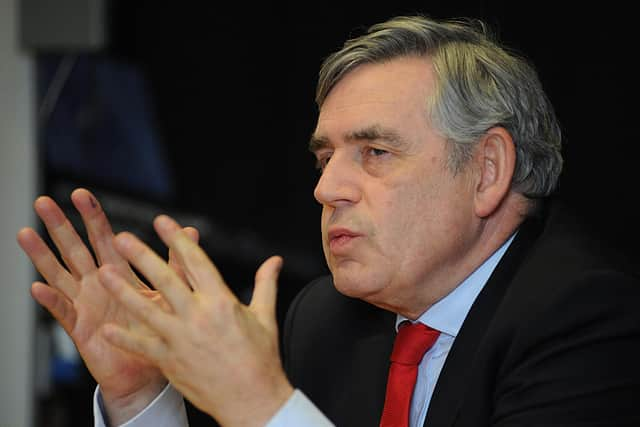

Bonuses and dividends made in the upswing stayed with the traders. Most of the losses ended up with the public.
As the excesses of extremely lightly regulated free markets spiralled out of control, governments were faced with the difficult choice of letting ordinary high street banks collapse or pumping money in to prop up failing finance companies.
When it comes to firms like Jaguar Land Rover, governments of all stripes are very good at telling us we mustn’t prop up failing industries. When it comes to finance a different choice was made because the consequences of a complete collapse would have been horrific. Ordinary people would have lost savings. Jobs. Houses.
In the aftermath, the British national debt doubled. The cost of bailing out the financial private sector in the 2008 crash was roughly the same as the impact on the national debt of Covid.
What happened after the crisis staggers belief. In order to pay for the excesses of reckless financial investors, burdens were placed on ordinary working people and the public services they rely on. We were told that austerity for us was the cure for the recklessness of some of the richest people and businesses in the country.
Teachers, nurses and doctors saw decades of real term pay cuts. Much trusted services like the NHS got starved of money. Meanwhile financial traders found new assets to gamble on and new ways of hiding money from the tax authorities.
Many high streets developed a look of abandon. The headquarters of some of the most irresponsible financial traders rose ever higher and gleamed in steel and glass.
The contrast between who took the pain and who deserved the blame has been so acute that it has fuelled resentment which has had some very unpleasant impacts on our society. After decades of being starved of money no public service seems to work the way it should and with the national debt standing at the same level as our entire national annual earnings it is incredibly challenging to find the funds to fix the problems
The bulk of our financial problems were not created by the impossibility of funding the welfare state. Back in the 1960s we managed to fund decent council housing, the NHS, health and unemployment benefits and grants rather than fees to go to University. Many of our problems can be directly traced to allowing our economy to be over dominated by finance as we under supported industry, science and innovation.
Unregulated or badly managed international money markets are risky things that can cost a nation dear. Which is why what is happening right now is so very worrying.
A whole series of new and even more risky financial booms are emerging that could easily drive us into another downward spiral with consequences that scarcely bear thinking about but badly and urgently need consideration.
Many people have invested in bitcoin because it is a fun way to make lots of money without doing any work. If prices start to fall questions are going to be asked about exactly what people have bought and what it is worth. You can’t eat bitcoin.
We laugh at people in history who were daft enough to invest in tulip bulbs only to lose their money. Any collapse in the value of crypto currency could easily get out of control.
There is similar danger in the boom in tech company shares. It is easy to assume that investing in the future is a certain way to make money and that artificial intelligence shares will rise in value. It is equally easy to forget that the 2008 crash was preceded by a crash in the value of ‘sure fire’ investments in internet stocks that never turned a profit.
During the last Labour government Gordon Brown told us that he had put an end to boom and bust as he cheered on the artificial boom fuelled by Margaret Thatcher’s deregulation of finance. When the bust came we all paid the price.
The new Labour government might like to take note. It is only a matter of time before the next crash and it might be wise to be rather better prepared than we were last time round.
Andy Brown is the Green Party councillor for Aire Valley.