
Young people’s relationship with money is nonexistent today - Sarah Todd
Apart from the late Lord John Prescott it’s a struggle to think of any Labour bigwigs your correspondent has admired. It was the former Member of Parliament for Hull East and Deputy Prime Minister’s independence of spirit - remember that left jab aimed at an egg thrower - in spite of New Labour’s perfectly packaged and expertly marketed image that endeared him.

Also the fact that our King is said to have enjoyed his company, paying a rare personal tribute to his ‘unique and indomitable character,’ on his death.
Of course, there was also Dewsbury-born Baroness Betty Boothroyd, who was a Labour MP for nearly two decades before becoming the first female Speaker of the House of Commons. Thinking aloud, like Prescott who left school and started work as a trainee chef and kitchen porter at 15 years old, the late Boothroyd had experienced the working world as a member of the high kicking dance troupe the Tiller Girls.
A vocal supporter of fox hunting, grammar schools, stricter welfare reforms and campaigner for a hard Brexit, Baroness Kate Hoey is a third left-leaning favourite. However, a Google search reveals that after serving as a Labour MP for 30 years, she is no longer a party member and as such serves as a ‘non-affiliated’ peer in the House of Lords. She’s a corker to listen to, but - hang on - no wonder, that online search also reveals she was born on a small pig farm. So she wouldn’t have grown up a stranger to hard work either.
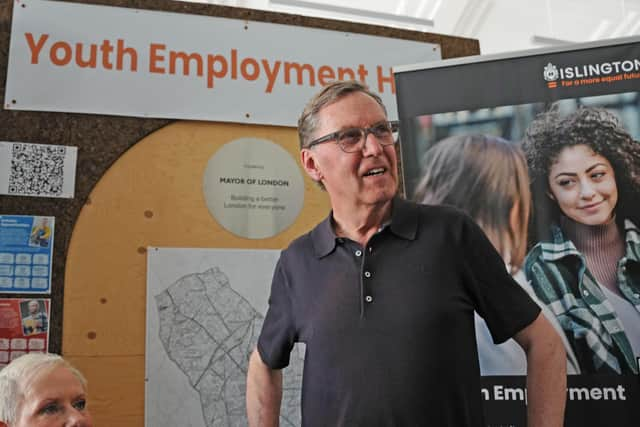

Now, while more of the modern ilk of professional politicians – think local government and trade union roles – there is something appealing about Alan Milburn’s council estate to cabinet life story. Once tipped as a former leader of his party, the big time Blairite’s name is back being bandied about as he is leading an independent review on youth employment.
Nobody likes somebody telling them how to suck eggs. But Mr Milburn would be well advised to walk into any hair salon on a Saturday morning for a trim and a chat.
Whoever is wielding the scissors will doubtless also be making the coffee, sweeping up afterwards and darting off mid-trim to answer the phone. The role of Saturday girl, that springboard to generations of stylists’ careers, is almost obsolete.
Some will tell you they simply can’t get any teenager to reliably turn up, others will say it’s the bother of having to jump through the legal permit and health and safety requirements.
Whatever it is, it’s also noticeable at the likes of bakeries, cafes and other businesses that always used to appreciate an extra pair of hands when the weekend rush arrives.
Make of these examples whatever you will, but while we’re on something else to ponder is the fact young people don’t have the same relationship with money that we did.
While we proudly presented our passbooks at the building society to get the amount of interest earnt updated and plonked 50 pence’s (Sellotaped to the insides of birthday cards by grandmothers and old aunties) into piggy banks or special coin sorting devices doled out for free with these junior savings accounts today’s young (forgive the pun) don’t seem to have the same interest.
Give them a banknote and they look at you like you’re from another planet.
‘Don’t lose it,’ youngsters are told, giving no hope that any crisp notes handed over for birthdays or Christmas will end up anywhere else but inside the washing machine.
In a world that is so used to blaming everybody else, teaching their children about money is surely a basic parental responsibility.
Suppose it’s a sad fact that many who are now mothers and fathers themselves grew up with no relationship with money or any concept of the value of an honest day’s work for an honest day’s pay.
One thing Mr Milburn and his team are apparently considering is monthly payments worth hundreds of pounds to families receiving benefits whose teenage children take up apprenticeships.
The thinking behind this is that the current welfare system effectively traps young people outside the workforce by penalising their parents financially if they let their offspring go out to work.
Mr Milburn describes the situation as ‘really shameful’. Apparently, parents can face substantial financial losses when their children begin apprenticeships, as they forfeit child benefit and portions of universal credit.
Shameful is an interesting choice of word. Is it not embarrassing or depressing that this is benefits Britain in 2026?
Perhaps Mr Milburn could spend some time looking at foreign welfare voucher systems, spent supporting local businesses while making sure support goes on what it was actually intended for.