
Canada's discussions show the European Union is a positive superpower counterweight - Yorkshire Post Letters

From: Peter Packham, Chair, Leeds for Europe, Roundhay, Leeds.
One of the more fanciful notions used to sell Brexit a decade ago was that leaving the European Union would liberate a free-trading ‘Global Britain’ to lead a revived ‘Anglosphere’.
Today, that fantasy lies in tatters because our imagined partners were never interested in playing second fiddle. ‘Empire 2.0’ was always nonsense, but the geopolitical shifts of the past decade have brutally exposed the emptiness of such wishful, grandiose delusions.
Facing an increasingly erratic and protectionist United States, Canada is actively seeking associate membership of a stable, dependable EU (‘Door open’ for Canada to become first associate member of the EU, The Yorkshire Post, September 17).
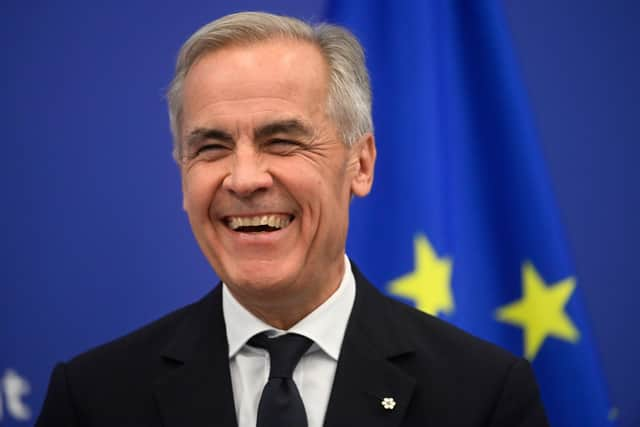

European Parliament President Roberta Metsola has confirmed Australia and New Zealand could follow suit (Euronews, September 17). The Brexiters’ one-time ‘CANZUK’ dream is
Dead.
Ironically, Leave campaigners also placed great faith in the trans-Pacific CPTPP partnership, which includes those three former British colonies as founding members.
The Office for Budget Responsibility has forecast CPTPP eventually adding 0.04 per cent to UK GDP – virtually nothing when compared to the four per cent economic hit of being outside the European Single Market.
In this increasingly troubled and turbulent world, middle-ranking liberal democracies that refuse to be bullied by US tariffs, coerced by China, or threatened by Russia recognise that the European Union is a positive superpower counterweight. Britain pivoted to Europe in the 1970s and benefited from doing so for decades; in 2026, some of our oldest Commonwealth allies are set to follow.
The claim that Britain had to sever European ties to trade again with former colonies is a uniquely British delusion. Spain never felt it necessary to quit the EU to trade with Mexico, nor did Portugal abandon the Single Market to do more with Brazil. Instead, Madrid and Lisbon act as Europe’s bridges to Latin America, leveraging the collective clout of 450 million consumers to negotiate heavyweight deals such as the EU-Mexico and EU-Mercosur agreements.
Before Brexit, Britain was that enormously valuable bridge between the English-speaking world and Europe. Today, our Commonwealth allies bypass London and go straight to Brussels. They get a warm welcome from our fellow Europeans – who usually speak superb English, too.
I’m not crying over spilt and soured Brexit milk here. I’m envisioning the immense economic and geopolitical opportunities that might await a Britain that has the confidence and courage to re-establish itself at the heart of Europe.