
Debate around apostrophes on North Yorkshire road signs raises wider questions over software limitations - Yorkshire Post Letters

From: John Rayner, North Ferriby.
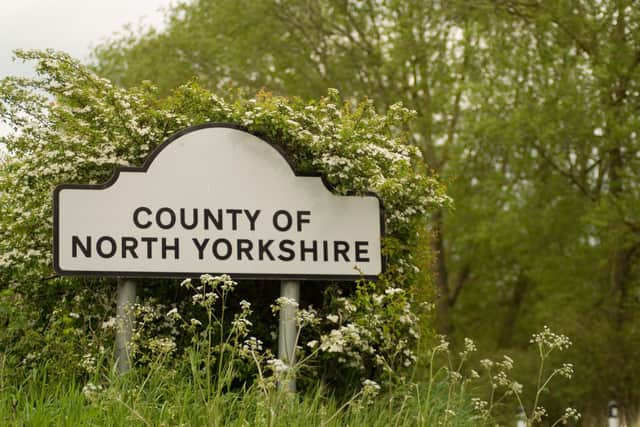
Welcome news indeed on The YP front page on May 17 that North Yorkshire Council has seen sense over the inclusion of apostrophes in road signage.
Blaming ‘computer says no’ for a dereliction of grammatical duty is sadly symptomatic of an all too pervasive trend to submit to the consequences of inadequate software development.
The road signs example may seem trivial, but the problem scales up all the way to the level of the Post Office Horizon scandal (significantly exacerbated by gross management failures in reaction to software inadequacies). The ever more pernicious societal problems from misuse of social media also embody failures of robust and comprehensive, fully thought through, systems design.

If social media accounts when first started were routinely defaulted to be closed, users would have explicitly to release their content and decide who could see it. Of course, it is in the interests of the service providers for the user experience to be simple and immediate, so they supply everything open, but unaware users have been left blindly to display their lives to the whole world.
From the earliest time of serious computer development in the middle of the last century, long before the development of fancy fonts, extended character sets and electronic typesetting, it was necessary to distinguish within text data between content characters and presentational control symbols.
For example, the use of ‘quotation marks’ (double or single) to denote a ‘character string’ within data means that you cannot use quote marks within the string, or the software gets confused.
A further problem arises when the same character has to act both as open and closing single quote marks and as an apostrophe. To overcome such confusions, the idea of ‘escape characters’ was developed. Initially, the ‘slash/solidus’ was typically adopted, later also the ‘backslash’ once the earliest character sets were extended.
For example ‘St. Mary’s Walk’ could be stored as data to denote ‘St. Mary’s Walk’ in outside life, the adjustments on data transfer being automatic in properly designed software.
Any character designated for control signalling can be reverted temporarily to its normal use by preceding it with the 'escape character' designated for that purpose. If it's the escape character itself you need, you simply put two of them instead of just the one.
These primitive arrangements are still available for implementation by software developers - even in the present era of fancy typography, where some systems can still get confused between opening and closing quote marks, both signalled by the same keyboard character and it is left to the word processing software to discern the context (traditional ‘hot metal’ typographers will understand why an ‘inverted comma’ is so called).
So, the technical cure for the NYC road sign problem might simply be to record street name data with two apostrophes instead of one or none. Whatever the technical detail, the observed problem arises because the commissioners, developers or supply contractors of the system used by NYC to manage their road maintenance records may not have perceived, during the software specification process, a need to provide for apostrophes in road name text.
Computer systems are supposed to be our servants, not vice versa, but we need to be much better at managing them - AI developers please note.