
Euro opt out would help Andy Burnham get support for rejoining EU: Yorkshire Post Letters

Peter Brown, Cleckheaton.
It should probably not be a great surprise that Britain might rejoin the European Union with a couple of its old opt-outs still possible (EU ‘would let UK stay out of euro and Schengen area’ if it rejoined, The Yorkshire Post, November 3).
That would just be formalising what would almost certainly happen in practice anyway. So why let a technical paper requirement hinder Britain and existing European Union members from agreeing on a much better, mutually beneficial way forward? Even if the presumption is that new members will eventually join Schengen and adopt the euro, this still needs to be agreed during entry negotiations.
Sweden joined the EU in 1995 and Poland in 2004. Both are meant to adopt the euro eventually, but they have no plans or pressure from the EU to do so. There are financial requirements before an existing EU member can join the Eurozone. For example, a debt-to-GDP ratio approaching 60 per cent is required.

Britain’s is 102 per cent and – short of an austerity programme George Osborne would balk at – is unlikely to get anywhere near 60 per cent for decades to come.
Similarly, the UK shares a land border with the Republic of Ireland – which is outside Schengen. It is hard to imagine the EU threatening the Good Friday peace agreement by insisting on an Irish land border. The value of trying to strong-arm Ireland into Schengen would be limited, given the natural sea border between us and the rest of the continent.
With no genuine Brexit benefits to point to, its remaining advocates often fall back on “poison pills” which, they say, will make the idea of rejoining less popular. Schengen and the single currency are often brought up.
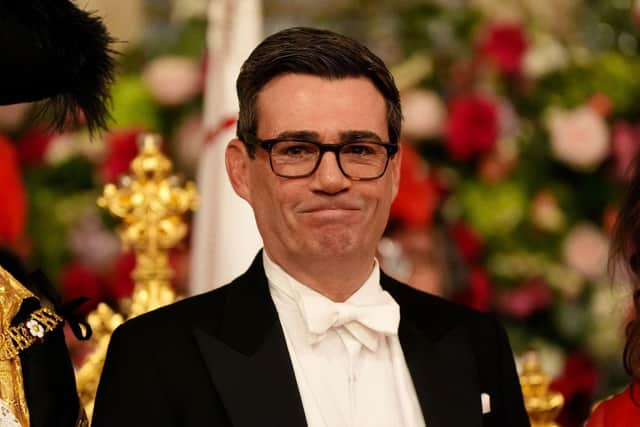
If Andy Burnham – or a possible successor – is able to get agreement on the euro and Schengen, they will undoubtedly be able to demonstrate the kind of strong public support for rejoining that any EU negotiator will want to see.
Thomas W Jefferson, Batty Lane, Howden, Goole.
Jas Olak of Leeds for Europe (The Yorkshire Post, October 24) neatly sidesteps the questions I previously posed. She wants us to rejoin the EU, but can’t explain why the Single Market that she claims benefitted us as members didn’t confer the same benefits on our peers, Germany, France and Italy who all have poorer growth records than us. It’s not unreasonable to ask why that was, in case rejoining brought us to the same poor state.
Ms Olak didn’t acknowledge that the Office for Budget Responsibility says it doesn’t have either the mandate or the resources to monitor the impact of Brexit and that the supposed loss of growth of 4 per cent over 15 years was not calculated by them. The assumed loss of global trade volumes shows no sign of occurring, so the assumed loss is unproven. Claims of larger losses are based on assumptions, not real-world data.
We constantly hear that our growth figures outperform other European G7 members. Commentators suggest that is because we are applying artificial intelligence faster than the EU, which would have been impossible if we had remained in the EU’s overly restrictive regulatory code. On every count, objective assessment has to conclude that we made the right decision in 2016.