
The complexities around ensuring Britain’s steel security - Yorkshire Post Letters

From: John Rayner, North Ferriby.
The crisis over future virgin steel production at Scunthorpe throws into sharp focus the UK's continuing dilemma about ‘Net Zero’ and energy costs, and a strategic question for national security over ‘defence grade’ steel supplies.
It is claimed that re-made steel from ‘green’ electric arc furnaces (EAFs) is not good enough for some military purposes and national infrastructure, so retention of the UK's last operational blast furnaces is essential.
Presumably the uncertain state of scrap metal recycled by EAFs is enough to query the output quality, while the ‘net zero’ objection to blast furnaces comes from their necessary use of coke in the chemical reaction that reduces iron oxide to pure iron, releasing CO2 unavoidably as a waste product.
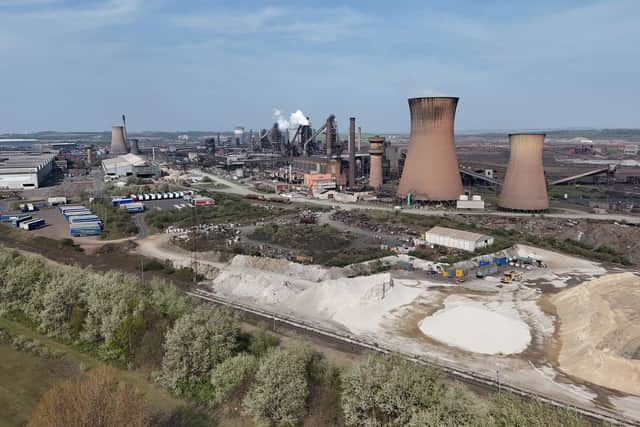

But CO2 emissions can be dealt with at Scunthorpe - and at the nearby Killingholme gas-fired power station, which would likely supply any replacement EAF - as part of the planned Humber region Carbon Capture pipeline, answering the valid requirement for emission reduction.
There should be no problem within the 'net zero' imperative for those few necessary processes, which unavoidably must produce CO2, continuing in operation with appropriate focused mitigation, while many other disparate sources of fossil carbon emission can and should be avoided.
The Scunthorpe steel plant only exists because historically Lincolnshire had a commercially viable seam of iron ore and proximity to coal from South Yorkshire, both long or lately defunct.
As it stands, supplies of both coking coal and iron ore are imported, so national security arguments about supplies of virgin steel from abroad look a bit hollow when continued home production would still depend on imports of the raw materials anyway.
Through the past decade there has been a controversy over proposals, now abandoned, to open a coal mine in Cumbria to produce ‘metallurgical coal’, from the type of coal deposit that is particularly suited for conversion to coke for use in blast furnaces.
If security of supply of specialist virgin steels is the major national concern, then perhaps Scunthorpe's blast furnaces should be supported from the defence budget, and supplied with coke made from Cumbrian coal, with limestone and iron ore also from expanded UK quarries?
Finally there is the question of future profitability, which needs consideration of energy costs as the plant is claimed to have been losing some £700,000 a day - while most foreign producers benefit from subsidies, for their analogous reasons of national security and industrial economic support.
Penalties to the plant related to blast furnace carbon emissions would be answered by connection to the carbon capture pipeline, while existing electricity costs would only be increased by a switch to EAF operation.
Britain uniquely continues to struggle with a perverse electricity pricing regime tied to the international market price of gas, when that fuel contributes an ever reducing part of the generation mix.
It would help everyone across the board to decouple electricity pricing from gas, so we can all benefit directly from the much lower unit production costs of renewables.