
The Government is right to take action on outdoor smoking - Yorkshire Post Letters

From: John Rayner, North Ferriby.
Your front page lead report (The YP, Aug 30) on the Government's proposed ban on smoking in pub gardens, includes an opinion from Tim Martin, founder of JD Wetherspoons, that the plan raises "a libertarian issue - whether the Government should interfere in individual liberties where danger is involved."
He thinks "mountaineering is dangerous, horse riding statistically causes many serious injuries…the ban may not seriously affect Wetherspoons business, it is really a libertarian issue”.
Two responses arise from Mr Martin's comments. Firstly, much of the adverse reaction so far comes from smaller scale publicans who seriously fear for their future business prospects - it is not a good look for Tim Martin to say ‘I'm alright, Jack’.
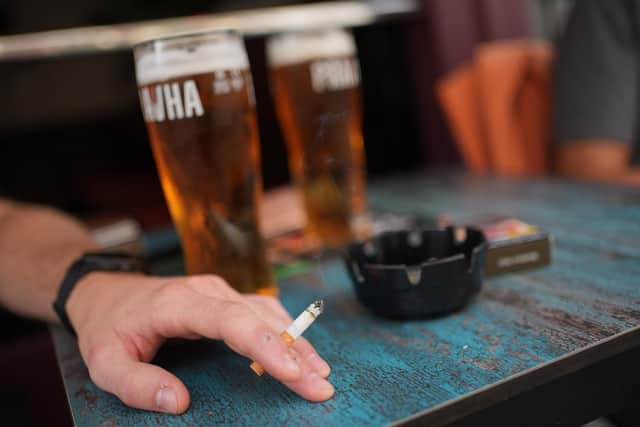

More significant, however, and the real difficulty for publicans wanting to argue against the ban, is the serious disjunction in character between smoking and Mr Martin's examples of other "dangerous" practices.
Yes, both mountaineering and horse riding carry a risk of danger to the practitioner. But both of these are healthy pursuits that not only develop practical skills to benefit the individual, but which can also be deployed to the benefit of others.
None of those beneficial characteristics apply to smoking in any circumstance. The habit is proven to be deleterious to the smoker's own health but there is no practical benefit to set against the risk. Those who have succumbed to an initial temptation of peer pressure continue to smoke only because of the insidious influence of nicotine addiction, and many struggle to quit.
While the practical skills in mountaineering and horsemanship can be deployed in aid of others, the practice of smoking merely spreads the noxious influence of tobacco smoke to everyone in the vicinity - whether indoors or outside - also damaging their health, and contaminating their clothing and hair with a malingering unpleasant odour.
It is unfortunate, but sadly necessarily borne for the moment, and a much lesser evil, that the steamy effluvia generated by vaping is equally unpleasant, especially when suffused with sickly-sweet artificial pseudo-flavours. It is remarkable that vapers are happy to do this in public, when surely they would baulk at visibly producing any other noxious bodily excretion?
It is entirely appropriate for a government to regulate to protect its citizens against the effects of individuals’ activities that are injurious to those not also participating. The sooner both smoking and vaping are rendered obsolete through greater personal and public enlightenment, the better.