
What happens in the future if Yorkshire County Cricket Club is demutualised? - Yorkshire Post Letters

From: John Jackson, Yorkshire CCC member, former member-elected director, Leeds.
I was struck by Chris Waters’ answer to a reader’s question about Yorkshire County Cricket Club’s proposed demutualisation, particularly his question to those opposed to it: “what do you think you would be losing exactly if the club was no longer a members’ club?”
It is a very good question. I am less certain that the answer is “not very much”.
For clarity, I am not opposed to demutualisation. I am a lifelong Yorkshire supporter and member and a former member-elected director of the club. I have not yet decided how I would vote. There are circumstances in which I could vote for it.
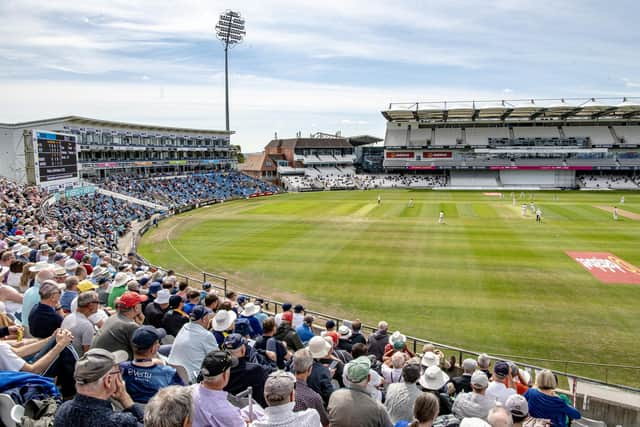

I also agree with Chris, and with Colin Graves and the Board, about much of the diagnosis. Yorkshire needs to be ambitious. Headingley requires substantial investment if it is to remain a leading international venue. The club needs to increase its revenues and become commercially stronger.
Where I part company with Chris is the apparent leap from Yorkshire needs investment to Yorkshire therefore needs to cease being a members’ mutual. Those are not the same proposition.
Chris asks what members would lose. The most obvious answer is ownership.
At present Yorkshire’s members collectively own their cricket club. Demutualisation could change not simply how Yorkshire raises money but ultimately who owns the club, who controls it and to whom those controlling it are accountable.
Harold Macmillan famously compared the disposal of national assets to selling the “family silver”. The analogy is not exact, but there is something in it here. Yorkshire’s members are being asked to contemplate disposing of something accumulated and handed down through generations. Once ownership has been transferred, it may be extraordinarily difficult, perhaps impossible, to recover.
One fellow Yorkshire member made what I think is an especially important point during the current debate. The concern is not necessarily who buys the club first. It is who buys it from them, and who buys it from them after that.
Members might be entirely comfortable with the first investor. They may be responsible, sympathetic to Yorkshire’s traditions and determined to protect its identity. But what happens when their investment is sold? And at the next sale? A decision taken by today’s members could establish an ownership structure which exists long after the present chairman, chief executive, Board and membership have gone.
That is why I do not think Chris’s suggestion that members should “trust in those who are running the club to make the right decisions in Yorkshire’s best interests” quite answers the problem.
This is not about whether we trust Colin Graves, Sanjay Patel or the present Board. Trust is personal and temporary. Constitutional protection is intended to survive the people who created it.
Nor would it be fair to suggest that the Board has simply ignored alternatives. Colin Graves’ recent letter to members sets out other possible structures which the Board says it has considered and explains why it believes they would not provide the investment and economic flexibility Yorkshire requires. That is a welcome and important contribution to the debate.
But it cannot be the end of the inquiry.