
Why meat consumption needs to be reduced - Yorkshire Post Letters

From: Mike Baldwin, Raven Road, Nether Edge, Sheffield.
The government's independent advisers, the Climate Change Committee (CCC) have just published their recommendations for the period 2038-2042, in order to achieve Net Zero by 2050. This lists the necessary increase in renewables, heat pumps and electric vehicles, low carbon fuels, carbon capture and storage, insulation, greater use of public transport, cycling and walking, increase in woodland and peat restoration and reductions in meat consumption. The last three items are particularly relevant to the government's recent consultation for the development of a Land Use Framework.
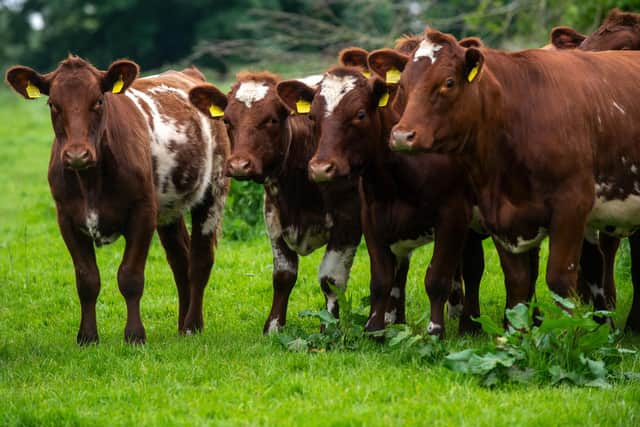
To absorb CO2 from the atmosphere, the CCC proposes to increase woodland from 13 per cent of UK land to 19 per cent by 2050. This is a large area the equivalent of Cornwall, Devon and Dorset combined. In order to do this, land used for cattle and sheep needs to be reduced. This also has the advantage of reducing methane produced: the delicately named cow 'burps'.
Our agricultural concentration on meat production is enormously inefficient. A staggering 85 per cent of agricultural land in the UK is used for cattle and sheep. In terms of the same amount of protein, beef requires 163 times as much land as needed for instance for soya, and lamb needs185 times as much. Protein from beef creates 74 times as much carbon dioxide as protein from soya.

The CCC recommends a 35 per cent reduction of meat and dairy by 2050 compared with 2019. The NHS already recommends reducing our consumption of red and processed meats and the benefits of greater consumption of vegetables are widely accepted. A recent study found that the UK's addiction to unhealthy food was costing £268bn per year, more than the annual cost of the NHS. The CCC's recommendations show we can eat more healthily and at the same time help reduce climate change. Not a bad plan?